Beethoven String Quartet, Op. 132, Part 2

Beethoven String Quartet, Op. 132, Part 2

Author: Joshua Weilerstein September 8, 2023 Duration: 44:37

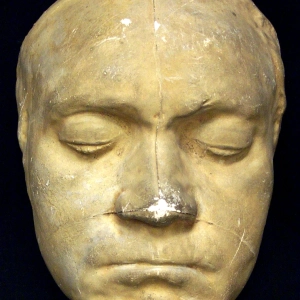
If you joined me last week, you heard about the severe intestinal illness that Beethoven suffered from during the year of 1825.  Beethoven thought that he was near death; he was spitting up blood, in terrible pain, and regularly begged his doctor for help.  Ensconced in Baden, a Viennese suburb known for its nature and calm, Beethoven slowly and miraculously recovered from the illness, giving him 2 more years to compose.  These two years brought us the quartets Op. 130 Op. 131, Op. 135, a series of canons, sketches for a 10th symphony. and of course, Op. 132.   Obviously, even as he suffered from this illness, Beethoven knew that he had much more in him left to compose.  The 4 quartets he wrote upon recovery from this illness ALL rank in the top 10 of the greatest musical compositions ever written by anyone.  During the slow movement of Op. 132, Beethoven takes the opportunity to thank the Deity, who or whatever that was to Beethoven, for his recovery.  This 15-20 minute movement is, as I said last week, beyond superlatives, but I'll do my best to quell my enthusiasm and look at this movements structure, its fascinating harmonic language, and of course, its spiritual dimension.  We'll then take apart the final two movements of the piece, two movements that teach us so much about Beethoven as a composer, as a person, and as a performer.  No piece of Beethoven's struggles for so long before finally reaching a glorious conclusion, but don't worry, we'll get there in the end. Join us to explore part 2 of one of the greatest masterpieces of music ever written!


There’s a particular kind of curiosity that draws people to classical music, but the sheer scale of the repertoire can feel overwhelming. Sticky Notes: The Classical Music Podcast, hosted by conductor Joshua Weilerstein, meets that curiosity right where it is. Think of it as a series of open conversations about the music itself, designed to be equally engaging for someone hearing a symphony for the first time and for a lifelong devotee. Episodes might feature a thoughtful interview with a performing artist, offering a glimpse behind the curtain, or they could focus entirely on a single piece, peeling back its layers to explore why it resonates. Weilerstein guides these explorations with clarity and enthusiasm, moving seamlessly from foundational concepts to more nuanced details about different musical eras. The entire premise of this podcast is built on a genuine belief that this music belongs to all of us. It’s about replacing any sense of intimidation with connection and understanding. While past seasons are gradually being re-released, each episode stands as its own invitation to listen more deeply.
Author: Language: English Episodes: 284

Sticky Notes: The Classical Music Podcast
Podcast Episodes
Mendelssohn Octet in E Flat Major, Op. 20 [not-audio_url] [/not-audio_url]

Duration: 1:03:17
From 1825-1827, Mendelssohn wrote 3 of his most beloved and most played works: his Midsummer Night's Dream Overture, his String Quartet, Op. 13, and the piece were going to talk about today, his Octet. What is truly asto…
Mahler Symphony No. 5, Part 2 [not-audio_url] [/not-audio_url]

Duration: 48:53
I left you last week after Part 1 of Mahler's 5th symphony, dazed and defeated. There seems to be no hope, and no way out. But as many of you know by now, Mahler reaches for the entire emotional spectrum in his music, an…
Mahler Symphony No. 5, Part 1 [not-audio_url] [/not-audio_url]

Duration: 57:58
There is a thread of musical theory called Schenkerian analysis, based on the work of Heinrich Schenker. Schenker believed that musical works could be boiled down to their fundamental structures and harmonies. Entire wor…
Schoenberg: Verklärte Nacht [not-audio_url] [/not-audio_url]

Duration: 57:39
I'm not sure there's ever been a composer who changed as much throughout his or her life as Arnold Schoenberg. Schoenberg would become famous, or infamous, depending on who you talk to, for his invention of atonality; th…
What Does an Opera Director Really Do? W/ Tabatha McFadyen [not-audio_url] [/not-audio_url]

Duration: 59:49
Have you ever wondered what exactly goes on behind the scenes putting together an opera? Have you ever asked yourself how a director make decisions on how to interpret the libretto of an opera? Why do some productions lo…
The Life and Music of Clara Schumann [not-audio_url] [/not-audio_url]

Duration: 48:33
Clara Schumann, without a doubt, was one of the greatest pianists of all time. Schumann's playing didn't just leave critics and audiences in raptures, it also left other composers amazed that their music could sound so b…
Brahms Symphony No. 1 [not-audio_url] [/not-audio_url]

Duration: 52:30
Brahms was only 20 years old when Robert Schumann wrote his famous Neue Bahnen(New Paths) article that proclaimed Brahms as the future of music and the heir of Beethoven. Beethoven had only been dead for 26 years at this…
Debussy String Quartet [not-audio_url] [/not-audio_url]

Duration: 48:56
Just one year before Debussy wrote his legendary Prelude to the Afternoon of a Faun, he completed another groundbreaking work. It was a string quartet, which he expected to be the first of many. But in the end, it would…