Beethoven String Quartet, Op. 59, No. 1

Beethoven String Quartet, Op. 59, No. 1

Author: Joshua Weilerstein February 15, 2024 Duration: 58:38

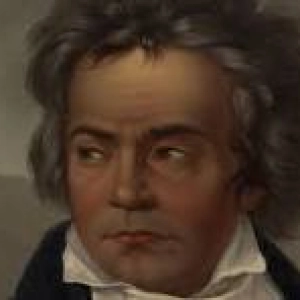
In 1806, the 36 year old Beethoven received a commission from the Russian ambassador in Vienna, Count Andreas Razumovsky. Razumovsky wanted a set of string quartets for what would soon be his house string quartet which included some of the finest players Vienna had to offer. As part of his commission, Razumovsky asked Beethoven to include a Russian theme in each one of the quartets. Beethoven obliged him in 2 of the quartets, and the Razumovsky quartets, Op. 59 1, 2, and 3, were born. 1806 was near the height of Beethoven's astonishing so called Middle Period, where the scale of his music drastically expanded from his earlier works and he began writing in a so called heroic style, with much more brash and adventurous music. This all started in 1803 with his Eroica Symphony, but Beethoven did not limit his adventures and his expanding palate to his symphonies. Everything with Beethoven's music was expanding, including his string quartets. 

These middle quartets form part of the core of most string quartets repertoires. They are astonishing works in every regard, where Beethoven starts pushing limits we didn't even, or maybe he didn't even, know he had. From the expansive 59, 1, to the intensely felt and taut 59, 2, to the often fun loving 59, 3, Beethoven explores every facet of string quartet playing and brings that heroic and passionate new style to the genre of the string quartet. For today, we're going to go through Op. 59, 1, a remarkably expansive and brilliant piece that explores every facet of string quartet playing, pushing quartets to their technical and emotional limits in ways that were absolutely shocking at the time and still unbelievably challenging today. If you come to this show for symphonies, that's great, but for me and many other musicians, Beethoven's string quartets are the greatest collection of pieces by any composer in any genre. I hope that today's exploration will help convince you of that! Join us!


There’s a particular kind of curiosity that draws people to classical music, but the sheer scale of the repertoire can feel overwhelming. Sticky Notes: The Classical Music Podcast, hosted by conductor Joshua Weilerstein, meets that curiosity right where it is. Think of it as a series of open conversations about the music itself, designed to be equally engaging for someone hearing a symphony for the first time and for a lifelong devotee. Episodes might feature a thoughtful interview with a performing artist, offering a glimpse behind the curtain, or they could focus entirely on a single piece, peeling back its layers to explore why it resonates. Weilerstein guides these explorations with clarity and enthusiasm, moving seamlessly from foundational concepts to more nuanced details about different musical eras. The entire premise of this podcast is built on a genuine belief that this music belongs to all of us. It’s about replacing any sense of intimidation with connection and understanding. While past seasons are gradually being re-released, each episode stands as its own invitation to listen more deeply.
Author: Language: English Episodes: 284

Sticky Notes: The Classical Music Podcast
Podcast Episodes
Ravel and Falla: Echoes of Spain [not-audio_url] [/not-audio_url]

Duration: 57:49
Nowadays it's hard to imagine Maurice Ravel as a "bad-boy" revolutionary, a member of a group whose name can be loosely translated as The Hooligans. To most listeners today, Ravel's music is the very picture of sumptuous…
Shostakovich Symphony No. 10 LIVE w/ The Aalborg Symphony [not-audio_url] [/not-audio_url]

Duration: 59:38
Longtime listeners of Sticky Notes know that Shostakovich's 10 symphony was the inaugural piece covered on the show. It's been 8 years(!) since that show, so I've totally re-written the episode and had the privilege of p…
Barber Violin Concerto [not-audio_url] [/not-audio_url]

Duration: 47:26
There are so many great apocryphal stories in the long history of classical music, from the reason Tchaikovsky wrote his Sixth Symphony to what famous composers supposedly said on their deathbeds, to my favorite story: h…
100 Years of Beethoven's Eroica (recordings) [not-audio_url] [/not-audio_url]

Duration: 55:53
One of my favorite things about having Patreon sponsors is that they often suggest the most fascinating pieces and topics for shows. Adrian, who sponsored a show last year, gave me one of my favorite prompts when he sugg…
The Life and Music of Grazyna Bacewicz [not-audio_url] [/not-audio_url]

Duration: 57:46
The great Polish composer Witold Lutoslawski said this after the premature death of his contemporary Grazyna Bacewicz: "She was born with an incredible wealth of musical talent, which she succeeded to bring to full flour…
Sticky Notes meets You'll Hear It [not-audio_url] [/not-audio_url]

Duration: 1:10:04
I had such a wonderful time joining the jazz podcast You'll Hear It! We talked about the meeting of jazz and classical music, a topic I've explored before, but never in this much depth and never with so much input from j…
Impressions in Blue: Ravel & Gershwin [not-audio_url] [/not-audio_url]

Duration: 44:34
In the mid-1920s, Maurice Ravel wrote a letter to the legendary composition teacher Nadia Boulanger. Boulanger's class was a mecca for composers, both young and old, and musicians from all over the world vied to study wi…
Weill: The Seven Deadly Sins [not-audio_url] [/not-audio_url]

Duration: 1:00:01
The collaboration between Kurt Weill and Bertolt Brecht is rightly legendary. The two men could not have been more different from each other, and like the Brahms/Joachim relationship I mentioned in my recent show about t…