Dvorak Cello Concerto

Dvorak Cello Concerto

Author: Joshua Weilerstein January 18, 2024 Duration: 48:53

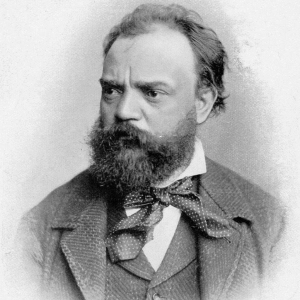
When you think of the genre of the concerto, you might be thinking of something like this: virtuoso fireworks, perhaps over romantic gestures designed simply to show the soloist off, and a rather pedestrian orchestral part, giving the soloist all of the spotlight while the conductor and orchestra are mere accompanists.  Of course, this is a huge generalization and it isn't true about many concertos.  But of all of the concertos that I conduct regularly, and hear regularly, there is one that always stands out as the exception to the rule: Dvorak's Cello Concerto.  The Dvorak deserves every bit of popularity it has received over the years. In fact, you could argue that it is THE perfect concerto.  It's enjoyable to play, perfectly written for the cello, enjoyable to listen to, and enjoyable to accompany for the orchestra. It has everything, which makes it all the more shocking to think that before Dvorak wrote the piece, he didn't even think of the cello as a suitable instrument for a solo piece!   But once convinced of the cello's viability as a solo instrument, Dvorak gave everything to to the piece. We'll talk all about the sometimes tragic history behind the writing of the concerto, the specific difficulties it places on the cellist, the conductor, and the orchestra, and of course, go through the piece in detail, pointing out all the different facets that result in the Dvorak being perhaps the greatest of all concertos. Join us!

Cellist: Miklos Perenyi 


There’s a particular kind of curiosity that draws people to classical music, but the sheer scale of the repertoire can feel overwhelming. Sticky Notes: The Classical Music Podcast, hosted by conductor Joshua Weilerstein, meets that curiosity right where it is. Think of it as a series of open conversations about the music itself, designed to be equally engaging for someone hearing a symphony for the first time and for a lifelong devotee. Episodes might feature a thoughtful interview with a performing artist, offering a glimpse behind the curtain, or they could focus entirely on a single piece, peeling back its layers to explore why it resonates. Weilerstein guides these explorations with clarity and enthusiasm, moving seamlessly from foundational concepts to more nuanced details about different musical eras. The entire premise of this podcast is built on a genuine belief that this music belongs to all of us. It’s about replacing any sense of intimidation with connection and understanding. While past seasons are gradually being re-released, each episode stands as its own invitation to listen more deeply.
Author: Language: English Episodes: 100

Sticky Notes: The Classical Music Podcast
Podcast Episodes
Shostakovich String Quartet No. 8 [not-audio_url] [/not-audio_url]

Duration: 50:44
What did Dmitri Shostakovich intend to portray in his music? There is probably no more debated a question in all of 20th century Western Classica lMusic than this one. On the surface, it seems to have an easy answer. Sho…
What Does a Conductor Really Do? [not-audio_url] [/not-audio_url]

Duration: 47:04
Have you ever wondered what it is that us conductors are really doing up there? Are we just waving our arms in time to the music? What role does the conductor actually play in a concert? How about a rehearsal? Do we also…
All things Piano with Marc-André Hamelin [not-audio_url] [/not-audio_url]

Duration: 52:38
Marc-André Hamelin is one of the world's greatest living pianists. He is known as a virtuoso of the highest order and has made nearly 100 recordings spanning the gamut of the piano repertoire. In this conversation we tal…
Tchaikovsky Symphony No. 4 [not-audio_url] [/not-audio_url]

Duration: 1:00:30
"This is Fate, the force of destiny, which ever prevents our pursuit of happiness from reaching its goal, which jealously stands watch lest our peace and well-being be full and cloudless, which hangs like the sword of Da…
My 25 Favorite Moments in Classical Music (Part 2) [not-audio_url] [/not-audio_url]

Duration: 55:12
Last week we covered moments 1-15 in my top 25 favorite moments in classical music, going all the way up towards the end of the 19th century. This week we're going to explore 9 of my favorite moments from the wide world…
My Top 25 Favorite Moments in Classical Music (Part 1) [not-audio_url] [/not-audio_url]

Duration: 52:28
What MAKES a moment in a piece of classical music? Sometimes it's the result of careful pacing from a composer, the slow build to a powerful release. Sometimes it's about surprise, a sudden explosion, or even a sudden ex…
Mendelssohn Octet in E Flat Major, Op. 20 [not-audio_url] [/not-audio_url]

Duration: 1:03:17
From 1825-1827, Mendelssohn wrote 3 of his most beloved and most played works: his Midsummer Night's Dream Overture, his String Quartet, Op. 13, and the piece were going to talk about today, his Octet. What is truly asto…
Mahler Symphony No. 5, Part 2 [not-audio_url] [/not-audio_url]

Duration: 48:53
I left you last week after Part 1 of Mahler's 5th symphony, dazed and defeated. There seems to be no hope, and no way out. But as many of you know by now, Mahler reaches for the entire emotional spectrum in his music, an…
Mahler Symphony No. 5, Part 1 [not-audio_url] [/not-audio_url]

Duration: 57:58
There is a thread of musical theory called Schenkerian analysis, based on the work of Heinrich Schenker. Schenker believed that musical works could be boiled down to their fundamental structures and harmonies. Entire wor…

«1...678910