Dvorak Violin Concerto

Dvorak Violin Concerto

Author: Joshua Weilerstein May 29, 2025 Duration: 49:16

Admit it: if you're a fan of classical music—or even just a regular concertgoer—you might have glanced at the title of this episode and done a double take. The Dvořák Violin Concerto? Not the Cello Concerto?

One of the things I love about my job as a conductor—and my side gig as a podcast host—is bringing audiences and listeners like you pieces you may never have heard before, even if they're by extremely well-known composers. Don't get me wrong, I love the blockbusters. But there's a special thrill in introducing someone to something new.

Now, some of you might already be big fans of the Dvořák Violin Concerto. But in my experience, it's relatively unknown compared to Dvořák's more famous works. I've never performed it myself, and I've only heard it live once. It's not part of most touring soloists' repertoire, and it's just one of those pieces that rarely comes up—especially compared to the Cello Concerto, which I think I've conducted at least once every season since becoming a conductor.

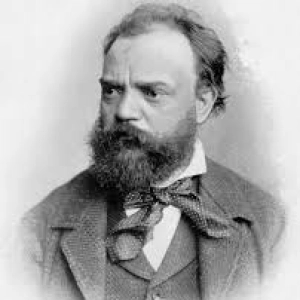
This concerto came about much like the Brahms Violin Concerto, the Brahms Double Concerto we talked about a couple of weeks ago, and so many other great 19th-century works: inspired by the sound of Joseph Joachim's violin. Joachim was the great violinist of the 19th century and had been a friend and supporter of Dvořák for many years. Dvořák ended up dedicating the concerto to Joachim, writing: "I dedicate this work to the great Maestro Jos. Joachim, with the deepest respect, Ant. Dvořák."

Sadly—and for reasons that remain somewhat unclear—Joachim never performed the piece. That may be one of the reasons it's never achieved the popularity it deserves.

Today, in this Patreon-sponsored episode, we'll dive into the concerto, exploring its unusual form, the myriad challenges it poses for the violinist, and perhaps some reasons why it's not part of the so-called "Big Five" violin concertos—even though it probably deserves to be.


There’s a particular kind of curiosity that draws people to classical music, but the sheer scale of the repertoire can feel overwhelming. Sticky Notes: The Classical Music Podcast, hosted by conductor Joshua Weilerstein, meets that curiosity right where it is. Think of it as a series of open conversations about the music itself, designed to be equally engaging for someone hearing a symphony for the first time and for a lifelong devotee. Episodes might feature a thoughtful interview with a performing artist, offering a glimpse behind the curtain, or they could focus entirely on a single piece, peeling back its layers to explore why it resonates. Weilerstein guides these explorations with clarity and enthusiasm, moving seamlessly from foundational concepts to more nuanced details about different musical eras. The entire premise of this podcast is built on a genuine belief that this music belongs to all of us. It’s about replacing any sense of intimidation with connection and understanding. While past seasons are gradually being re-released, each episode stands as its own invitation to listen more deeply.
Author: Language: English Episodes: 100

Sticky Notes: The Classical Music Podcast
Podcast Episodes
Copland Symphony No. 3 [not-audio_url] [/not-audio_url]

Duration: 1:01:02
There has always been a debate about "The Great American Symphony." By the time most prominent American composers got around to writing large scale symphonic works, the symphony had very nearly gone out of fashion. To ma…
An Exploration of Klezmer Music w/ Abigale Reisman [not-audio_url] [/not-audio_url]

Duration: 56:48
Klezmer music has always been very close to my heart, even as a classical violinist. During the pandemic I attempted to learn Klezmer clarinet, and soon I began collaborating with the great Klezmer(and classical!) violin…
Schumann Symphony No. 3, "Rhenish" [not-audio_url] [/not-audio_url]

Duration: 54:36
In 1850, Robert Schumann accepted a position as the new Music Director in Dusseldorf. This job had a lot of responsibilities, including conducting the city orchestra. Schumann, along with his wife, the legendary pianist…
Beethoven String Quartet, Op. 59, No. 1 [not-audio_url] [/not-audio_url]

Duration: 58:38
In 1806, the 36 year old Beethoven received a commission from the Russian ambassador in Vienna, Count Andreas Razumovsky. Razumovsky wanted a set of string quartets for what would soon be his house string quartet which i…
Ethel Smyth Serenade in D [not-audio_url] [/not-audio_url]

Duration: 48:09
I've mentioned Ethel Smyth a few times in the past on this show. This is partly because of her music, and partly because she remains one of the most interesting people who ever lived. She was a composer of course, but sh…
Dvorak Cello Concerto [not-audio_url] [/not-audio_url]

Duration: 48:53
When you think of the genre of the concerto, you might be thinking of something like this: virtuoso fireworks, perhaps over romantic gestures designed simply to show the soloist off, and a rather pedestrian orchestral pa…
Bernstein: Symphonic Dances from Westside Story [not-audio_url] [/not-audio_url]

Duration: 46:37
We're back! Welcome to Season 10! Leonard Bernstein to his wife: "These days have flown so -- I don't sleep much; I work every -- literally every -- second (since I'm doing four jobs on this show -- composing, lyric-writ…
Lutoslawski Concerto for Orchestra [not-audio_url] [/not-audio_url]

Duration: 1:02:21
Throughout the history of Western Classical Music, folk music has imprinted itself as an invaluable resource for composers from all over the world. In fact, it's easier to make a list of composers who never used folk mus…
R. Schumann Piano Concerto [not-audio_url] [/not-audio_url]

Duration: 48:17
In January of 1839, Clara Wieck, Robert's future wife, wrote to Robert, "Don't take it amiss if I tell you that I've been seized by the desire to encourage you to write for orchestra. Your imagination and your spirit are…