Lili Boulanger: Psalm 130

Lili Boulanger: Psalm 130

Author: Joshua Weilerstein April 16, 2026 Duration: 46:24

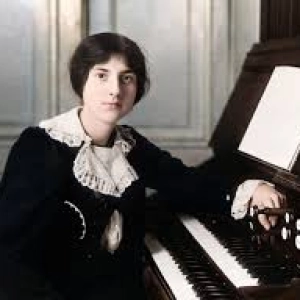
The story of Lili Boulanger's life is one of the most fascinating and tragic in all of musical history. A remarkably precocious talent, Boulanger learned to read sheet music before the alphabet, played the violin, piano, cello, and harp, and composed regularly from a young age. Despite her talent and commitment, Boulanger suffered from chronic illness her entire life, which severely dampened her budding career and prevented her from reaching her potential. She died at the age of just 24, likely from Crohn's disease, and left behind several spectacular pieces that unfortunately were soon relatively forgotten. Boulanger's sister, Nadia, became one of the preeminent composition teachers of the 20th century, working with luminaries such as Aaron Copland, Elliott Carter, David Diamond, Philip Glass, Astor Piazzolla, and many more. But throughout the 20th century there was very little interest in Lili Boulanger's musical output. That has changed somewhat with a renewed focus on bringing the works of female composers to the stage, and this has led to an explosion of performances of a few works, specifically Boulanger's brilliant short orchestral pieces D'un Matin de Printemps and D'un Soir Triste. But there is still a dearth of performances of some of Boulanger's great choral pieces, and in particular of Psalm 130, a piece that I find to be absolutely stunning but which is almost never performed. The piece, written in memory of Lili and Nadia's father Ernest, is a lament that shows off the potential of the 22-year-old composer, writing a piece far beyond her years in its emotional maturity and technical construction. In many ways, Lili Boulanger should be thought of in the pantheon of the great musical prodigies in Western classical music. Unfortunately she should also be thought of in the pantheon of the great composers who died tragically young. Today on the show, we're going to do a brief overview of Lili Boulanger's life to orient you into her style, and then we'll go through this gorgeous piece, talking about Boulanger's influences and her creative use of those influences, and discussing whether the piece was autobiographical or not. I think you will really discover something very special with this piece, so come join us! 


There’s a particular kind of curiosity that draws people to classical music, but the sheer scale of the repertoire can feel overwhelming. Sticky Notes: The Classical Music Podcast, hosted by conductor Joshua Weilerstein, meets that curiosity right where it is. Think of it as a series of open conversations about the music itself, designed to be equally engaging for someone hearing a symphony for the first time and for a lifelong devotee. Episodes might feature a thoughtful interview with a performing artist, offering a glimpse behind the curtain, or they could focus entirely on a single piece, peeling back its layers to explore why it resonates. Weilerstein guides these explorations with clarity and enthusiasm, moving seamlessly from foundational concepts to more nuanced details about different musical eras. The entire premise of this podcast is built on a genuine belief that this music belongs to all of us. It’s about replacing any sense of intimidation with connection and understanding. While past seasons are gradually being re-released, each episode stands as its own invitation to listen more deeply.
Author: Language: English Episodes: 100

Sticky Notes: The Classical Music Podcast
Podcast Episodes
Ravel and Falla: Echoes of Spain [not-audio_url] [/not-audio_url]

Duration: 57:49
Nowadays it's hard to imagine Maurice Ravel as a "bad-boy" revolutionary, a member of a group whose name can be loosely translated as The Hooligans. To most listeners today, Ravel's music is the very picture of sumptuous…
Shostakovich Symphony No. 10 LIVE w/ The Aalborg Symphony [not-audio_url] [/not-audio_url]

Duration: 59:38
Longtime listeners of Sticky Notes know that Shostakovich's 10 symphony was the inaugural piece covered on the show. It's been 8 years(!) since that show, so I've totally re-written the episode and had the privilege of p…
Barber Violin Concerto [not-audio_url] [/not-audio_url]

Duration: 47:26
There are so many great apocryphal stories in the long history of classical music, from the reason Tchaikovsky wrote his Sixth Symphony to what famous composers supposedly said on their deathbeds, to my favorite story: h…
100 Years of Beethoven's Eroica (recordings) [not-audio_url] [/not-audio_url]

Duration: 55:53
One of my favorite things about having Patreon sponsors is that they often suggest the most fascinating pieces and topics for shows. Adrian, who sponsored a show last year, gave me one of my favorite prompts when he sugg…
The Life and Music of Grazyna Bacewicz [not-audio_url] [/not-audio_url]

Duration: 57:46
The great Polish composer Witold Lutoslawski said this after the premature death of his contemporary Grazyna Bacewicz: "She was born with an incredible wealth of musical talent, which she succeeded to bring to full flour…
Sticky Notes meets You'll Hear It [not-audio_url] [/not-audio_url]

Duration: 1:10:04
I had such a wonderful time joining the jazz podcast You'll Hear It! We talked about the meeting of jazz and classical music, a topic I've explored before, but never in this much depth and never with so much input from j…
Impressions in Blue: Ravel & Gershwin [not-audio_url] [/not-audio_url]

Duration: 44:34
In the mid-1920s, Maurice Ravel wrote a letter to the legendary composition teacher Nadia Boulanger. Boulanger's class was a mecca for composers, both young and old, and musicians from all over the world vied to study wi…
Weill: The Seven Deadly Sins [not-audio_url] [/not-audio_url]

Duration: 1:00:01
The collaboration between Kurt Weill and Bertolt Brecht is rightly legendary. The two men could not have been more different from each other, and like the Brahms/Joachim relationship I mentioned in my recent show about t…