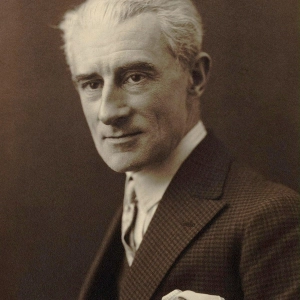
Ravel, Bolero + La Valse

Ravel, Bolero + La Valse

Author: Joshua Weilerstein June 22, 2023 Duration: 54:28

Maurice Ravel the Magician, the Swiss Watchmaker, the aloof, the elegant, the precise, the soulful, the childlike, the naive, the warm, the radical, the progressive. These are all words that were used to describe a man of elegant contradictions throughout his life and into today. I talked a lot about Ravel's skill with orchestration last week when we discussed Mussorgsky's Pictures at an Exhibition, but Ravel's brilliance and creativity in terms of orchestral sound is absolutely unparalleled in musical history. But Ravel is somebody I've very rarely covered on the show, partly because he didn't write very many large scale works that would cover a whole hour long episode. Well, it took 6 years for me to figure it out, but I realized a little while ago that I could cover two of Ravel's shorter pieces and put them together on a double bill, so to speak. So today I'm going to tell you about Ravel's most beloved and most despised piece, Bolero, and about my favorite piece of Ravel's, La Valse. These are two pieces that could not be more different in their aims, in their constructions, and in their impacts on the audience. They are both thrillingly exciting, but in completely different ways. A good performance of Bolero should make you want to jump out of your seat with excitement, while a good performance of La Valse should terrify you to your core. Join us to learn all about it!


There’s a particular kind of curiosity that draws people to classical music, but the sheer scale of the repertoire can feel overwhelming. Sticky Notes: The Classical Music Podcast, hosted by conductor Joshua Weilerstein, meets that curiosity right where it is. Think of it as a series of open conversations about the music itself, designed to be equally engaging for someone hearing a symphony for the first time and for a lifelong devotee. Episodes might feature a thoughtful interview with a performing artist, offering a glimpse behind the curtain, or they could focus entirely on a single piece, peeling back its layers to explore why it resonates. Weilerstein guides these explorations with clarity and enthusiasm, moving seamlessly from foundational concepts to more nuanced details about different musical eras. The entire premise of this podcast is built on a genuine belief that this music belongs to all of us. It’s about replacing any sense of intimidation with connection and understanding. While past seasons are gradually being re-released, each episode stands as its own invitation to listen more deeply.
Author: Language: English Episodes: 100

Sticky Notes: The Classical Music Podcast
Podcast Episodes
Mozart String Quartet, K. 465, "Dissonance" [not-audio_url] [/not-audio_url]

Duration: 49:26
You might be wondering: why on earth would I choose a piece that is literally called "Dissonance" when I was looking for something a bit simpler or cleaner to talk about on the show today? Actually, Mozart's Dissonance q…
Bonus Episode: Beethoven 5 en français! [not-audio_url] [/not-audio_url]

Duration: 42:47
Bienvenue dans cette édition spéciale du podcast Sticky Notes en français ! Aujourd'hui, nous parlons de la symphonie la plus célèbre du monde, et de la symphonie que nous allons interpréter à Lille les 21, 22 et 23 mai,…
Liszt Faust Symphony [not-audio_url] [/not-audio_url]

Duration: 1:03:46
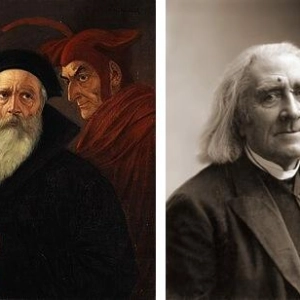
Thank you to Jerry for sponsoring today's episode on Patreon! Goethe's Faust is considered to be the greatest work of German literature. This sprawling, 2-part play occupied Goethe's life for nearly 60 years, from its or…
Schubert: Die Schöne Mullerin Mini-Episode No. 1 (Free Preview) [not-audio_url] [/not-audio_url]

Duration: 6:52
This is a free preview of my new series of mini-episodes over on Patreon all about Schubert's Die Schöne Mullerin, one of the great masterpieces of the 19th century. Each week we'll explore one song from the cycle, in a…
Lili Boulanger: Psalm 130 [not-audio_url] [/not-audio_url]

Duration: 46:24
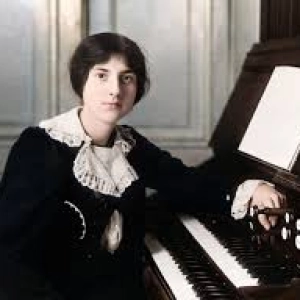
The story of Lili Boulanger's life is one of the most fascinating and tragic in all of musical history. A remarkably precocious talent, Boulanger learned to read sheet music before the alphabet, played the violin, piano,…
Tchaikovsky Symphony No. 6 (Part 2) [not-audio_url] [/not-audio_url]

Duration: 48:23
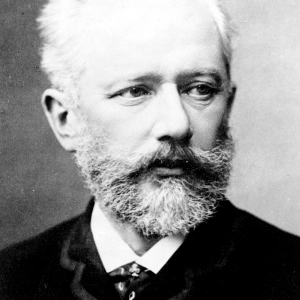
In a letter to Tchaikovsky's nephew Vladimir Davydov, Tchaikovsky wrote: "I'm very pleased with its content, but dissatisfied, or rather not completely satisfied, with the instrumentation. For some reason it's not coming…
Tchaikovsky Symphony No. 6 (Part 1) [not-audio_url] [/not-audio_url]

Duration: 50:44
The great and somewhat controversial conductor Leopold Stokowski said this about Tchaikovsky: "His musical utterance comes directly from the heart and is a spontaneous expression of his innermost feeling. It is as sincer…
Beethoven String Quartet, Op. 59, No.2 [not-audio_url] [/not-audio_url]

Duration: 56:56
I'm always tickled by composer trivia questions, like which standard canon works begin in a major key and end in a minor key? I'll give you one, but please comment others below: Mendelssohn's 4th Symphony. Well, how abou…
Brahms Symphony No. 2 LIVE w/ The Aalborg Symphony [not-audio_url] [/not-audio_url]

Duration: 58:32
Brahms spent much of his adult life battling with his ambition to write the next great symphony and his terror at the shadow of Beethoven standing behind him. Brahms tortured himself for 14 years with his first symphony,…