Shostakovich Cello Concerto No. 1

Shostakovich Cello Concerto No. 1

Author: Joshua Weilerstein March 20, 2025 Duration: 50:05

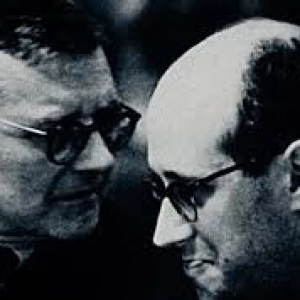
It's hard to overstate the depth of the connection between Dmitri Shostakovich and the legendary cellist Mstistlav Rostropovich. Shostakovich and Rostropovich were extremely close friends, and Shostakovich wrote and dedicated several works to him, including the piece we're going to talk about today, the first Cello Concerto. Rostropovich had been desperate to get Shostakovich to write a concerto for him, but Shostakovich's wife had one simple piece of advice: if you want Shostakovich to write something for you, don't talk to him about it or even mention it. So Rostropovich waited and waited, until July of 1959, when he was asked by Shostakovich to come to Leningrad to try out a new Cello Concerto. Shostakovich played through the piece for Rostropovich, turned to him, and asked him if he liked it. Rostropovich apparently told Shostakovich that he "had been shaken to the core." Shostakovich, in his famously modest way, then shakily asked Rostropovich if he could dedicate the concerto to him. Rostropovich immediately agreed, and then rushed off to learn the concerto as quickly as possible. He learned the entire concerto in 3 days, then returned to Shostakovich and played it for him by heart. The concerto is practically stamped with Rostropovich's name, which is why I'll be using a recording of a live performance of Rostropovich during the show today, though I must say I also recommend a pretty great modern recording by a certain cellist who is also my sister, Alisa Weilerstein. This concerto has always been one of my favorites; it is compact, powerful, punchy, beautiful, intense, concentrated, and tremendously exciting. For me, it is one of Shostakovich's most Beethovenian works, in its lean power and its obsession with a single motive. Today on this fundraiser sponsored show, we'll talk through this fantastic concerto, and explore just what makes its momentum so inevitable and so thrilling from start to finish. Join us!


There’s a particular kind of curiosity that draws people to classical music, but the sheer scale of the repertoire can feel overwhelming. Sticky Notes: The Classical Music Podcast, hosted by conductor Joshua Weilerstein, meets that curiosity right where it is. Think of it as a series of open conversations about the music itself, designed to be equally engaging for someone hearing a symphony for the first time and for a lifelong devotee. Episodes might feature a thoughtful interview with a performing artist, offering a glimpse behind the curtain, or they could focus entirely on a single piece, peeling back its layers to explore why it resonates. Weilerstein guides these explorations with clarity and enthusiasm, moving seamlessly from foundational concepts to more nuanced details about different musical eras. The entire premise of this podcast is built on a genuine belief that this music belongs to all of us. It’s about replacing any sense of intimidation with connection and understanding. While past seasons are gradually being re-released, each episode stands as its own invitation to listen more deeply.
Author: Language: English Episodes: 50

Sticky Notes: The Classical Music Podcast
Podcast Episodes
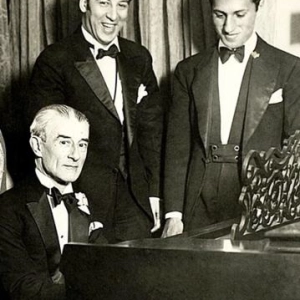
Impressions in Blue: Ravel & Gershwin [not-audio_url] [/not-audio_url]

Duration: 44:34
In the mid-1920s, Maurice Ravel wrote a letter to the legendary composition teacher Nadia Boulanger. Boulanger's class was a mecca for composers, both young and old, and musicians from all over the world vied to study wi…
Weill: The Seven Deadly Sins [not-audio_url] [/not-audio_url]

Duration: 1:00:01
The collaboration between Kurt Weill and Bertolt Brecht is rightly legendary. The two men could not have been more different from each other, and like the Brahms/Joachim relationship I mentioned in my recent show about t…
The Ravel Sound with Norbert Müllemann and Stefan Knüpfer [not-audio_url] [/not-audio_url]

Duration: 45:32
I so enjoyed making this latest episode in my collaboration with G Henle Publishers. I talked with two absolute experts in their fields, Norbert Mülleman and Stefan Knüpfer, all about how to edit Ravel's music, and how t…
Dvorak Violin Concerto [not-audio_url] [/not-audio_url]

Duration: 49:16
Admit it: if you're a fan of classical music—or even just a regular concertgoer—you might have glanced at the title of this episode and done a double take. The Dvořák Violin Concerto? Not the Cello Concerto? One of the t…
Brahms Double Concerto [not-audio_url] [/not-audio_url]

Duration: 58:17
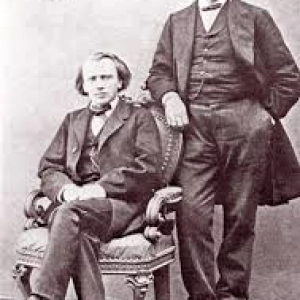
It's entirely possible that we would not know the name of Johannes Brahms very well if Brahms hadn't met Joseph Joachim as a very young man. Joachim, who was one of the greatest violinists of all time, had already establ…
Copland Clarinet Concerto [not-audio_url] [/not-audio_url]

Duration: 48:13
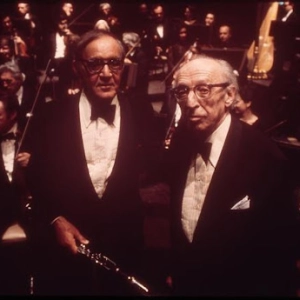
The commission for a new Clarinet Concerto from the great American composer Aaron Copland came from a rather unlikely source: Benny Goodman, the man known as the King of Swing. Goodman was one of the most famous and impo…
Steve Reich: Different Trains [not-audio_url] [/not-audio_url]

Duration: 52:30
Steve Reich, the great American contemporary composer, provided this program note about his work Different Trains: "The idea for the piece came from my childhood. When I was one year old my parents separated. My singer,…
Best of Frenemies: Debussy and Ravel [not-audio_url] [/not-audio_url]

Duration: 52:22
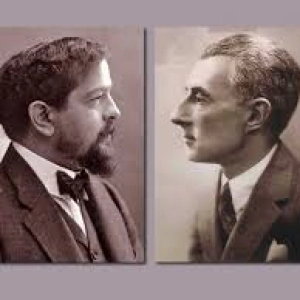
Debussy and Ravel are often described as the prototypical musical impressionists. It is often said that the two composers are the closest equivalents to the artistic world of Monet, Renoir, Pisarro, Degas, and others. Bu…