Smetana: Ma Vlast

Smetana: Ma Vlast

Author: Joshua Weilerstein February 6, 2025 Duration: 1:05:54

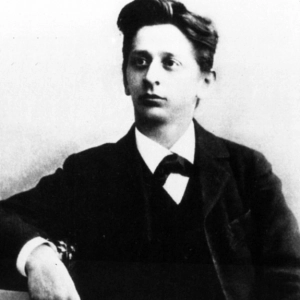
Nationalism, patriotism, cultural identity, a sense of home; these are concepts and ideas whose popularity have ebbed and flowed throughout history. Nationalism has been seen as a natural expression of cultural identity and pride, and it also has been at the core of virulent racism and xenophobia. Patriotism has been used as a cudgel by all sides of the political spectrum for good and evil, and a sense of home has led to cultural explosions and also to some of the bloodiest wars of all time. For Bedrich Smetana, these concepts were extremely multi-layered. He was a proud Bohemian nationalist for much of his life, but he also barely spoke Czech(German was the lingua franca among educated classes in Prague), and he was also disenchanted with the Prague musical establishment due to their cool reception of his Wagnerian/Lisztian style. He even left Prague for a time to work in Gothenburg Sweden, writing curtly to his parents: "Prague did not wish to acknowledge me, so I left it." But only 6 years later, he wrote again to a friend: "My home has rooted itself into my heart so much that only there do I find real contentment. It is to this that I will sacrifice myself." Stirred to patriotic and nationalistic sentiments, Smetana began studying the Czech language in earnest, and his second opera, The Bartered Bride, became the first Czech opera to enter the mainstream repertoire around Europe. It was a piece fully in Czech style, and even though Smetana battled to the end of his life with different members of the Prague musical establishment, he is still thought of today as the founder of the Czech national sound. This is even before we begin talking about the topic for today, Ma Vlast, which is commonly translated to My Fatherland, My Country, or My Homeland. Ma Vlast is a massive, nearly hour and a half long work that amalgamates Wagnerian and Listzian ideas of a tone poem along with nationalistic music that has stirred not only the Czech soul but the souls of people all around the world. As Semyon Bychkov, the great Russian conductor and current Music Director of the Czech Philharmonic says: "The core subject of this piece is home and the meaning of home; everything else is the gravy." Today on the show we'll begin by talking about Smetana's tragic experience of deafness, and then we'll go through each movement of his huge piece, talking about the msuic from the perspecitve of nationalism and also Wagnerian ideas of leitmotifs as well as orchestration and style. Join us!

Recording: Czech Philharmonic conducted by Rafael Kubelik


There’s a particular kind of curiosity that draws people to classical music, but the sheer scale of the repertoire can feel overwhelming. Sticky Notes: The Classical Music Podcast, hosted by conductor Joshua Weilerstein, meets that curiosity right where it is. Think of it as a series of open conversations about the music itself, designed to be equally engaging for someone hearing a symphony for the first time and for a lifelong devotee. Episodes might feature a thoughtful interview with a performing artist, offering a glimpse behind the curtain, or they could focus entirely on a single piece, peeling back its layers to explore why it resonates. Weilerstein guides these explorations with clarity and enthusiasm, moving seamlessly from foundational concepts to more nuanced details about different musical eras. The entire premise of this podcast is built on a genuine belief that this music belongs to all of us. It’s about replacing any sense of intimidation with connection and understanding. While past seasons are gradually being re-released, each episode stands as its own invitation to listen more deeply.
Author: Language: English Episodes: 100

Sticky Notes: The Classical Music Podcast
Podcast Episodes
Franck Symphony in D Minor [not-audio_url] [/not-audio_url]

Duration: 59:57
In the 1960s, Leonard Bernstein famously helped to popularize the music of a then relatively obscure composer, Gustav Mahler. His work, as well as the work of other conductors, made Mahler into a classical-music househol…
Ravel and Falla: Echoes of Spain [not-audio_url] [/not-audio_url]

Duration: 57:49
Nowadays it's hard to imagine Maurice Ravel as a "bad-boy" revolutionary, a member of a group whose name can be loosely translated as The Hooligans. To most listeners today, Ravel's music is the very picture of sumptuous…
Shostakovich Symphony No. 10 LIVE w/ The Aalborg Symphony [not-audio_url] [/not-audio_url]

Duration: 59:38
Longtime listeners of Sticky Notes know that Shostakovich's 10 symphony was the inaugural piece covered on the show. It's been 8 years(!) since that show, so I've totally re-written the episode and had the privilege of p…
Barber Violin Concerto [not-audio_url] [/not-audio_url]

Duration: 47:26
There are so many great apocryphal stories in the long history of classical music, from the reason Tchaikovsky wrote his Sixth Symphony to what famous composers supposedly said on their deathbeds, to my favorite story: h…
100 Years of Beethoven's Eroica (recordings) [not-audio_url] [/not-audio_url]

Duration: 55:53
One of my favorite things about having Patreon sponsors is that they often suggest the most fascinating pieces and topics for shows. Adrian, who sponsored a show last year, gave me one of my favorite prompts when he sugg…
The Life and Music of Grazyna Bacewicz [not-audio_url] [/not-audio_url]

Duration: 57:46
The great Polish composer Witold Lutoslawski said this after the premature death of his contemporary Grazyna Bacewicz: "She was born with an incredible wealth of musical talent, which she succeeded to bring to full flour…
Sticky Notes meets You'll Hear It [not-audio_url] [/not-audio_url]

Duration: 1:10:04
I had such a wonderful time joining the jazz podcast You'll Hear It! We talked about the meeting of jazz and classical music, a topic I've explored before, but never in this much depth and never with so much input from j…
Impressions in Blue: Ravel & Gershwin [not-audio_url] [/not-audio_url]

Duration: 44:34
In the mid-1920s, Maurice Ravel wrote a letter to the legendary composition teacher Nadia Boulanger. Boulanger's class was a mecca for composers, both young and old, and musicians from all over the world vied to study wi…