Weill: The Seven Deadly Sins

Weill: The Seven Deadly Sins

Author: Joshua Weilerstein June 26, 2025 Duration: 1:00:01

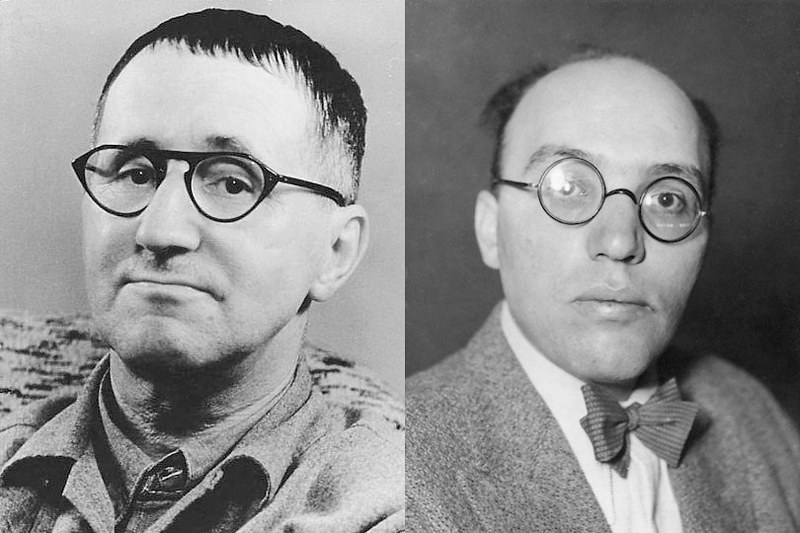
The collaboration between Kurt Weill and Bertolt Brecht is rightly legendary. The two men could not have been more different from each other, and like the Brahms/Joachim relationship I mentioned in my recent show about the Brahms Double concerto, the friendship between Weill and Brecht was stormy to say the least. The two collaborated on some of the most memorable works of the Weimar era in Germany, such as the Threepenny Opera, which features a pretty famous tune called Mack the Knife.

Their final collaboration was on the "sung ballet" The Seven Deadly Sins. This is a piece that was written at a point of remarkably high tension within Weimar Germany. On an artistic level, the 1920s and early 1930s had seen a veritable explosion in the world of culture, with art, dance, theater, and music all featuring artists who were pushing the boundaries with wild experimentation and a kind of ecstatic fervor that produced some of the world's greatest and most memorable cultural achievements. On a parallel track however, the rise of the Nazis cast a pall over all of this. By 1933, both Brecht and Weill(who was Jewish) knew that Germany was not a place that they could stay safely. Weill ended up in Paris and then in the US for the rest of his life, while Brecht bounced around Europe before returning to East Germany after the war, hoping to be a part of the Marxist Utopia that he believed had been founded there.  The simmering combination of Weill's mastery of transforming popular forms into a unique kind of classical music along with Brecht's pointed satire and brilliantly inventive libretti resulted in the Seven Deadly Sins, a piece that that brutally satirizes extreme capitalism and the degradation of the human soul that supposedly results from it. This is a nakedly political piece, and I should make it clear that by talking about it, by choosing to feature it on the show, and by regularly performing it, I don't necessarily endorse its views. Brecht was extreme in all ways, as we'll get to today, and the power of this piece in my opinion doesn't come from its politics, but from its remarkable and devastating portrayal of a human soul and the tragedies that can befall it. This is one of my favorite pieces of the whole 20th century, and I'm so happy to share it with you today. Join us!


There’s a particular kind of curiosity that draws people to classical music, but the sheer scale of the repertoire can feel overwhelming. Sticky Notes: The Classical Music Podcast, hosted by conductor Joshua Weilerstein, meets that curiosity right where it is. Think of it as a series of open conversations about the music itself, designed to be equally engaging for someone hearing a symphony for the first time and for a lifelong devotee. Episodes might feature a thoughtful interview with a performing artist, offering a glimpse behind the curtain, or they could focus entirely on a single piece, peeling back its layers to explore why it resonates. Weilerstein guides these explorations with clarity and enthusiasm, moving seamlessly from foundational concepts to more nuanced details about different musical eras. The entire premise of this podcast is built on a genuine belief that this music belongs to all of us. It’s about replacing any sense of intimidation with connection and understanding. While past seasons are gradually being re-released, each episode stands as its own invitation to listen more deeply.
Author: Language: English Episodes: 100

Sticky Notes: The Classical Music Podcast
Podcast Episodes
Schubert Sonata in B Flat, D. 960 (Part 1) [not-audio_url] [/not-audio_url]

Duration: 40:07
For a long time I've received emails and messages from people asking, and sometimes demanding, that I explore the solo piano repertoire. Other than a look at the Goldberg Variations of Bach, I've basically neglected a hu…
Mozart Piano Concerto in D Minor, K. 466 [not-audio_url] [/not-audio_url]

Duration: 48:12
H.C. Robbins Landon, the great musicologist, once wrote about Mozart that his music was "an excuse for mankind's existence and a small hope for our ultimate survival." I couldn't agree more, especially when it comes to a…
What is a Mode? [not-audio_url] [/not-audio_url]

Duration: 44:37
My first interaction with the musical term modes was Leonard Bernstein's brilliant Young People's Concert, also called What is a Mode? In that show, Bernstein showed how modes are an essential part of what makes modern m…
Brahms Piano Concerto No. 1 [not-audio_url] [/not-audio_url]

Duration: 1:03:25
In 1857, Brahms wrote to his friend Joseph Joachim about his first Piano Concerto, saying, " "I have no judgment about this piece anymore, nor any control over it." Brahms first began sketching his first piano concerto i…
Fast, Furious, Fortissimo [not-audio_url] [/not-audio_url]

Duration: 46:31
Very often, when I tell people that I'm a classical musician, I am told, "wow, I love classical music! It's so relaxing!" I think almost all classical musicians have heard that before, and you know what? Sometimes, it's…
Copland Symphony No. 3 [not-audio_url] [/not-audio_url]

Duration: 1:01:02
There has always been a debate about "The Great American Symphony." By the time most prominent American composers got around to writing large scale symphonic works, the symphony had very nearly gone out of fashion. To ma…
An Exploration of Klezmer Music w/ Abigale Reisman [not-audio_url] [/not-audio_url]

Duration: 56:48
Klezmer music has always been very close to my heart, even as a classical violinist. During the pandemic I attempted to learn Klezmer clarinet, and soon I began collaborating with the great Klezmer(and classical!) violin…
Schumann Symphony No. 3, "Rhenish" [not-audio_url] [/not-audio_url]

Duration: 54:36
In 1850, Robert Schumann accepted a position as the new Music Director in Dusseldorf. This job had a lot of responsibilities, including conducting the city orchestra. Schumann, along with his wife, the legendary pianist…
Beethoven String Quartet, Op. 59, No. 1 [not-audio_url] [/not-audio_url]

Duration: 58:38
In 1806, the 36 year old Beethoven received a commission from the Russian ambassador in Vienna, Count Andreas Razumovsky. Razumovsky wanted a set of string quartets for what would soon be his house string quartet which i…
Ethel Smyth Serenade in D [not-audio_url] [/not-audio_url]

Duration: 48:09
I've mentioned Ethel Smyth a few times in the past on this show. This is partly because of her music, and partly because she remains one of the most interesting people who ever lived. She was a composer of course, but sh…
