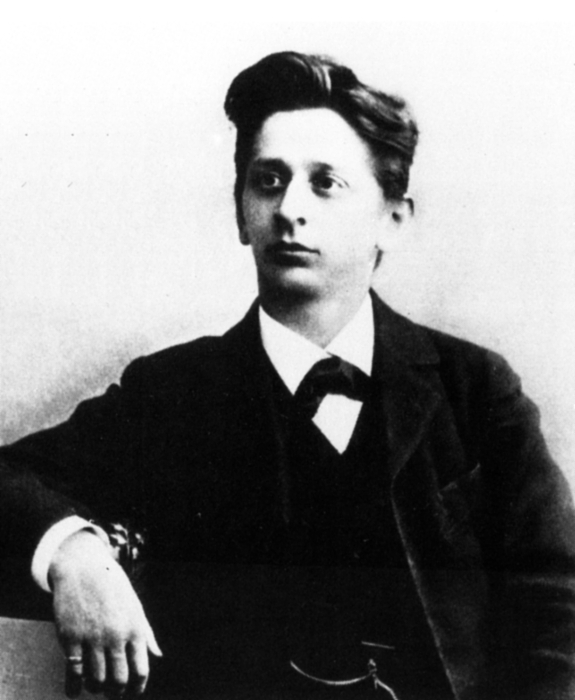
Zemlinsky: The Mermaid

Zemlinsky: The Mermaid

Author: Joshua Weilerstein February 5, 2026 Duration: 1:01:32

The story of Alexander von Zemlinsky's The Mermaid begins with a passionate love affair and ends in heartbreak of the most unabashedly big-R Romantic kind. In 1900, the young, fabulously talented, and famously beautiful Alma Schindler came to Zemlinsky's home to study composition. Wildly passionate feelings soon developed between them, and Alma wrote the following in her diary: "I would gladly be pregnant for him, gladly bear his children. His blood and mine, commingled: my beauty with his intellect. I would gladly serve him in his professional life, live for him and his kith and kin, breathe [for him], attend to his every happiness, serve him with a gentle hand. God give me the strength and the willpower to do so."

The relationship lasted a little over a year, until one night when Schindler attended a party that happened to be frequented by a brilliant conductor and composer twenty years her senior: Gustav Mahler. The rest is history.

Zemlinsky was devastated and poured his energies into a tone poem based on Hans Christian Andersen's The Little Mermaid. The source may seem surprising, but as we'll see later on, it proved to be the perfect vehicle for Zemlinsky to exorcise the tortured memories of this turbulent relationship. For a long time, however, the score was lost. It wasn't until the 1980s that the full work was reconstructed, and it has since become one of Zemlinsky's most frequently performed pieces.

And it's not hard to see why. The Mermaid is a forty-minute tone poem that, from start to finish, overflows with fin-de-siècle romanticism, very much in the vein of Schoenberg's Verklärte Nacht (Transfigured Night). It is a work of irresistible beauty and passion, and it is being played more and more as Zemlinsky's name begins to take its rightful place in the standard canon of composers.

Today on the show, I'll tell you a bit more about Zemlinsky in case you're not familiar with him, read more of the unbearably passionate letters and diary entries from both Zemlinsky and Alma Schindler, and, of course, walk you through the heartbreakingly beautiful music of The Mermaid, showing how Zemlinsky balances narrative and abstract form, and how he created this opulent, lush, and profoundly moving score. Join us!


There’s a particular kind of curiosity that draws people to classical music, but the sheer scale of the repertoire can feel overwhelming. Sticky Notes: The Classical Music Podcast, hosted by conductor Joshua Weilerstein, meets that curiosity right where it is. Think of it as a series of open conversations about the music itself, designed to be equally engaging for someone hearing a symphony for the first time and for a lifelong devotee. Episodes might feature a thoughtful interview with a performing artist, offering a glimpse behind the curtain, or they could focus entirely on a single piece, peeling back its layers to explore why it resonates. Weilerstein guides these explorations with clarity and enthusiasm, moving seamlessly from foundational concepts to more nuanced details about different musical eras. The entire premise of this podcast is built on a genuine belief that this music belongs to all of us. It’s about replacing any sense of intimidation with connection and understanding. While past seasons are gradually being re-released, each episode stands as its own invitation to listen more deeply.
Author: Language: English Episodes: 100

Sticky Notes: The Classical Music Podcast
