Why Good Companies Go Bad — Eric Ries #375

Why Good Companies Go Bad — Eric Ries #375

Author: James Taylor - Keynote Speaker on Creativity, Innovation and Artificial Intelligence May 26, 2026 Duration: 44:12

Why Good Companies Go Bad — Eric Ries #375

This episode explores why mission-driven organizations lose their way as they scale. Ries argues this decay isn’t a moral failure, but a structural one. Pulled by “financial gravity,” unprotected companies naturally default to maximizing short-term shareholder returns unless founders encode their core values into the organization’s legal DNA.

To combat corporate corruption, Ries introduces frameworks from his new book, Incorruptible. He explains that organizations act as “emergent intelligences” requiring two critical defenses: internal coherence and external integrity. By treating governance as a profound creative act rather than compliance, founders can engineer superorganisms designed to survive and stay true.

The conversation issues a bold challenge to leaders and employees alike: question your organization’s default legal structure before it is too late to change it. It is never too early to legally protect a company’s mission, such as converting to a Public Benefit Corporation. Order your copy of Incorruptible: Why Good Companies Go Bad and How Great Companies Stay Great today at incorruptible.co.

Notable Quotes

  • “The coordination of humans is where the power is, and so management is the most powerful force in the universe.”

  • “No matter how good a management system you build, it can still be unwound so easily. One board meeting and poof, everything you built is gone.”

  • “Every biological being on this planet is shaped by the gravitational pull of the Earth. I started to think about organizations in those same terms.”

  • “Governance is one of the most powerful and exciting things in the world. I’ve taken the most boring topics imaginable and tried to make them interesting because that’s where the power is.”

  • “The hardest question with mission protection is not what protections to enact, but when they should be enacted. It’s always too early until it’s too late.”

  • “Don’t work at someplace that’s mission-hopeful. Go find someplace that’s actually mission-driven. You’ll be a lot happier.”

Resources and Links
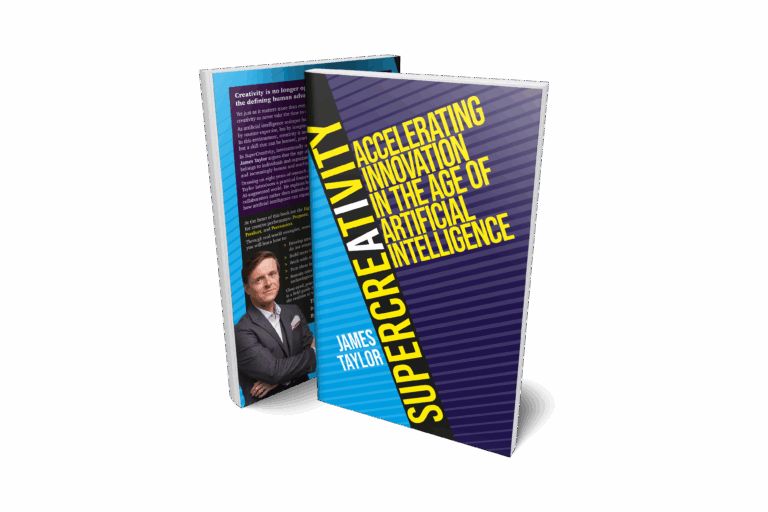
Order your copy of ‘SuperCreativity – Accelerating Innovation in the Age of Artificial Intelligence’ today at https://geni.us/QiDBu

Takeaways

In his upcoming book, James Taylor delves into the transformative concept of SuperCreativity™—the art of amplifying your creative potential through collaboration with both humans and machines. Drawing from his experiences speaking in over 30 countries, James combines compelling stories, case studies, and practical strategies to help readers unlock innovation and harness the power of AI-driven tools. This book is a must-read for anyone looking to elevate their creativity and thrive in the modern age of human-machine collaboration

James Taylor is a highly sought-after keynote speaker, often booked months or even years in advance due to his exceptional expertise. Given his limited availability, it’s crucial to contact him early if you’re interested in securing a date or learning how he can enhance your event. Reach out to James Taylor now for an opportunity to bring his unique insights to your conference or team.

Free 3-Part Video Training Series On How To Unlock Your Creative Potential, Break Down Creative Blocks, and Unleash Your Creative Genius
FREE training video shows you how to unlock your creative potential in 5 simple steps. The world’s top creative individuals and organizations use these exact strategies.


FREE training video shows you the ten ways to make $1,000,000 from your speaking. The world’s top professional speakers use these exact strategies.

In this first FREE video series, award-winning keynote speaker James Taylor reveals how to become a 7-figure speaker.

Timestamps

  • 00:08 – James Taylor introduces Eric Ries and his new book, Incorruptible.

  • 01:47 – Eric shares his journey from basement programmer to realizing management is the ultimate force.

  • 04:00 – The realization that good management systems can be instantly destroyed by poor governance.

  • 07:17 – How society has lost the language to accurately evaluate an organization’s character and trustworthiness.

  • 10:33 – The psychological toll on founders who inextricably link their ego and identity to their companies.

  • 13:16 – Debunking the modern myth that “maximizing shareholder return” is a historical law of capitalism.

  • 16:47 – Understanding organizations as “emergent intelligences” akin to ant colonies or superorganisms.

  • 20:00 – The two essential structural defenses against corporate decay: internal coherence and structural integrity.

  • 28:46 – Redefining governance as a dynamic, creative, and strategic act rather than a boring compliance exercise.

  • 32:00 – The story of a startup that fatally hid its true, heart-driven mission to appease traditional investors.

  • 35:58 – Why founders must establish mission protection mechanisms early before they lose structural control.

  • 38:00 – A practical framework employees can use to uncover their organization’s true legal purpose.

Order your copy of ‘SuperCreativity – Accelerating Innovation in the Age of Artificial Intelligence’ today at https://geni.us/QiDBu

James Taylor (00:08)
When people hear the word creativity, they often think like inspiration, a flash of insight, a moment of brilliance. But if creativity was just inspiration, you couldn't build it really. You know, couldn't scale it. You couldn't teach it. And yet over the last eight years, I've been teaching it to leaders and teams from all over the world, which must mean that creativity has a structure. There's a way of teaching it and developing it in ourselves.

And that structure is what I call the eight P's of super creativity. And in my new book, Super Creativity, Accelerating Innovation in the Age of Artificial Intelligence, I argue that we're living in a new era. And I'm going to teach you these eight P's of super creativity in this book. See, this is an era where creativity is no longer optional, but creativity today operates across three distinct dimensions. Human creativity, human plus human creativity,

and human plus machine creativity. The APs sit across these three layers. So think of them as the architecture of modern creative ways of working. So the first three P's that I focus on in the book is purpose, personality, and practice. Purpose is simply asking, why are you creating? What problem actually matters for you and your team and your organization?

because research consistently shows that creativity is strongest when it's connected to our meaning, our why. Next is personality. Personality asks, what kind of creative are you? Are you a visionary? Are you a builder? Are you a connector of ideas? Practice asks, what habits are you building in your day-to-day work and your life? See, creativity isn't magic. It's a skill. It's something you can become better at and more skilled at over time.

These three form your foundations. Without them, nothing else works. The next three P's move beyond simply us as individuals. And those are people, process, and place. People is about who you create with, who's on your team. Because creativity is not a solo act, it's a collaborative effort. Process is how you move ideas from simply concepts

to reality. See, great ideas fail all the time because the process around them is really weak, so they can't be fully developed. And then we have place. Place is where creativity happens. The environment that you work in shapes your imagination more than you realize. Physical space, creating psychological safety, cultural norms. If you want innovation, you must design the spaces in which you work to kind of foster this kind of creativity.

And then the final two P's recognise something kind of pretty new, that we're now collaborating not just with other people, but with intelligent systems. So we talk about product and persuasion. Product asks, what are you creating and how can AI help you explore more possibilities? Persuasion asks, who needs convincing? Because the best idea in the world is useless if no one buys into it. If you can't get those resources,

to that into a reality. In the age of AI, the edge is not just generating ideas, it's aligning people around those ideas. The eight Ps, transforming creativity, they transform your creativity from something just kind of vague into something much more actionable. So instead of saying, we need to be more innovative, you can ask questions like, is our purpose clear? Do we know what we're trying to go after? Do we understand?

our creative personalities are on our team and how those work together. It's like chemistry. Are we designing better processes to go from the idea to execution? Are we collaborating well with artificial intelligence? That's how creativity becomes strategic. So super creativity is not about waiting for inspiration. It's about building a system that makes innovation much, much more likely. The APs are that system. That's what I talk about in this book.

If you want to go deeper into each principle and learn how to apply them in your team, in your life, in your organization, that's exactly what this book is designed to help you do. Because in this super creative age, structure beats sporadic brilliance and collaboration beats the lone genius. You can pick up your copy of my new book, Super Creativity, Accelerating Innovation in the Age of Artificial Intelligence by going to jamestaylor.me forward slash

super creativity, or by ordering it from your favourite bookstore. My name's James Taylor. Thanks for watching.

The post Why Good Companies Go Bad — Eric Ries #375 appeared first on James Taylor.


The SuperCreativity Podcast with James Taylor explores the vital intersection where creative thinking meets practical application. Hosted by James Taylor, an internationally recognized keynote speaker on creativity, innovation, and artificial intelligence, each episode delves into the methods and mindsets that fuel original ideas and transformative change. This isn't just abstract theory; it's a deep dive into the tangible skills and strategies used by leaders across diverse fields. You'll hear conversations that unpack the creative process, examine how innovation is managed within organizations, and consider the profound impact of emerging technologies on the future of work and art. The discussions are grounded in real-world experience, offering insights for entrepreneurs, artists, managers, and technologists alike. By weaving together perspectives from business, the arts, management, and technology, this podcast provides a unique lens on how to cultivate a more inventive and adaptable approach to both professional and personal challenges. Tune in for a thoughtful exploration of what it means to be creatively resilient in a rapidly evolving world, discovering inspiring ideas that you can apply directly to your own projects and goals. The SuperCreativity podcast serves as a regular source of provocation and practical wisdom for anyone looking to harness their innate creative potential.
Author: Language: en-us Episodes: 100

SuperCreativity Podcast with James Taylor | Creativity, Innovation and Inspiring Ideas
Podcast Episodes
Curiosity: The Ultimate Competitive Advantage in the Age of AI #374 [not-audio_url] [/not-audio_url]

Duration: 5:05
Curiosity: The Ultimate Competitive Advantage in the Age of AI #374 If there is one trait that will define who thrives in the age of artificial intelligence, it is not intelligence or technical skill.It is curiosity.In t…
How should humans really work with artificial intelligence? #370 [not-audio_url] [/not-audio_url]

Duration: 5:55
How should humans really work with artificial intelligence? #370 In this solo episode of the SuperCreativity Podcast, James Taylor explores two distinct and highly effective models for human–AI collaboration: the Centaur…
Creative Pairs: Why Breakthrough Ideas Rarely Happen Alone #369 [not-audio_url] [/not-audio_url]

Duration: 5:01
Creative Pairs: Why Breakthrough Ideas Rarely Happen Alone #369 We love the story of the lone genius. But when you look behind the scenes of the most successful companies, discoveries, and creative breakthroughs, a very…
The Lone Genius Myth and Why Creativity Is a Team Sport #368 [not-audio_url] [/not-audio_url]

Duration: 6:34
The Lone Genius Myth and Why Creativity Is a Team Sport #368 The biggest myth about creativity is that it belongs to the lone genius. In this solo episode, keynote speaker and author James Taylor dismantles the centuries…
What Is SuperCreativity? Why AI Expands Your Creative Potential #367 [not-audio_url] [/not-audio_url]

Duration: 3:52
What Is SuperCreativity? Why AI Expands Your Creative Potential #367 In this solo episode, James Taylor breaks down the core idea behind his new book SuperCreativity – Accelerating Innovation in the Age of AI. He explain…