This week is beginners week on SUPfm and ahead of Season 4 we've got new SUP tribe members covered, with four episodes covering some of the key questions and challenges facing new paddlers wherever you are.
We're featuring experienced watermen and women covering these key subjects
- How to choose your SUP
- SUP safety
- Learning, confidence and developing core skills
- What you need to know about your iSUP and package
Make sure you don't miss out on future episodes by following us on your favourite podcast app here https://www.supfmpodcast.com/listen
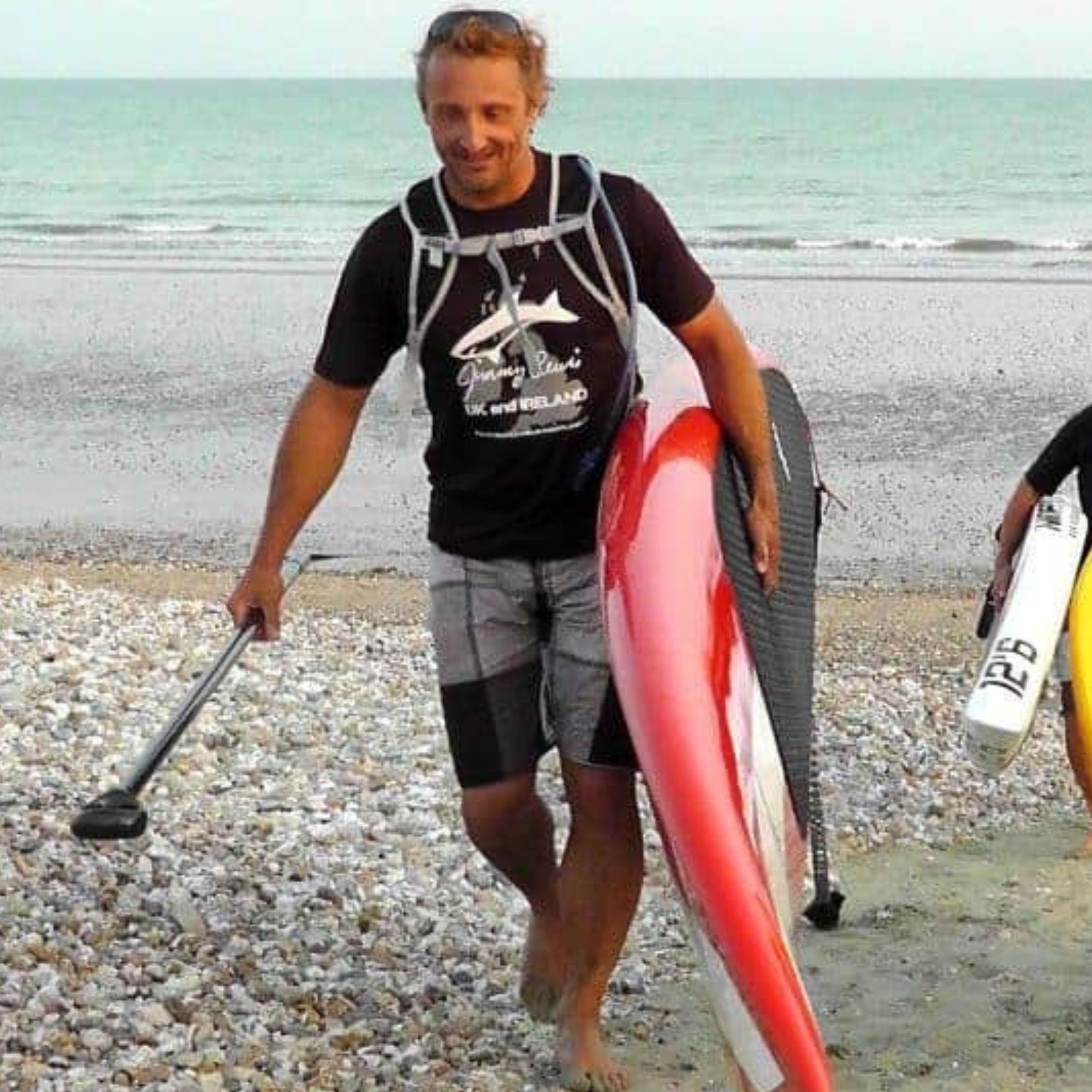
Today is day two of this week's releases and this episode features Ian Phillips, a waterman whose considerable practical experience across watersports has led to a number of huge achievements and today we're tapping his knowledge on a key evergreen topic for people wanting to join the sport.
Check out Ian's excellent source article on How to select your SUP, originally written for his Facebook group Standup Paddleboard UK and Ireland right at the very bottom of these show-notes. Even if you don't listen to the episode, please make sure you read it, you won't regret it!
In this episode we talk about Ian's waterman background and his paddle from Scilly to the UK mainland before riffing through his article giving you a great lead through the main features and pitfalls of choosing your first SUP.
To learn or to buy a board/equipment with Ian then please visit his site here https://www.surfs-sup.co.uk/
In Season 4 of the podcast we're also giving a shout out to the SUP instructors who work hard to help new and improving paddlers engage with the sport, and get equipped with the skills they need.
If you're a certified instructor from anywhere across the world, then we'd like to feature you on an episode. Simply leave us a message here with your name, your certifying body and a message about you and where you are, with a tip, piece or advice or even a nice word about the podcast ;)
You've only got 1min 25 secs of recording time and you can re-record as many times as you like before you send it!
We'll choose a recording to feature on each episode after applying a light edit and getting the sound balanced.
Well done to all instructors for your hard work expanding our SUP tribe and wishing you a great season!
Ian's Article - This is the best independent information on buying your SUP out there!
STARTING OUT GUIDE
CHOOSING A BOARD
The most commonly asked question on any sup group worldwide we want to help by giving a quick intro to board and paddle choice for any of our group members.
* POINT 1 *
In reality you have 2 categories of boards being 1) Inflatable and 2) Hard construction.
1) An inflatable board is one that is stored in a bag, but when ready for use can be rolled out and pumped up.
2) A hard board uses a build material of a foam core wrapped in either an epoxy or carbon, much like a normal surf board.
Within each category (inflatable and hard board) you have subsets including : All rounder, Tourer, Race, Downwind and Surf sups.
* POINT 2 *
Inflatable:
PROS
If storage space is limited then the isup or inflatable is a great option.
You don't need roofbars on a car to transport them as they can easily fit into a car boot.
They're light to carry (some are heavier than others)
They're not as easily damaged as a hard board so can be dropped or laid on concrete for example without risking cracking the hard board skin.
Great as a shared family board for mucking about on.
CONS
They are affected more by wind as they often sit higher in the water.
They don't have the more refined shapes that hard boards have.
They're not as adept at surfing or more performance oriented sup.
They can puncture and deflate.
Hard board:
PROS
The board designer can refine a shape and has way more control over every aspect such as rocker line, rails and tail.
This in turn enables greater specific performance.
Depending on the materials and size, a hard board can be very lightweight.
CONS
They can be more vulnerable to damage on hard surfaces like concrete, rocks etc.
They're not so suited to being the family trampoline with kids literally jumping on and off.
* POINT 3 *
Before buying a board it is well worth having a lesson to see how good your balance is and to get an idea of proper technique. There is nothing worse than rushing in and buying some kit to then find you've got something totally unsuitable and you have to buy again.
A coach will be able to give you pointers are to boards sizes, paddles and obviously some of the safety considerations you need to be aware of.
* POINT 4 *
Demo kit if possible and try other friends kit. Just be very aware that what works for one may not work for you. A person weighing 100+kg will get a different experience to a person weighing 70kg and that goes for both board and paddle.
* POINT 5 *
Board widths range from 21 inches wide in raceboards to 34+ inches wide in isups.
The wider a board is, the more stable it may feel, but it comes with problems. At 34 inches wide a board will be quite slow and you will have to be a bigger person to control it and will find that your shoulder width determines how far out you need to lean to get the paddle in the water, whereas a 30 wide board would see you leaning out less, which in turn means you maintain a better stroke and position.
As a first time paddler on flat water a good width for an all round board would be between 30-32. This will offer stability, but be less sluggish.
As you progress through the ranks you'll quickly find you want to reduce width to maybe a 29 or even 27, but bear in mind that the water state e.g choppy can make a board feel less stable, so do consider where you're likely to paddle.
* POINT 6 *
Buying your first board doesn't need to be stressful if you follow some simple rules.
1) Consider where you're likely to paddle - sea, lake, river
2) Consider how sporty you are in general and if you want to progress
3) Take into account your height. Someone who is shorter will benefit from a narrower board e.g 32 or less as it helps you reach.
4) Take into account your weight. Heavier paddlers, from 85kg + would do better on something 6 inches thick as it would offer a stiffer board whereas a lighter person could get away with a board of 4.7 inches thick.
Based on the points above, thick boards can be affected more by wind and feel overly buoyant to lighter people and wider boards require a wider reach from the paddler so you need to be taller
This board would allow you to play on lakes, rivers and the sea, whilst enjoying some relaxing paddling or even a playful surf.
Summary - a good starter board would range from 10'6 to 11'6 if inflatable with a slightly longer board offering better glide for distance paddling or carrying kids and dog. A starter board will be capable in both flat water and small waves or a river. Heavier people (85kg+) would really benefit from the longer 11'6 and 6 inch thick and 32+ wide whilst lighter paddler can benefit from the 4.75 inch thick board and a bit narrower, but board length still offer the same benefit of 11'6 being more glide oriented than a 10'6
* POINT 7 *
Price is a big factor and paints a confusing factor. It's not that simple to just badge boards as all being the same in price bands but there are some very regular facts based on the products in question.
A budget board (£350 ish) will come with a cheaper paddle, often aluminium (heavier) and possibly a single skin which may make the board more flexible so you'll never enjoy a good paddling experience as you're struggling to balance.
A good mid range board (£400-700) often offers more build quality which is translated into the paddling experience. This goes for the board and associated paddle. If the board is stiffer you immediately gain a huge performance boost but also your focus can be on enjoying the paddling experience of simply balancing.
A higher end board (£700+) will have a lot of R&D sitting behind them and generally have better materials and considered shapes.
* POINT 8 *
Paddles a huge part of the sup experience and so try as many as you can before committing.
As a beginner you'll end up with a package paddle, which may be aluminium (heavy and very unpleasant to use) whilst some packages offer glass fibre paddles which give a softer feeling and lighter weight.
If you're a big bloke you may think the the weight difference is nothing, but after swinging the paddle for a few hours you'd be surprised how it adds up so stay away from aluminium for sure.
Swing weight is determined by the weight of the blade so where possible get something that feels relaxed in hand when you swing it through a stroke pattern. If you find it pulls you off balance it may be the blade is heavy and pulling you out of position.
* POINT 9 *
Leashes that come with boards as part of a package are generally coiled. When paddling on the flat you don't want the leash trailing in the water as it creates a...