The Art of Neighboring: Pastor Amy Schenkel on Building Community, One Picnic Table at a Time (A WEAVE: The Social Fabric Project Story)
Author: Scan Media, LLC
February 24, 2026
Duration: 52:18
How do we rebuild the social fabric of our neighborhoods and congregations in an age of disconnection and division?
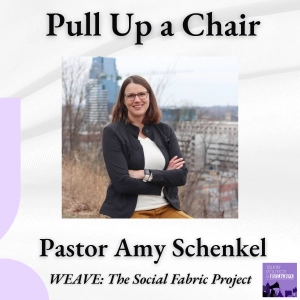
In this episode, Pastor Amy Schenkel joins Corey to talk about what it means to be a "weaver" in your own community. From a front-yard picnic table that became a neighborhood gathering place to decades of church planting in downtown Grand Rapids, Amy brings a grounded, practical theology of neighboring that cuts across political and religious lines. Along the way, she and Corey explore the difference between curiosity and contentiousness, how congregations survive painful splits, and why "mission" might be the one thing that unites people who agree on very little else.
Amy is a pastor and ministries coordinator at Neland Avenue Church in Grand Rapids, Michigan, and a regional mission leader who has also served as North American and U.S. Director of Resonate Global Mission. She's a trained missiologist, a church planting veteran, and a certified speaker with the Weave Speakers Bureau.
Calls to Action
✅ If this conversation resonates, consider sharing it with someone who believes connection across difference still matters.
✅ Subscribe to Corey’s Substack: coreysnathan.substack.com
✅ Leave a review on Apple Podcasts, Spotify, or wherever you listen: ratethispodcast.com/goodfaithpolitics
✅ Subscribe to Talkin’ Politics & Religion Without Killin’ Each Other on your favorite podcast platform.
✅ Watch the full conversation and subscribe on YouTube: youtube.com/@politicsandreligion
Key Takeaways
Neighboring as a Practice: Neighboring doesn't happen by accident. It takes intentionality, imagination, and a willingness to show up consistently for the people around you.
The Front-Yard Principle: A picnic table in the front yard rather than the backyard signals openness. Shared space that's accessible but not invasive invites connection without pressure.
Missional Imagination: There's no curriculum for how your church or community should engage its neighborhood. It requires listening, creativity, and the willingness to try things and sometimes fail.
Asset-Based Community Development (ABCD): Instead of cataloguing what's broken in a neighborhood, start by identifying what's already there: the gifts, talents, and resources people bring. Let the community lead its own renewal.
Mission as Common Ground: Churches and communities can disagree deeply about politics and theology while still uniting around a shared calling to love their neighbors. Mission can hold together what ideology pulls apart.
Curiosity Over Contentiousness: Everyone is an expert in something you know nothing about. Approaching others with genuine curiosity rather than a prepared rebuttal changes the entire nature of a conversation.
The Non-Anxious Presence: When a community faces painful decisions, the most valuable thing a leader can bring is a calm, non-anxious presence. It lowers the temperature and makes honest dialogue possible.
Broken Open: Weave identifies people who have been "broken open" by loss or hardship as some of the most effective community weavers. Suffering, when it doesn't harden us, can deepen our compassion for those on the margins.
Dispositional Preparation: The preparation that matters most before a hard conversation isn't rehearsing your rebuttals. It's working on your own disposition, arriving curious, open, and genuinely willing to hear.
The Image of God Principle: Even when a relationship feels impossibly strained, there's a way through. Lisa Sharon Harper's prayer, "The image of God in me loves the image of God in you," offers a floor to stand on when everything else feels unstable.
About Our Guest
Pastor Amy Schenkel is a pastor and ministries coordinator at Neland Avenue Church in Grand Rapids, Michigan, where she works to help one congregation connect more deeply with its neighborhood. A graduate of Calvin University and Calvin Theological Seminary, Amy was among the first women ordained in her classis within