5 challenges we could solve by designing new proteins | David Baker

5 challenges we could solve by designing new proteins | David Baker

Author: TED June 17, 2019 Duration: 10:06
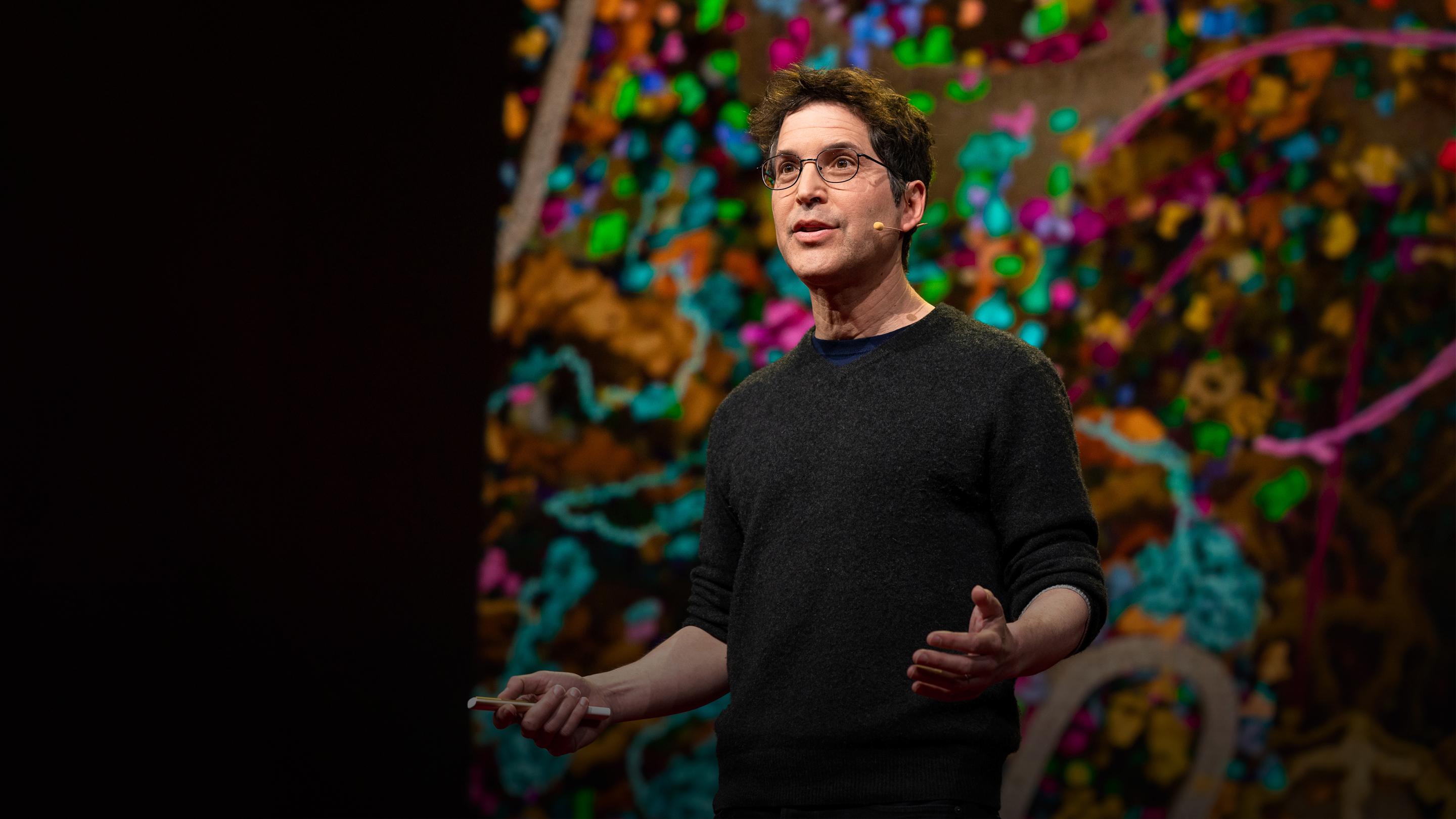
Proteins are remarkable molecular machines: they digest your food, fire your neurons, power your immune system and so much more. What if we could design new ones, with functions never before seen in nature? In this remarkable glimpse of the future, David Baker shares how his team at the Institute for Protein Design is creating entirely new proteins from scratch -- and shows how they could help us tackle five massive challenges facing humanity. (This ambitious plan is a part of the Audacious Project, TED's initiative to inspire and fund global change.)

Curiosity about how our bodies work and the universe functions finds a compelling home in TED Talks Science and Medicine. This curated collection pulls directly from the global stage, featuring leading researchers, pioneering physicians, and insightful thinkers who are actively reshaping their fields. Each episode is a deep, personal narrative from the person behind the discovery, moving beyond textbook summaries to share the human story of scientific pursuit. You’ll hear a neurosurgeon explain the delicate biology of consciousness, a biologist decoding the secret language of trees, or an epidemiologist tracing the path of a pandemic. The discussions are grounded in rigorous research but delivered with a clarity and passion that makes complex concepts accessible and genuinely thrilling. Sourced from flagship TED conferences, independent TEDx events, and partner gatherings worldwide, this podcast serves as a direct line to the cutting edge. It’s for anyone who finds wonder in a detailed medical breakthrough or a revolutionary physics concept, offering a regular dose of perspective on the mechanisms of life and the cosmos. TED’s nonprofit mission to spread impactful ideas is perfectly realized here, turning each listening session into an engaging, thought-provoking exploration of what we know and the vast mysteries that remain.
Author: Language: English Episodes: 133

TED Talks Science and Medicine
Podcast Episodes
The journey through loss and grief | Jason B. Rosenthal [not-audio_url] [/not-audio_url]

Duration: 13:55
In her brutally honest, ironically funny and widely read meditation on death, "You May Want to Marry My Husband," the late author and filmmaker Amy Krouse Rosenthal gave her husband Jason very public permission to move o…
How vultures can help solve crimes | Lauren Pharr [not-audio_url] [/not-audio_url]

Duration: 10:33
Can a bird that symbolizes death help the living catch criminals? In this informative and accessible talk, forensic anthropologist Lauren Pharr shows us how vultures impact crime scenes -- and the assistance they can pro…
The doctors, nurses and aid workers rebuilding Syria | Rola Hallam [not-audio_url] [/not-audio_url]

Duration: 6:54
Local humanitarians are beacons of light in the darkness of war, says humanitarian aid entrepreneur and TED Fellow Rola Hallam. She's working to help responders on the ground in devastated communities like Syria, where t…
The "dead zone" of the Gulf of Mexico | Nancy Rabalais [not-audio_url] [/not-audio_url]

Duration: 11:49
Ocean expert Nancy Rabalais tracks the ominously named "dead zone" in the Gulf of Mexico -- where there isn't enough oxygen in the water to support life. The Gulf has the second largest dead zone in the world; on top of…
Should we create a solar shade to cool the earth? | Danny Hillis [not-audio_url] [/not-audio_url]

Duration: 6:51
In this perspective-shifting talk, Danny Hillis prompts us to approach global issues like climate change with creative scientific solutions. Taking a stand for solar geoengineering, he looks at controversial solutions wi…
How fungi recognize (and infect) plants | Mennat El Ghalid [not-audio_url] [/not-audio_url]

Duration: 4:23
Each year, the world loses enough food to feed half a billion people to fungi, the most destructive pathogens of plants. Mycologist and TED Fellow Mennat El Ghalid explains how a breakthrough in our understanding of the…