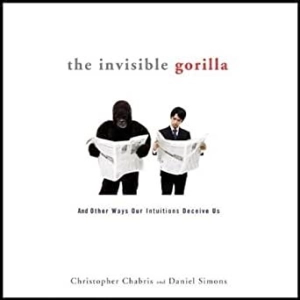
The Invisible Gorilla: And Other Ways Our Intuitions Deceive Us

The Invisible Gorilla: And Other Ways Our Intuitions Deceive Us

Author: Airwave Literature December 8, 2020 Duration: 9:22:00
by Christopher Chabris, Daniel Simons—Reading this book will make you less sure of yourself—and that’s a good thing. In The Invisible Gorilla, Christopher Chabris and Daniel Simons, creators of one of psychology’s most famous experiments, use remarkable stories and counterintuitive scientific findings to demonstrate an important truth: Our minds don’t work the way we think they do. We think we see ourselves and the world as they really are, but we’re actually missing a whole lot.Again and again, we think we experience and understand the world as it is, but our thoughts are beset by everyday illusions. We write traffic laws and build criminal cases on the assumption that people will notice when something unusual happens right in front of them. We’re sure we know where we were on 9/11, falsely believing that vivid memories are seared into our minds with perfect fidelity. And as a society, we spend billions on devices to train our brains because we’re continually tempted by the lure of quick fixes and effortless self-improvement. The Invisible Gorilla reveals the myriad ways that our intuitions can deceive us, but it’s much more than a catalog of human failings. Chabris and Simons explain why we succumb to these everyday illusions and what we can do to inoculate ourselves against their effects. Ultimately, the book provides a kind of x-ray vision into our own minds, making it possible to pierce the veil of illusions that clouds our thoughts and to think clearly for perhaps the first time.

Warren Buffett’s idea that reading is the ultimate level playing field is where this conversation begins. The Bookshelf: Business & Self-Improvement, from Airwave Literature, isn’t about quick tips or hype. Instead, it’s a quiet, thoughtful space dedicated to the books that shape how we think about work, leadership, and personal growth. Each episode takes a single title-whether a timeless classic or a contemporary analysis-and unpacks its core ideas, not just summarizing but exploring how its lessons apply to real decisions and challenges. You’ll hear the host reflect on key passages, connect themes across different authors, and consider the practical implications of what’s on the page. The tone is more like a guided reading session than a lecture, designed for anyone who believes that deep understanding comes from engaging seriously with good writing. This podcast operates on the belief that the right book, properly considered, can change a mindset or a method. It’s for listeners who want to move beyond the headlines and dig into the substance that fuels lasting improvement, making your reading time more focused and impactful. Tune in to fill your own shelf with ideas that matter.

Author: Language: English Episodes: 100

The Bookshelf: Business & Self-Improvement
Podcast Episodes
Misbehaving: The Making of Behavioral Economics [not-audio_url] [/not-audio_url]

Duration: 13:37:55
by Richard H. Thaler—Nobel laureate Richard H. Thaler has spent his career studying the radical notion that the central agents in the economy are humans—predictable, error-prone individuals. Misbehaving is his arresting,…
Quiet: The Power of Introverts in a World That Can't Stop Talking [not-audio_url] [/not-audio_url]

Duration: 10:39:45
by Susan Cain—At least one-third of the people we know are introverts. They are the ones who prefer listening to speaking; who innovate and create but dislike self-promotion; who favor working on their own over working i…
Homo Deus: A History of Tomorrow [not-audio_url] [/not-audio_url]

Duration: 14:53:55
by Yuval Noah Harari—Yuval Noah Harari, author of the critically-acclaimed New York Times bestseller and international phenomenon Sapiens, returns with an equally original, compelling, and provocative book, turning his f…
Sapiens: A Brief History of Humankind [not-audio_url] [/not-audio_url]

Duration: 15:17:54
by Yuval Noah Harari—100,000 years ago, at least six human species inhabited the earth. Today there is just one. Us. Homo sapiens.How did our species succeed in the battle for dominance? Why did our foraging ancestors co…
Yes!: 50 Scientifically Proven Ways to Be Persuasive [not-audio_url] [/not-audio_url]

Duration: 5:22:32
by Noah J. Goldstein, Robert B. Cialdini—Small changes can make a big difference in your powers of persuasion.What one word can you start using today to increase your persuasiveness by more than fifty percent?Which item…