Animation

Animation

Author: The Children's Hour Inc. September 14, 2025 Duration: 59:00
On this episode of The Children’s Hour, junior producer and intern Thaniel Lentz takes us through the incredible history and science of animation. From early tools like the zoetrope and flipbooks to famous characters like Felix the Cat and Mickey Mouse, we learn how still pictures came to life. Thaniel explains how Disney’s Snow White used cels to transform animation, and how computers made it possible to create 3D films like Toy Story and Into the Spider-Verse. This episode is a celebration of imagination and the artists who make drawings move. Find the full episode page, learning guide, links, videos and more at https://childrenshour.org/animation Our show begins with the earliest history of animation. While many people think that animation has only existed since the invention of film, animation has actually been around for centuries. One example of a classical animation technology is the zoetrope. The image below shows a sculpture zoetrope, and the video demonstrates an image zoetrope. Next, we meet some of the first cartoon stars: Felix the Cat, Oswald the Lucky Rabbit, and Mickey Mouse. Thaniel tells us how Walt Disney and his team made Snow White and the Seven Dwarfs, the first full-length animated movie, using “cel animation”—where clear sheets let characters move without redrawing the background every time. This saved artists time and made cartoons smoother and more detailed. We begin with early inventions like the magic lantern, a box with a candle inside that could project pictures on a wall. Thaniel explains how tools like the phenakistoscope and zoetrope used spinning images to create movement. We try flipbooks and learn how even simple drawings can show motion if you flip them fast enough. Next, we meet some of the first cartoon stars: Felix the Cat, Oswald the Lucky Rabbit, and Mickey Mouse. Thaniel tells us how Walt Disney and his team made Snow White and the Seven Dwarfs, the first full-length animated movie, using “cel animation”—where clear sheets let characters move without redrawing the background every time. This saved artists time and made cartoons smoother and more detailed. Thaniel also teaches us the Twelve Principles of Animation, used by animators everywhere to make movement more lifelike and fun. We learn about "squash and stretch" (which makes characters bounce and bend), "anticipation" (getting ready for a big action), and "exaggeration" (making things more dramatic for laughs or emotion). Then, we leap into the computer age and discover how animation changed with new technology. We hear about The Adventures of André and Wally B., the first short by the company that became Pixar, and how Toy Story became the world’s first full 3D animated movie. Thaniel explains how computers help animators “rig” characters like puppets, so they don’t need to be redrawn again and again. Finally, we explore how today’s movies like Into the Spider-Verse, Wolfwalkers, and The Wild Robot use a mix of hand-drawn art and digital tools to create bold, unique animation styles. From chalkboards to CGI, Thaniel shows us how artists keep finding new ways to bring imagination to life. This episode was written and produced by our Junior Producer and Intern Thaniel Lentz, with help from Katie Stone and Sarah Gabrielli. The Children’s Hour is produced by The Children’s Hour Inc., a nonprofit dedicated to creating high-quality children’s public radio. We’re distributed by Native Voice One, the Native American Radio Network, and we’re supported by listeners like you. © 2025 The Children’s Hour Inc. All Rights Reserved.

Tune in to The Children's Hour, a weekly production from The Children's Hour Inc. that brings the spirit of public radio directly to families. This isn't just background noise; each episode is carefully crafted around a specific theme, weaving together engaging stories, fascinating educational segments, and a thoughtfully curated soundtrack of the best music for young ears. It’s designed to spark curiosity and conversation, whether you're exploring science, history, or cultures from around the globe. The result is a genuinely entertaining and enriching experience that turns drive time into learning time, making it a perfect companion for road trips or afternoon activities. By blending high-quality audio production with content that respects its audience, this podcast creates a shared space for kids and their grown-ups to discover the world together. You'll find each show is a complete journey, packed with ideas that linger long after the episode ends. Listen to The Children's Hour for a standout example of how family-friendly audio can be both fun and substantive, proving that great radio doesn't just talk at children-it includes them in the adventure.
Author: Language: en-us Episodes: 100

The Children's Hour
Podcast Episodes
Lemurs [not-audio_url] [/not-audio_url]

Duration: 59:00
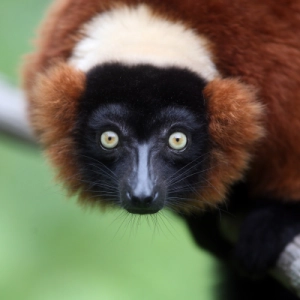
Lemurs are some of the most amazing primates in the world. These furry animals are only found in Madagascar, an island off the coast of Africa. On this episode of The Children’s Hour, the Kids Crew and Katie Stone meet F…
Composers [not-audio_url] [/not-audio_url]

Duration: 59:00
On this episode of The Children’s Hour, we learn all about composers — the people who write music. Have you ever wondered how songs are created? A composer is the person who puts the notes together, making melodies that…
Pumpkin Spice [not-audio_url] [/not-audio_url]

Duration: 59:00
It’s Halloween time on The Children’s Hour! In this episode, we celebrate pumpkins, jack-o’-lanterns, costumes, and trick-or-treating. Our Kids Crew shares their own traditions, from trunk-or-treat clothing drives to fes…
Dating Trees [not-audio_url] [/not-audio_url]

Duration: 59:00
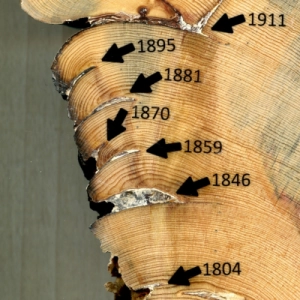
Trees have birthdays too, and scientists find out when they are by studying tree rings. This episode comes with a learning guide.
Animals In The Backyard [not-audio_url] [/not-audio_url]

Duration: 59:00
The Kids Crew discover the animals living right outside our doors. From prairie dogs, coyotes, and roadrunners in New Mexico to monkeys in Thailand, stray dogs in India, koalas in Australia, and wildlife in Brazil, we le…
Balloons [not-audio_url] [/not-audio_url]

Duration: 59:00
On this episode of The Children’s Hour, we explore balloons. From party balloons to weather balloons, and from the first hot air balloons in 18th-century France to the Albuquerque International Balloon Fiesta, the Kids C…
Renewable Energy [not-audio_url] [/not-audio_url]

Duration: 59:00
Everything we do uses energy, but not all energy is the same. On this episode of The Children’s Hour, we learn about renewable energy—power that comes from sources we can use again and again without running out. Find the…
Welcome Stranger [not-audio_url] [/not-audio_url]

Duration: 59:00
What does it mean to be a stranger in a new land? On this episode of The Children’s Hour, we explore the experiences of refugees—people who must leave their homes to find safety somewhere else. Find the learning guide, p…
Mars [not-audio_url] [/not-audio_url]

Duration: 59:00
Have you ever looked up and spotted a bright red dot in the night sky? That’s Mars — our neighbor in the solar system, and a planet full of mysteries. On this episode of The Children’s Hour, we journey to the Red Planet…
Journalism [not-audio_url] [/not-audio_url]

Duration: 59:00
What is journalism, and why does it matter? On this episode of The Children’s Hour, we learn what journalism is and how journalists help us understand the world around us. We meet trailblazing reporters, hear from our Ki…