How Fashion Brands Are Winning the Winter Olympics

How Fashion Brands Are Winning the Winter Olympics

Author: The Business of Fashion February 11, 2026 Duration: 23:50

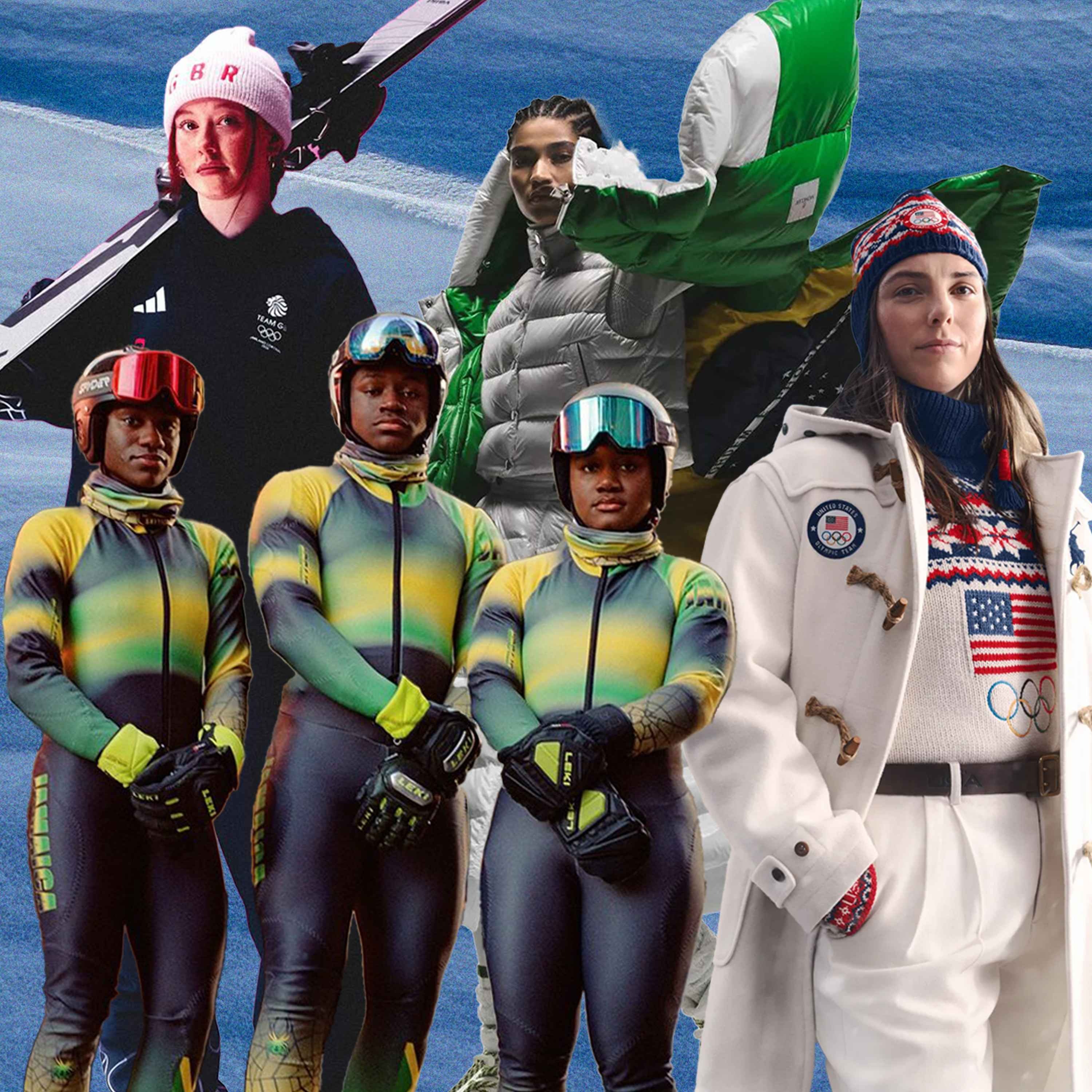
While the Olympics remain one of the world’s biggest sporting stages, they are also one of the most tightly controlled marketing environments. Rules limit how sponsors can interact with athletes and advertise during the Games. As a result, fashion and sportswear brands are finding alternative ways to capitalise on the moment, from outfitting national teams and launching capsule collections to sending squads of influencers to experience the Games.


BoF correspondents Haley Crawford and Mike Sykes join Sheena Butler-Young and Brian Baskin on The Debrief to unpack how the winterwear boom is reshaping the Olympic marketing playbook. 


Key Insights:


  • Musician Bad Bunny’s choice of Zara for his Super Bowl halftime show outfit crystallises a broader tension in fashion marketing: the balance between cultural relevance and commercial perception. Whilst Sykes acknowledged the pushback from critics who found the use of a fast-fashion Spanish brand on such a global platform surprising, he also notes the strategic logic. “This performance is supposed to be about inclusivity, and part of that is accessibility and affordable products. And plus, Zara is also a Spanish brand... It makes more sense considering the cultural magnitude of the performance,” Sykes says.


  • Crawford argues the Games are no longer just about logo placement on performance gear, but a broader spotlight on winter fashion as a growing category. “We've seen that consumers are interested, not only from a performance perspective, but also from a fashion-forward perspective, in having gear that's equally stylish as it is performance driven on the slopes,” she says. But Olympic marketing comes with strict limitations. As Crawford explains, official sponsors can use Olympic branding, but others must tread carefully. For non-sponsors like Canadian label Roots, that means linguistic gymnastics: using phrases like “rooting for Canada” without explicitly referencing the Games.


  • With broadcast advertising and official branding tightly controlled, being visibly present at the Games can be the most direct route to global reach. Sykes points to Adidas’ scale: “We’ve seen a bunch of brands like Adidas…that launched this 700-piece collection.” Even if it is not a traditional campaign, the visibility is enormous. “Just to have your logos on some of these athletes as they perform, while millions of people are watching across the globe, that is the sort of marquee way we’re seeing brands participate,” he says.


  • As leagues and federations try to expand their audiences, fashion-forward fan wear has become a strategic priority. Crawford says Off Season’s approach to Team USA illustrates the shift: rather than just jerseys, brands are creating “wearable jackets and sweaters and things that fans can actually wear in their day-to-day.” Sykes sees the trend as part of a wider evolution across sport. Off Season’s product “reminds me of what the Starter jackets used to be in the 90s,” he says, predicting that more brands will build momentum by “taking team logos and putting them on unique products that aren't just a jersey.”


  • While the Olympic window is tightly controlled, brands often see their biggest opportunities once the closing ceremony ends. Crawford points to the Paris Olympics breakout star Ilona Maher, who “popped off for creating all this viral behind-the-scenes content in the Olympic village,” then landed deals with Maybelline and Paula’s Choice. For fashion, Suni Lee is a recent template. After Paris, she started campaigns for LoveShackFancy and Victoria’s Secret Pink and attended the CFDA Awards with a designer partner. “She really built this whole other part of her public persona,” Crawford says – showing how medals and momentum can translate into longer-term brand equity.


Additional Resources:


Hosted on Acast. See acast.com/privacy for more information.


Every week, The Debrief takes the most talked-about articles from BoF Professional and turns them into a deeper conversation. This isn't just about runway shows and red carpets; it's about the money, strategy, and often surprising forces driving the decisions we see. Hosted by seasoned BoF correspondents Sheena Butler-Young and Brian Baskin, the discussions pull back the curtain on a $2.5 trillion global industry, moving from the boardrooms of mega labels to the creative hustle of indie upstarts. You'll hear analysis of the pivotal deals, the disruptive technologies, and the powerful personalities that are constantly redefining what fashion means. The result is a clear-eyed look at the complex ecosystem where art, beauty, and commerce intersect. Tune in to this weekly podcast from The Business of Fashion for a nuanced perspective that goes far beyond the headlines, offering context and clarity on how the business actually works.
Author: Language: English Episodes: 100

The Debrief
Podcast Episodes
The Sneaker of the Year 2025 [not-audio_url] [/not-audio_url]

Duration: 28:25
Choosing “sneaker of the year” has rarely been this contentious. In 2025 the debate has splintered opinion between incumbent players like Nike and contenders from Vans, Converse and New Balance as consumers test the fiel…
What Happens When Women Lead [not-audio_url] [/not-audio_url]

Duration: 16:49
Collectively, Clare Waight Keller and Maria Cornejo have over two decades of experience in the fashion industry. Waight Keller’s impressive career includes roles at Givenchy, Chloé and Gucci — and today, she serves as cr…
5 Big Questions About Luxury [not-audio_url] [/not-audio_url]

Duration: 30:46
Luxury’s most eventful year in some time is closing with a bang. From Prada’s Versace acquisition to Matthieu Blazy’s debut Chanel Métiers d’Art collection, seismic industry developments are landing on an almost daily ba…
Is This the Year Discount Mania Finally Ends? [not-audio_url] [/not-audio_url]

Duration: 27:33
As the holiday shopping season approaches, consumer sentiment is slumping, yet spending is bifurcated – the top end keeps buying while the bottom 80 percent is more cautious. With Black Friday looming, brands are recalib…
Can Fashion Still Meet Its Climate Promises? [not-audio_url] [/not-audio_url]

Duration: 30:26
As COP30 gets underway in Belém, a port city on the edge of the Brazilian rainforest, the mood is sober. A decade after the Paris Agreement was adopted internationally to limit global warming, many of the world’s largest…
Why Is Everyone Obsessed With Accessories? [not-audio_url] [/not-audio_url]

Duration: 22:06
Colourful charms, Labubu-laden handbags and a ring on every finger – accessories sales are booming. A surge of necklace stacks, playful rings and quirky charms is being driven by Gen Z’s push for personal style, using ad…
The Human Cost of Trump's Tariffs [not-audio_url] [/not-audio_url]

Duration: 25:21
In late August, the US doubled duties on Indian goods to 50 percent, in what President Donald Trump described as a punishment for India’s purchases of Russian oil. Brands reacted immediately, postponing or cancelling ord…
Would You Let AI Shop for You? [not-audio_url] [/not-audio_url]

Duration: 32:27
A new wave of AI shopping agents has emerged as Big Tech and start-ups alike vie for dominance of this new market. OpenAI, Google and Perplexity are experimenting with search-to-checkout, while fashion-specific entrants…
Does Fashion Still Know What Women Want? [not-audio_url] [/not-audio_url]

Duration: 27:27
This fashion month, models walked the tightrope between fantasy and function. On the runway, spectacle was dialled up to 100: Alaïa’s armless “straitjacket” dress, Margiela’s metal mouthpieces, and Jean Paul Gaultier’s n…
Can a Shop Truly Be a “Third Place”? [not-audio_url] [/not-audio_url]

Duration: 26:09
Retailers are racing to repackage shops as “third places” — low-pressure spaces to linger between home and work — as post-pandemic footfall softens and social isolation rises. Sociologist Ray Oldenburg’s original idea ce…