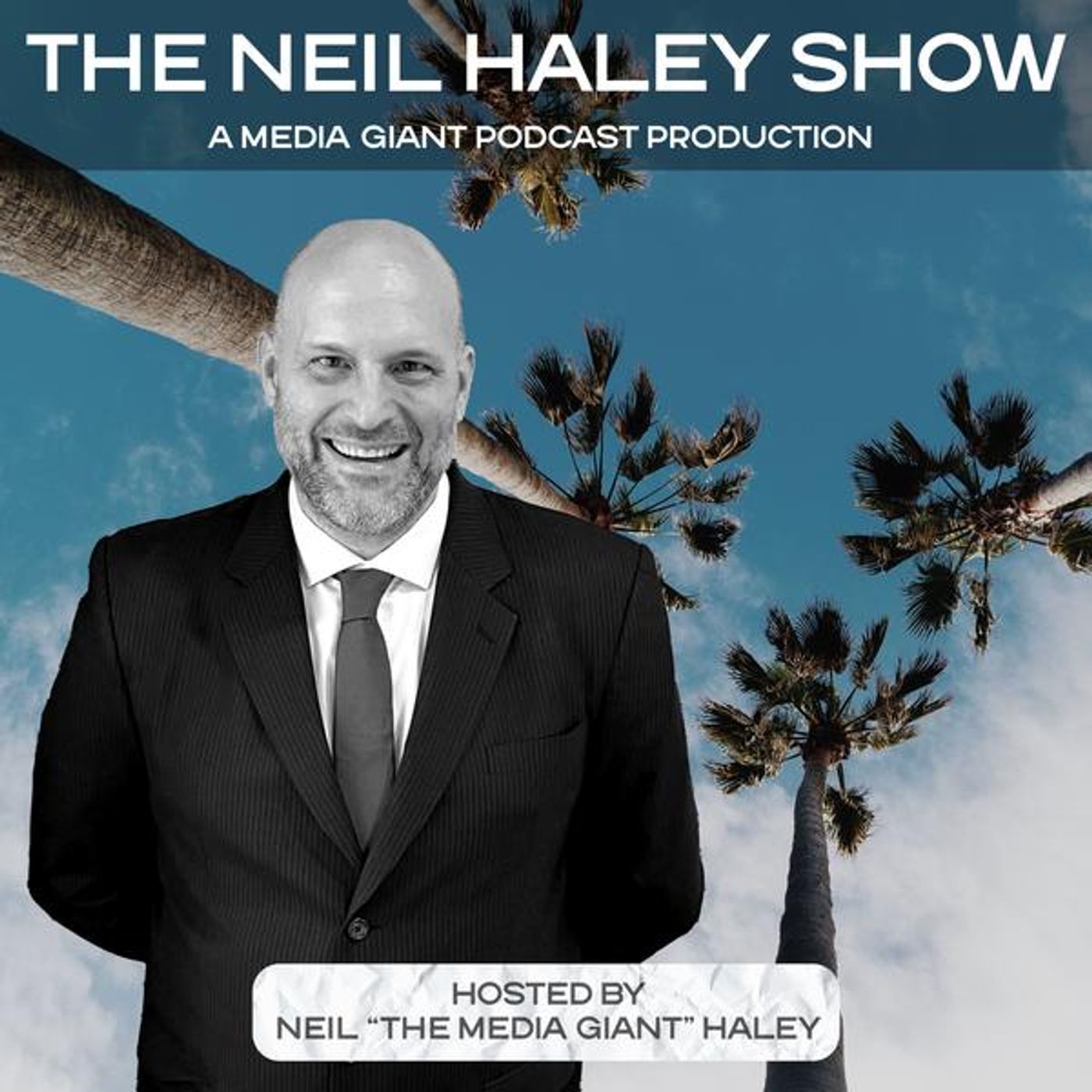
The Neil Haley Show Featuring Dr. Lew Lim, Michael D. Aguas, and Dr. Gilda Carle
Author: Neil Haley
April 29, 2026
Duration: 1:00:01
The Neil Haley Show Featuring Dr. Lew Lim, Michael D. Aguas, and Dr. Gilda Carle
Neil opened with Million Dollar Minutes featuring Dr. Lew Lim, founder and CEO of Vielight Inc., the Toronto-based pioneer of brain photobiomodulation (PBM) technology. Dr. Lim explained that PBM, also known as red light therapy, delivers visible red and near-infrared light to tissues to support healing, with Vielight specifically focused on the brain to address traumatic brain injury, cognition issues, and neurodegenerative diseases like Alzheimer's. He traced his journey back to the mid-1990s when low-level light therapy was emerging primarily in the Soviet bloc, recalling his first profound Alzheimer's case using intranasal delivery.Dr. Lim explained why Vielight stands apart in a crowded red light therapy market: precise calibration of dose, power, wavelength, and pulse frequency, validated through measurable EEG response. He warned that bright red panels often have very little actual power, while the truly therapeutic 810 nanometer near-infrared light is nearly invisible. Too little produces no response and too much creates free radicals, which is why critics calling all red light therapy "snake oil" miss the science.He highlighted brain resilience for athletes in contact sports, warfighters exposed to blast waves, and aging populations. A landmark BYU football team study from the University of Utah showed players using the active Vielight device through a full season had zero signs of inflammation or axonal damage on imaging, while the sham group showed shocking damage from a normal season. Dr. Lim also shared unpublished research with long-term meditators who entered altered states at specific pulse frequencies, opening pathways to engineering "flow states" similar to what elite athletes describe when they can see stitches on a baseball. Vielight devices start at $2,400 at vielight.com.Michael D. Aguas of The Reignstorm Radio returned with a deferred compensation deep dive, defining it as "earning money now, getting paid later" — a flexible non-qualified golden handcuffs strategy that lets business owners reward key employees with future payouts tied to vesting schedules and performance benchmarks. Unlike a 401(k), non-qualified deferred comp can be selectively offered to one or two key employees rather than every staff member. Michael shared an example of a CPA firm building a plan for a younger partner under 35 to lock in a decade-long succession path. The structure benefits law firms, architectural firms, engineering firms, financial advisors, and medical practices.Michael returned for a second segment introducing Section 181 of the tax code, a 2004 provision designed to incentivize US-based independent film production with budgets typically under $25 million. Investors receive full deductions with leveraged returns of roughly four to five dollars per dollar invested. Major Section 181 projects include The Wolf of Wall Street, American Sniper, Black Swan, and Mark Wahlberg's Flight Risk on HBO Max. Michael emphasized the powerful brand benefits of red carpet access, IMDb credits, and film festival invitations including Cannes. Visit reignstormmediagroup.com.The show closed with the Gilda Gram Podcast featuring Dr. Gilda Carle responding to a recent New York case where a judge's son secretly filmed women during sex and is now complaining the system ruined his life rather than acknowledging harm to his victims. Dr. Gilda used the case to spotlight a growing crisis of entitlement among young people, drawing parallels to teens who underwent transition surgery only to detransition in their twenties and blame their parents for permitting it. Citing her recent appearance with Stacy Washington on SiriusXM and the case of Redmond O'Neal, she stressed real parenting requires being friendly toward children rather than friends with them, and that the prefrontal cortex does not fully mature until much later in life.