The Unicorn Project w/ Gene Kim

The Unicorn Project w/ Gene Kim

Author: The OWASP Podcast Series October 16, 2019 Duration: 44:02
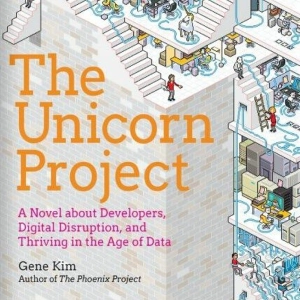
Edwards Deming went to post-war Japan in the late 1940s to help with the census. While there, he built relationships with some of the main manufacturers in the region, helping them understand the value of building quality into a product as part of the production process, thus lowering time to market, eliminating rework and saving company resources. In his 1982 book, "Out of the Crisis", Deming explained in detail why Japan was ahead of the American manufacturing industry and what to do about. His "14 Points on Quality Management" helped revitalize American industry. Unknowingly, he laid the foundation for DevOps 40 years later. Eli Goldratt published "The Goal" in 1984, focusing on the "Theory of Constraints", the idea that a process can only go as fast as it's slowest part. In fictionalized novel form, Goldratt was able to reach a wide audience who would utilize the theory to help find bottlenecks, or constrainsts, within production that were holding back the entire system. Once again, the theories espoused in The Goal were a precursor to the DevOps movement 40 years later. In January 2013, 40 years after Deming and Goldratt reshaped the manufacturing processes in American, Gene Kim published "The Phoexnix Project". He used the same format as Goldratt, telling the story in a fictional novel format with characters who were easily identifiable within the software manufacturing process, from a manager's point of view. The Phoenix Project is now one of the most important books in the industry, and is used as a starting point for companies interested in participating in a DevOps transformation. It's now six years later, 2019. Gene's new book, The Unicorn Project, will be released at the upcoming DevOps Enterprise Summit in Las Vegas on October 28. This new book has an interesting premise: What was going on with the software development team in the Phoenix Project as the management team was flailing to get the project back on track. It's a novel approach to have parallel timelines in separate books, looking at the same project. In this broadcast, Gene and I talk about how the Unicorn Project aligns with the Phoenix Project, the overlap in storylines, and why he chose to speak for software developers in this iteration of the story. Do a quick review of the Phoenix Project, which is probably already on your bookshelf, and then listen in as we discuss using Deming, Goldratt and Kim as the foundation of the principles of the DevOps movement.

Tune in to The OWASP Podcast Series for genuine conversations that go beyond the headlines of cybersecurity. Instead of dry lectures, you'll hear from the people actually building, testing, and defending the software that shapes our world. Each episode sits down with a different practitioner or innovator, pulling insights directly from their daily work and long-term vision. The discussions are grounded in the real challenges of application security, offering practical knowledge and forward-thinking strategies. This podcast provides a unique audio space to understand the evolving threats and defensive techniques critical for our digital infrastructure. You’ll find the dialogue is both technical and accessible, demystifying complex topics through the experiences of those on the front lines. The goal is to share actionable wisdom from the OWASP community and its extended network, focusing on how to create more resilient systems. By listening, you gain a deeper appreciation for the ongoing effort required to secure technology for everyone. It’s an essential resource for developers, security professionals, and anyone curious about the foundational work of safeguarding our connected future. The series turns abstract concepts into tangible lessons, all through the voices of the individuals dedicated to this crucial mission.

Author: Language: English Episodes: 100

The OWASP Podcast Series
Podcast Episodes
ep2024-12 Tanya Janca: Happy Holidays are Secure Code [not-audio_url] [/not-audio_url]

Duration: 1:00:13
Some production issues caused this one to slip to December so the intro is a bit off but this is still a great episode. So, learn some lessons on creating secure code from one of my favorite guests: Tanya Janca. It was h…
ep2024-10 Don't be Scared, It's just a Pen Test with Brad Causey [not-audio_url] [/not-audio_url]

Duration: 37:19
There's no reason to be scared about a pen test - especially when it's run by a professional like Brad Causey. I catch up with Brad in this episode to discuss what's recently changed in pen testing in how you test and pe…
ep2024-09 Threat Modeling with Takaharu [not-audio_url] [/not-audio_url]

Duration: 36:19
What happens when you get interested in Threat Modeling and you want to share. For some, that means you do one work shop, then another, then another. What happens when you start down this path. Takaharu Ogasa tells us wh…
ep2024-08 OWASP Projects Roundup [not-audio_url] [/not-audio_url]

Duration: 36:19
The August episode is a review of projects from a recent OWASP project showcase. We talk to the leaders of the OWASP pytm, OWASP Developer Guide, OWASP State of AppSec Survey Project. Get up on the latest news and update…
ep2024-07 Safety belts for AppSec with Lisa Plaggemier [not-audio_url] [/not-audio_url]

Duration: 32:04
After a long and unplanned pause, the OWASP podast is back with a home run of an episode. We have Lisa Plaggemier as our guest who reprises her eloquent keynote topic from AppSec DC. All hope isn't lost, we are making pr…
ep2023-07 What's Audit got to do with IT [not-audio_url] [/not-audio_url]

Duration: 33:40
In this episode we talk with Zain Haq and take a leap and bound over the first and second line to discover more about the third line - internal audit. We discover answers to a number of questions: What role does audit pl…
AppSec at 40,000 feet [not-audio_url] [/not-audio_url]

Duration: 44:02
In this episode I speak with Jerry Hoff who provides some very interesting perspective on application security especially at scale and from a high level view like that of a CISO. Even if you're not in a senior leadership…