
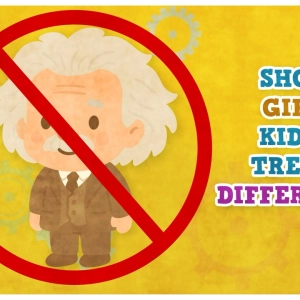
680. Why Should We Protect Gifted and Talented Programs? The Case for Merit in Education

680. Why Should We Protect Gifted and Talented Programs? The Case for Merit in Education

Author: Connor Boyack April 7, 2026 Duration: 13:01

When education systems stop rewarding effort, ability, and achievement, they risk holding back the very students they're meant to help.

Across the country, merit-based education is increasingly under attack — and one of the biggest targets is gifted and talented programs. In cities like New York, policymakers are pushing to eliminate advanced programs in the name of "fairness," raising important questions about what fairness actually means.

In this episode of The Way the World Works, we explore why gifted and talented programs exist, how they help students reach their full potential, and why removing merit-based opportunities can harm both advanced learners and struggling students alike. We break down the difference between equality of opportunity and equality of outcomes, and why trying to make everyone achieve the same results can lead to lower standards and fewer opportunities for growth.

When education shifts from rewarding merit to enforcing equal outcomes, everyone loses.

What You'll Learn in This Episode:

  • What merit-based education means and why it matters
  • How gifted and talented programs help students succeed
  • Why removing academic standards can harm students
  • The difference between equality of opportunity and equality of outcomes
  • How policies based on "fairness" can backfire

Timestamps:

0:00 What Is Merit in Education?
2:30 What Are Gifted and Talented Programs?
5:00 Why These Programs Are Being Targeted
7:30 The Problem With Eliminating Standards
10:00 Equality vs. Equal Outcomes
13:00 The Impact on Students
16:00 Why Merit-Based Systems Matter

👍 Like this video if you believe students should be rewarded for effort and ability
🔔 Subscribe for more values-based conversations about education and opportunity
💬 Comment below: Should schools prioritize merit or equal outcomes?

Shop Resources:

📘 Learn more about merit and opportunity in
The Tuttle Twins and the Golden Rule
https://www.tuttletwins.com/products/the-tuttle-twins-and-the-golden-rule

📚 Get Tuttle Twins books and homeschool resources:
https://tuttletwins.com

Tags:

#GiftedAndTalented #Merit #EducationPolicy #Equality #Opportunity #PublicEducation #CriticalThinking #ValuesEducation


Looking for a way to navigate today’s complex world with your kids? The Way the World Works: A Tuttle Twins Podcast for Families, hosted by Connor Boyack, is here to help. This podcast extends the conversation from the popular book series into your daily life, offering a resource for parents and children to learn together. Each episode dives into current events and enduring ideas, breaking them down into understandable concepts that spark family discussion. The goal is to move beyond the noise and confusion, providing tools for critical thinking and clearer understanding. You’ll hear explorations of history, economics, and personal freedom, all framed in an engaging, age-appropriate manner. This isn’t about dry lectures; it’s about equipping your family with principles to analyze the world around them. Tune in to this podcast for regular episodes that blend education with real-world application, fostering curiosity and meaningful dialogue at home. It’s a natural next step for fans of the Tuttle Twins and a welcoming starting point for any family seeking to build a foundation of knowledge and shared values.
Author: Language: English Episodes: 50

The Way the World Works: A Tuttle Twins Podcast for Families
Podcast Episodes
722. What Do You Call A War That Isn't Called A War? [not-audio_url] [/not-audio_url]

Duration: 14:22
If bombs are dropping and troops are being sent overseas, does it matter what the president decides to call it? Today's episode continues a conversation about war powers: who actually has the constitutional authority to…
721. Is Capitalism Fair and Just? [not-audio_url] [/not-audio_url]

Duration: 14:45
If you built something with your own hands and your own time, who should get to keep it — and does the answer to that question tell you everything you need to know about capitalism? Today's episode tackles a big question…
720. What Is The Bystander Effect? [not-audio_url] [/not-audio_url]

Duration: 10:55
*Would you actually call for help if you saw someone in trouble — or would you quietly assume someone else already had it covered?* Today's episode digs into one of the most eye-opening psychological biases from The Tutt…
719. What If Birthday Parties Were Centrally Planned? [not-audio_url] [/not-audio_url]

Duration: 12:54
You already know exactly what you'd want at your own birthday party — so what happens when a total stranger on the other side of the world tries to plan it for you? Brittany uses birthday parties to explain one of econom…
717. Who Was Madam C.J. Walker? [not-audio_url] [/not-audio_url]

Duration: 10:12
She was born in a Louisiana cotton field to parents who had been enslaved, orphaned by age seven, and married at fourteen to escape an abusive home — yet Madam C.J. Walker became the first self-made female millionaire in…
715. The Man Who Saved Thomas Jefferson's Life [not-audio_url] [/not-audio_url]

Duration: 10:18
In the dead of night, a 26-year-old Virginian heard hoofbeats on the road to Charlottesville and made a split-second choice that may have saved Thomas Jefferson's life. When British troops launched a surprise raid aimed…
714. Why NYC's Socialist Mayor Can't Create More Housing [not-audio_url] [/not-audio_url]

Duration: 14:59
New York City just elected a democratic socialist mayor, and his plan to fix the housing crisis starts with getting rid of the very thing that builds houses: private ownership. Brittany dives into the real-world experime…
713. What Can Legos Teach Us about Innovation? [not-audio_url] [/not-audio_url]

Duration: 10:28
A struggling Danish carpenter lost his business in the Great Depression, watched his workshop burn to the ground twice, and still built one of the most beloved brands on the planet out of tiny plastic bricks. Legos aren'…
