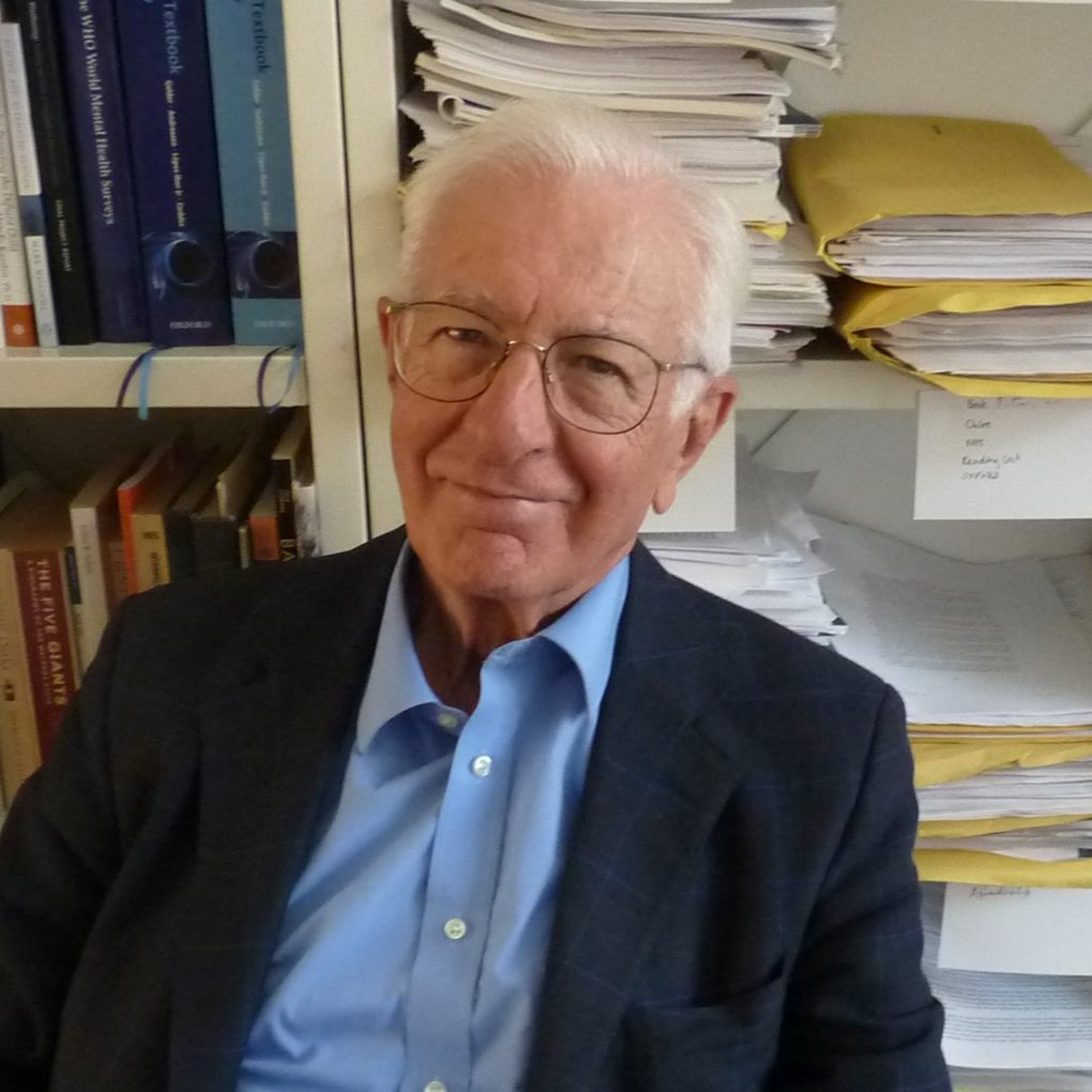
Richard Layard on his life in public service and his pioneering research on happiness

Richard Layard on his life in public service and his pioneering research on happiness

Author: Industrial Relations Section, Princeton University January 8, 2023 Duration: 23:51
Richard Layard, the founding director of the Centre for Economic Performance at the London School of Economics and co-director of the Centre’s Community Wellbeing Programme, joins the podcast to talk to Princeton’s Orley Ashenfelter about his life in public service, his advocacy on behalf of the unemployed, and his pioneering research on happiness, life satisfaction, and mental health. In this episode, Layard and Ashenfelter discuss: • Layard’s role in the Robbins Commission in the early 1960s and the impact it had on higher education in the U.K. • The creation of the “two equation model” for measuring the relationship between inflation and unemployment. • Layard’s research on unemployment benefits and his work organizing protests across England on behalf of the unemployed. • Layard’s pioneering work on life satisfaction and mental health, and his experience evaluating policies for treating anxiety and depression experienced by unemployed workers. Layard first joined the London School of Economics in 1964 and has been a member of the House of Lords since 2000. "The Work Goes On"—a podcast produced as Princeton's Industrial Relations Section (IR Section) celebrates its 100th anniversary—is an oral history of industrial relations and labor economics hosted by Princeton's Orley Ashenfelter. Read the transcript of this interview: https://irs100.princeton.edu/sites/default/files/2023-02/003-TWGO-Richard%20Layard%20episode%20transcript_4.pdf References: • Layard, Richard and George Ward. “Can we be Happier? Evidence and Ethics”. London: Pelican, an imprint of Penguin Books, 2020. • Layard, Richard, Stephen J. Nickell, Werner Eichhorst, and Klaus F. Zimmermann. “Combating Unemployment”. Oxford: Oxford University Press, 2011. • Layard, Richard, Stephen J. Nickell, and Richard Jackman. “Unemployment: Macroeconomic Performance and the Labour Market”. Oxford: Oxford University Press, 2005.

There's a living history in the stories we tell about our jobs, our wages, and the often invisible forces that shape the workplace. The Work Goes On: An Oral History of Industrial Relations and Labor Economics with Princeton’s Orley Ashenfelter is a direct conversation with that history. Produced by Princeton University's Industrial Relations Section, this podcast unfolds through extended, personal interviews conducted by the pioneering economist Orley Ashenfelter. Instead of dry lectures, you'll hear the voices of the field's most influential thinkers, policymakers, and scholars as they recount their own journeys. They share the debates that defined eras, the research that changed policies, and the personal anecdotes behind the economic theories that govern how we work. Each episode is a deep, narrative dive into the human side of labor economics, capturing insights and intellectual turning points that textbooks often miss. Tuning in provides a unique, archival-quality perspective on the ideas and conflicts that built the modern labor landscape, all preserved through the intimate medium of a spoken-word podcast.

Author: Language: English Episodes: 53

The Work Goes On: An Oral History of Industrial Relations and Labor Economics with Princeton’s Orley Ashenfelter
Podcast Episodes
Reuben Gronau on his many contributions to Israeli economic policy [not-audio_url] [/not-audio_url]

Duration: 29:38
Reuben Gronau, Professor of Economics Emeritus at the Hebrew University of Jerusalem, joins the podcast to talk about what inspired his interest in labor economics and his many contributions to Israeli economic policy. R…