This episode is designed for educational and artistic purposes only, to inform mature audiences. It explores ideas related to various substances and must not be interpreted as promoting illegal use or activities. Viewers are responsible for knowing and complying with local laws. If you or someone you know is struggling with mental health, substance use, or addiction, please seek help from a qualified healthcare professional or contact a local support service.
This video is designed for educational and artistic purposes only, to inform mature audiences. It explores ideas related to various substances and must not be interpreted as promoting illegal use or activities. Viewers are responsible for knowing and complying with local laws. If you or someone you know is struggling with mental health, substance use, or addiction, please seek help from a qualified healthcare professional or contact a local support service.'
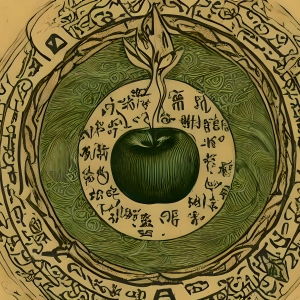
There are places knowledge cannot land, only circle.A thin rim of fog where the instruments fall quiet, and the most honest thing you can do is feel the question without forcing it into an answer.
In this episode, we walk to that threshold: where reductionism reaches its blind spot, where the “hard problem” still burns, and where psychedelics often return people with a strange, luminous certainty not of facts, but of meaning. We explore why metaphor isn’t a decorative flourish, but the mind’s ancient bridge between mechanism and mystery: how symbol becomes the language of what refuses to be measured.
In this episode, we cover:
* Why reductionism reveals precision and erases the lived whole: what it can explain, and what it cannot hold
* The “hard problem” of consciousness: why neural correlates don’t automatically become felt experience
* Thomas Nagel’s “what-it’s-like-ness” and the limits of third-person description when the subject is subjectivity itself
* Psychedelic states as a pressure-test for scientific models: receptors, networks, entropy versus awe, tears, and wordless knowing
* Metaphor as cognitive infrastructure: how the brain translates between domains, and why meaning often arrives as image
* Psychedelic symbolism as necessity, not fantasy: when language collapses and the psyche speaks in archetype, music, and myth
* The ethical power of mystery: why reverence is not anti-science, but the soil from which science grows
* “The map is not the territory”: how models guide and how they can quietly imprison our imagination of reality
If Episode 36 explored consciousness as pattern and feedback, Episode 37 steps further outward toward the edge where pattern becomes poetry, where explanation meets its own horizon, and where wonder returns as a kind of disciplined humility.
Next time, we’ll follow this boundary into the modern labyrinth: how our maps whether digital, algorithmic, predictive—begin to reshape the territory of mind itself.
Get full access to thegreengage at
thegreengage.substack.com/subscribe