Diamonds Are Weirder Than You Think

Diamonds Are Weirder Than You Think

Author: Dustin Driver July 24, 2026 Duration: 8:03
In Neal Stephenson’s science fiction masterpiece The Diamond Age: Or, A Young Lady's Illustrated Primer, microscopic nanobots build fantastic structures and extravagant objects out of diamond. They assemble mile-high buildings atom by atom, constructing colossal translucent towers stronger and more durable than anything we can imagine today. Of course those opulent towers are only accessible to a select few elites and the rest of humanity lives in nightmarish toxic squalor, but the theoretical technology is still fascinating. And its based on the very real and very strange properties of diamonds.   Diamonds are made of carbon, the fourth most abundant element in the universe, and the second most abundant element in your body. It is the key element of life, the backbone of organic chemistry. Carbon is special because it so easily bonds with other elements to create a huge variety of compounds and materials, everything from simple sugars to bones. Of course most recently it has gained fame as the core component of carbon fiber, a super-light and super-strong material made from carbon threads and resin. Carbon fiber’s strength is due in large part to its unique arrangements of carbon atoms. Carbon can bond to itself in many ways, creating complex structures with many different properties. In carbon fiber, the element bonds together to create extremely tough chains that resist stretching. Arrange those atoms differently, however, and you get bizarre and astonishing results.    Diamond is pure carbon arranged in a cubic crystal structure. Each atom is bonded to four other atoms to form a tetrahedron, or pyramid, shape. Carbon in this arrangement is incredibly hard, in fact it’s by far the hardest material we’ve discovered. Hardness is, simply put, how much a material resists denting or scratching. This is a well-known fact; we’ve all seen cat burglars using diamond glass cutters to steal priceless artifacts, or used diamond-coated drill bits or saw blades to cut through tough materials like steel. But diamonds have other amazing properties that are often overlooked.   Diamond has the highest thermal conductivity of any material. That means it can transfer heat better than anything else, which is why real diamonds can feel warm to the touch whereas cheap knockoffs feel cool. To understand just how amazing diamond is at transferring heat, we first need to understand thermal conductivity. Thermal conductivity is measured in Watts per meter-Kelvin, W/mK. A material with a conductivity value of 1 W/mK will transfer heat at a rate of 1 watt for every degree of temperature difference between opposite faces.    That’s all pretty meaningless without a solid example, though. Pure copper, the famously good electrical and thermal conductor, has a conductivity of around 400 W/mK. Gold measures in at 327 W/mK. Diamond, however, has a thermal conductivity between 1,500-2,200 W/mK.   Why can diamond conduct heat so well? Again, the secret lies in its structure. Heat can quickly and easily propagate through its cubic crystal structure in the form of atomic vibrations called phonons. In condensed-matter physics, a phonon is a unit of vibrational energy that arises from oscillating atoms within a crystal. Heat energy zips right through diamond’s crystal lattice.    Electrons, however, can’t travel through diamonds at all. This makes them electrically non conductive, in other words an insulator. Combine high thermal conductivity with zero electrical conductivity and you get a material that’s perfect for dissipating heat away from sensitive electronics. Electrical engineers use diamond to quickly and efficiently channel heat away from sensitive circuitry. These components, called diamond heat spreaders, are used in satellites, airplanes, and other equipment that must endure extreme conditions. They’re also used in high-performance computing, LED lighting systems, electric vehicles, radiofrequency (RF) transmitters, and high-power lasers.  

Dustin Driver hosts This is a Science Show, a space where curiosity meets conversation. It’s built on the idea that genuine discovery begins with admitting what we don’t understand. Each episode brings together leading researchers, thinkers, and storytellers to explore questions that sit at the intersection of hard science and human experience. You’ll hear discussions that range from the practical challenges of climate adaptation to the speculative futures of interstellar settlement and the long-term evolution of our species. This isn't just a lecture series; it’s a collaborative investigation into how scientific inquiry shapes our culture, our stories, and our society. The dialogue is grounded yet imaginative, always returning to that foundational moment of wonder. Tune in for a thoughtful and accessible journey through complex ideas, where every conversation is an invitation to think more deeply about our world and what lies beyond. This podcast thrives in the territory between known facts and the vast unknown, making the profound both engaging and relatable for anyone who’s ever looked up at the night sky and wondered.
Author: Language: English Episodes: 35

This is a Science Show
Podcast Episodes
Why is fusion power taking so long? With John McCone [not-audio_url] [/not-audio_url]

Duration: 26:28
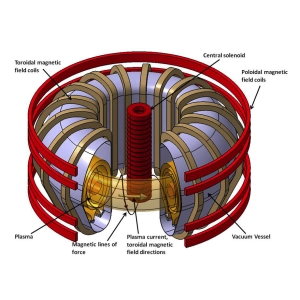
Holding a miniature sun in a magnetic bottle isn't easy. But that's how you make a fusion reactor. In this episode I chat with plasma physicist John McCone about the challenges of building a functional fusion reactor. We…
What‘s the Deal with Dieselgate? [not-audio_url] [/not-audio_url]

Duration: 23:25
In 2015, the world's second largest car maker got caught cheating on emissions tests. It was bad. Really, really bad. VW diesel cars were cranking out toxic levels of nitrous oxides—and not the happy laughing gas kind. T…
Is alcohol poison? [not-audio_url] [/not-audio_url]

Duration: 18:13
This summer a lot of science news bubbled up out of the quantum foam, but the one thing that really caught my attention was booze. And not Oregon’s world-famous craft beers. A study landed that allegedly found that any a…
Why is raccoon scat deadly? [not-audio_url] [/not-audio_url]

Duration: 16:03
That’s the bone-chilling shriek of America’s favorite pest, the trash panda. Or Raccoon. And while they may sound like demons shredding the flesh from helpless babes, there’s something even more terrifying about them: Th…
Should we make a humanzee? [not-audio_url] [/not-audio_url]

Duration: 20:19
Psychologist and author David P. Barash recently wrote an article for Nautilus Magazine arguing that now is the time to make a humanzee. I wrote a story about an experiment gone horribly wrong. How are they related? List…
What is CRISPR? With Sam Sternberg [not-audio_url] [/not-audio_url]

Duration: 45:22
No fancy sci-fi introduction is needed this time, folks, because today we have world-renown CRISPR expert Sam Sternberg. Sam worked with biochemist, author, and science celebrity Jennifer Doudna to refine CRISPR gene edi…
Can you teach a computer to talk? With Kelly Davis [not-audio_url] [/not-audio_url]

Duration: 1:01:53
In this episode I had the opportunity to chat with the head of the Common Voice project, Kelly Davis. Kelly is a trained physicist who studied string theory before getting hooked on artificial intelligence in the late ‘9…
Is fusion power right around the corner? [not-audio_url] [/not-audio_url]

Duration: 7:38
Nuclear fusion technology could herald a golden age of energy that will make the fossil fuel age look like the stone age! That’s right, limitless carbon-free energy for everyone, all thanks to the hard work of genius nuc…
Are we doomed to nuclear apocalypse? [not-audio_url] [/not-audio_url]

Duration: 7:49
Are we headed for nuclear apocalypse? Everybody’s favorite crony capitalist and democratically elected dictator Vladimir Putin just announced an all-new nuclear-powered cruise missile that can hit any target on earth. Th…
Can you clone your dog? [not-audio_url] [/not-audio_url]

Duration: 4:37
Barbra Streisand cloned her favorite dog and things didn’t turn out as expected. Why? And How? And, most importantly, Whuuuuuuuut? First, Streisand revealed in a recent interview with Variety Magazine that she had her re…