GenAI: Killing Craft

GenAI: Killing Craft

Author: Dustin Driver August 6, 2026 Duration: 10:47
When I was about eight years old, I became irrationally upset by the fact that I had all these fantastic stories and ideas swirling around in my head that required real work to become, well, real. Why was I gifted with such a fabulous imagination in a world that completely ignored my thoughts? I even wrote an essay about it, titled something like, “On the Extreme Frustration of Not Being Able to Manipulate Reality with my Mind.” As painful as this realization was, I persevered and eventually either learned to do the work or accepted the fact there are some things I simply cannot do. Today, though, it feels like we’re all at the mercy of that 8-year old’s irrational feelings in the form of GenAI. In the minds of many, GenAI represents a kind of magical power that bypasses the messy and difficult process of craft and simply creates the wildest dreams out of thin air. It’s an undeniably alluring idea, which is one reason the whole world is shoveling money into it like a stoker shoveling coal into a runaway train’s boiler.  But for many of us creative types, the craft is the fun part. We enjoy tediously picking away at prose to make it tighter, more understandable, more relatable. We love pushing pixels to make our digital art perfect on a level no one else will ever notice. The craft is cathartic and human and the reason we all got into this in the first place. It brings us joy and peace, distracts us from our overactive and hypercritical minds. So our hearts fall and our souls whither when they tell us, “just put that paragraph in ChatGPT and ask it to streamline the text.” Because for us, pouring over every word and space in a paragraph is the good part of the job. GenAI is made to optimize outcomes and maximize profits. Both of these are of course necessary in a world driven by profits, but creative professionals try to at least shoehorn some humanity into the work, to create some kind of connection. And making those human connections requires human effort, not just probabilistic guesses from a machine. It requires careful thinking and arduous tinkering. This toiling and tinkering also creates a sort of insulation between us (the artists) and the ultimate purpose of our corporate/commercial work. If we can focus on these tiny turns of phrases or minute adjustments to kerning, we can create distance between us and the cold machinery of capitalism. This is the creative process and it’s why we do what we do. This desire to eliminate creativity in the name of production is why I loathe GenAI. I also hate how it has stolen the work of countless humans, dumped it into a mathematical meat grinder, and excreted unimaginable amounts of inedible creative sausage. I am also keenly aware that this process consumes gigawatts of energy and millions of gallons of water (even if it isn’t strictly drinking water). GenAI is not only anti creativity, it’s horrifically inefficient. According to the International Energy Agency, a typical AI-focused hyperscaler data center uses as much electricity as 100,000 households. In comparison, a single human brain, which is capable of everything from scoring 100 points in a basketball game to coming up with General Relativity, consumes about 20 watts. It can also navigate the real world, remember things, and have experiences. The human brain is a miracle and to offload so much of its creativity to an inefficient machine in the name of production and progress is heartbreaking and criminal.  Don’t get me wrong, I believe there are real uses for machine learning and GenAI. Both technologies can be used to model and improve systems and can be invaluable in doing many things in science, like identifying new galaxies in old telescope data or finding cancer cells hidden in medical scans. It can be a tremendous boon for any task that requires sifting through unimaginable amounts of data, or for helping humans comprehend huge, complex systems. It can help in ways I can’t even begin to fathom because I’m

Dustin Driver hosts This is a Science Show, a space where curiosity meets conversation. It’s built on the idea that genuine discovery begins with admitting what we don’t understand. Each episode brings together leading researchers, thinkers, and storytellers to explore questions that sit at the intersection of hard science and human experience. You’ll hear discussions that range from the practical challenges of climate adaptation to the speculative futures of interstellar settlement and the long-term evolution of our species. This isn't just a lecture series; it’s a collaborative investigation into how scientific inquiry shapes our culture, our stories, and our society. The dialogue is grounded yet imaginative, always returning to that foundational moment of wonder. Tune in for a thoughtful and accessible journey through complex ideas, where every conversation is an invitation to think more deeply about our world and what lies beyond. This podcast thrives in the territory between known facts and the vast unknown, making the profound both engaging and relatable for anyone who’s ever looked up at the night sky and wondered.
Author: Language: English Episodes: 35

This is a Science Show
Podcast Episodes
Why is fusion power taking so long? With John McCone [not-audio_url] [/not-audio_url]

Duration: 26:28
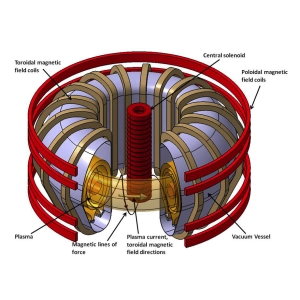
Holding a miniature sun in a magnetic bottle isn't easy. But that's how you make a fusion reactor. In this episode I chat with plasma physicist John McCone about the challenges of building a functional fusion reactor. We…
What‘s the Deal with Dieselgate? [not-audio_url] [/not-audio_url]

Duration: 23:25
In 2015, the world's second largest car maker got caught cheating on emissions tests. It was bad. Really, really bad. VW diesel cars were cranking out toxic levels of nitrous oxides—and not the happy laughing gas kind. T…
Is alcohol poison? [not-audio_url] [/not-audio_url]

Duration: 18:13
This summer a lot of science news bubbled up out of the quantum foam, but the one thing that really caught my attention was booze. And not Oregon’s world-famous craft beers. A study landed that allegedly found that any a…
Why is raccoon scat deadly? [not-audio_url] [/not-audio_url]

Duration: 16:03
That’s the bone-chilling shriek of America’s favorite pest, the trash panda. Or Raccoon. And while they may sound like demons shredding the flesh from helpless babes, there’s something even more terrifying about them: Th…
Should we make a humanzee? [not-audio_url] [/not-audio_url]

Duration: 20:19
Psychologist and author David P. Barash recently wrote an article for Nautilus Magazine arguing that now is the time to make a humanzee. I wrote a story about an experiment gone horribly wrong. How are they related? List…
What is CRISPR? With Sam Sternberg [not-audio_url] [/not-audio_url]

Duration: 45:22
No fancy sci-fi introduction is needed this time, folks, because today we have world-renown CRISPR expert Sam Sternberg. Sam worked with biochemist, author, and science celebrity Jennifer Doudna to refine CRISPR gene edi…
Can you teach a computer to talk? With Kelly Davis [not-audio_url] [/not-audio_url]

Duration: 1:01:53
In this episode I had the opportunity to chat with the head of the Common Voice project, Kelly Davis. Kelly is a trained physicist who studied string theory before getting hooked on artificial intelligence in the late ‘9…
Is fusion power right around the corner? [not-audio_url] [/not-audio_url]

Duration: 7:38
Nuclear fusion technology could herald a golden age of energy that will make the fossil fuel age look like the stone age! That’s right, limitless carbon-free energy for everyone, all thanks to the hard work of genius nuc…
Are we doomed to nuclear apocalypse? [not-audio_url] [/not-audio_url]

Duration: 7:49
Are we headed for nuclear apocalypse? Everybody’s favorite crony capitalist and democratically elected dictator Vladimir Putin just announced an all-new nuclear-powered cruise missile that can hit any target on earth. Th…
Can you clone your dog? [not-audio_url] [/not-audio_url]

Duration: 4:37
Barbra Streisand cloned her favorite dog and things didn’t turn out as expected. Why? And How? And, most importantly, Whuuuuuuuut? First, Streisand revealed in a recent interview with Variety Magazine that she had her re…