How do squids change their own DNA?

How do squids change their own DNA?

Author: Dustin Driver June 14, 2020 Duration: 8:52
When you edit DNA, it’s permanent. The cell you edit will be changed forever, or at least until it dies. But what if there was a less-permanent way to edit genes?  There is, actually. It’s called RNA editing and it happens quite a bit in our own cells. RNA is the go-between in protein synthesis. DNA codes to RNA, which then codes to specific proteins. Proteins are what we’re all about, so if you alter anything in that production chain, you can potentially change the entire organism. In nature, RNA editing happens in that stage between DNA and protein synthesis. Here’s how it works: Imagine protein synthesis: DNA unravels and pairs up with messenger RNA. That RNA breaks off and goes to assemble some protein. Before it can, some sneaky enzymes jump in and make some changes to the RNA. Thanks to those changes, the RNA makes a new protein—one that isn’t coded in the DNA.  Why would this happen? Multicellular organisms like you and me are super complicated. We require lots of different kinds of proteins to function—more than our DNA actually codes for, in fact. RNA editing is a way to get more variety out of a limited amount of DNA. It gives us more adaptability. For example, we’ve found that liver and intestinal cells share the same DNA for a particular protein, yet make different versions of it. In the liver, the protein carries cholesterol in the bloodstream. In the intestine, thanks to some RNA editing magic, a shortened version of the protein absorbs lipids—like a fat sponge—before they move into the bloodstream. Same DNA, different protein. Last episode I said we’d be talking squids. Scientists at the Marine Biological Laboratory in Woods Hole, Massachusetts discovered this RNA editing in squids a few years back. An article published in Wired in May suggests that the discovery was recent, but Joshua Rosenthal and his colleagues announced their discovery in March, 2019. At any rate, they found this kind of RNA editing in squid axons—the long skinny filament-like cells that connect neurons in the brain and nervous system. It’s the first time anyone has seen so much of it. They estimate that more than 60,000 cells in the squid’s brain use RNA editing, giving them a tremendous amount of adaptability.  Is this even more evidence that cephalopods are from another planet? Or perhaps they are actually earth’s supreme species, more advanced than us talking monkeys. But probably not. They are definitely more well adapted to life in the ocean, and they may be more genetically complex, but they’re not more advanced. In fact, the term “advanced” is meaningless in evolutionary terms. There are just too many factors to measure. Are we talking smarter? Or better at adapting to the environment? If it’s smarts, we win. But bacteria win when it comes to adapting to their environments, no contest.  But I digress.  Rosenthal and his colleagues hope to figure out how RNA editing works in squids so they can do the same thing in other animals and humans. Like some kind of Island of Dr. Moreaux scenario? Not really. Many genetic diseases could be treated with RNA editing. And because you’re not changing cell DNA, your changes wouldn’t be permanent. Wait, wouldn’t you want to permanently fix a genetic disorder? We simply don’t know the long-term effects of modifying DNA directly. A DNA treatment could reverse a genetic disorder, but cause cancer down the line. We just don’t know. RNA editing, on the other hand, would be safer. If doctors encountered any issues with the treatment, they could stop right away without causing permanent damage.  “RNA editing is a hell of a lot safer than DNA editing. If you make a mistake, the RNA just turns over and goes away,” said Rosenthal in the Wired article. You can read the article by Eric Niiler at Wired.com, and you can learn a ton more about RNA editing at Chemical Engineering News. Links in the show notes.  I also found an awesome YouTube channel that delves into the nitty-gritty of RNA editing.  Sh

Dustin Driver hosts This is a Science Show, a space where curiosity meets conversation. It’s built on the idea that genuine discovery begins with admitting what we don’t understand. Each episode brings together leading researchers, thinkers, and storytellers to explore questions that sit at the intersection of hard science and human experience. You’ll hear discussions that range from the practical challenges of climate adaptation to the speculative futures of interstellar settlement and the long-term evolution of our species. This isn't just a lecture series; it’s a collaborative investigation into how scientific inquiry shapes our culture, our stories, and our society. The dialogue is grounded yet imaginative, always returning to that foundational moment of wonder. Tune in for a thoughtful and accessible journey through complex ideas, where every conversation is an invitation to think more deeply about our world and what lies beyond. This podcast thrives in the territory between known facts and the vast unknown, making the profound both engaging and relatable for anyone who’s ever looked up at the night sky and wondered.
Author: Language: English Episodes: 33

This is a Science Show
Podcast Episodes
Can we burn metal as fuel? [not-audio_url] [/not-audio_url]

Duration: 23:16
Even if we stick solar panels on every roof in the world, we’d still need a way to store energy to use when it gets dark. And a way to use that energy later to do more than just power a lightbulb—to do things like power…
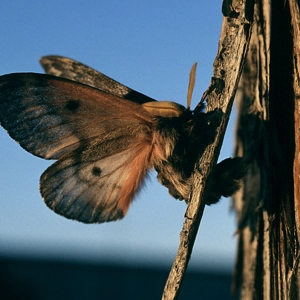
What‘s a pandora moth? [not-audio_url] [/not-audio_url]

Duration: 24:19
I caught the tail end of the Pandora moth outbreak on a recent visit to Bend, Oregon. I lived in Bend for almost five years without seeing a single Pandora moth. This summer I saw thousands littering the streets and park…
Can we go completely solar? With John McCone [not-audio_url] [/not-audio_url]

Duration: 1:10:44
In this podcast I talk to scientist and philosopher John McCone about his excellent article “Blueprint for a Solar Economy.” John outlines a way to transition from fossil fuels to solar power using some of our existing f…
Will climate change destroy humanity? [not-audio_url] [/not-audio_url]

Duration: 34:33
For the first time in human history, the concentration of CO2 in the atmosphere is 415 ppm. But what does that mean? Are we doomed to suffocate under a blanket of carbon, slowly cooking to death as the planet melts away…
Superhero Science: Monica Rambeau aka Spectrum [not-audio_url] [/not-audio_url]

Duration: 29:49
Carol Danvers isn't the most powerful Captain Marvel. That honor may just go to Monica Rambeau, the second Captain Marvel. She can transform into and manipulate any form of energy in the electromagnetic spectrum.
What‘s an analog computer? [not-audio_url] [/not-audio_url]

Duration: 16:14
Digital is the past—the future is analog. Crackling, hissing, buzzing, messy, full-spectrum analog. The arcane electronic contraptions put people on the moon and they could be the key to true AI, perfect biological simul…
Superhero Science: Captain Marvel [not-audio_url] [/not-audio_url]

Duration: 16:07
She can punch through interstellar dreadnaughts like they were tissue paper, fire photon blasts that vaporize steel, and propel herself across the galaxy. She’s the most powerful superhero in the Marvel Cinematic Univers…
What is reality? [not-audio_url] [/not-audio_url]

Duration: 17:54
Dreamworlds are notoriously fickle. They exist solely in our minds, and thus aren’t grounded in any objective reality. In a very real sense, the act of observing something in a dream DOES change it because the dream and…
Why is fusion power taking so long? With John McCone [not-audio_url] [/not-audio_url]

Duration: 26:28
Holding a miniature sun in a magnetic bottle isn't easy. But that's how you make a fusion reactor. In this episode I chat with plasma physicist John McCone about the challenges of building a functional fusion reactor. We…
What‘s the Deal with Dieselgate? [not-audio_url] [/not-audio_url]

Duration: 23:25
In 2015, the world's second largest car maker got caught cheating on emissions tests. It was bad. Really, really bad. VW diesel cars were cranking out toxic levels of nitrous oxides—and not the happy laughing gas kind. T…