373. Robert Merry: How Massachusetts and South Carolina Led the Way to Civil War

373. Robert Merry: How Massachusetts and South Carolina Led the Way to Civil War

Author: Town Hall Seattle September 19, 2024 Duration: 57:59

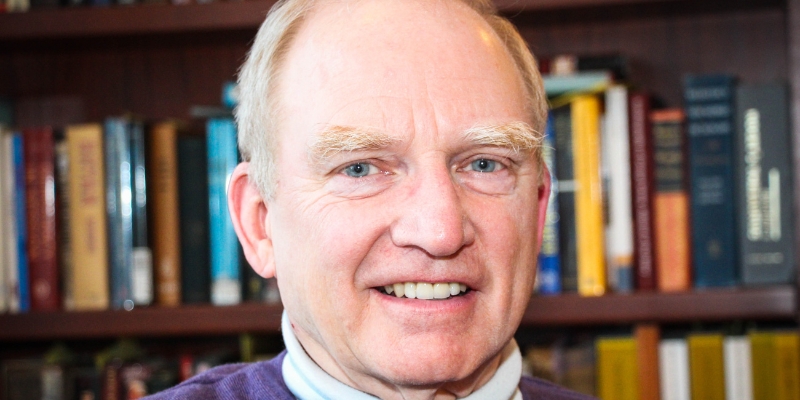
Headshot of Roberyt W. Merry (with fair skin & hair) in front of a background of full bookshelves

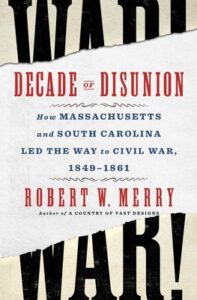
In his new book, Decade of Disunion, Robert W. Merry explores the critical lessons from the 1850s when the United States faced a growing crisis over slavery.

The Mexican War's vast new territories sparked debates on expanding slavery, clashing with the 1820 Missouri Compromise. Key events such as the Compromise of 1850, the 1854 repeal of the Missouri Compromise, the 1857 Dred Scott decision, and John Brown's 1859 raid heightened tensions, leading to violent conflicts and further division between North and South.

Merry focuses on the contrasting roles of South Carolina and Massachusetts. South Carolina, reliant on slave labor, debated secession, while Massachusetts became an antislavery stronghold, questioning the Constitution's role in abolishing slavery. These states' actions widened the national divide, making disunion inevitable. In December 1860, South Carolina's secession following Abraham Lincoln's election triggered the South's departure from the Union. Through the lens of key figures, Merry underscores the fragile nature of democracy and the continuous effort required to sustain it.

Robert W. Merry spent 45 years in Washington, D.C., as a Wall Street Journal reporter and executive at Congressional Quarterly, including 12 years as CQ's president and editor-in-chief. After CQ was sold to the Economist, he also served as editor of the polemical magazines The National Interest and The American Conservative. He is the author of six books on American history and foreign policy, including the forthcoming Decade of Disunion: How Massachusetts and South Carolina Led the Way to Civil War, 1849-1861.


Recorded live from a historic venue in the Pacific Northwest, the Town Hall Seattle Civics Series podcast brings the stage to your headphones. Each episode captures a vital conversation from Town Hall Seattle's ongoing programming, where experts, activists, and thinkers grapple with the ideas shaping our collective life. You’ll hear historians reframe our past, legal scholars dissect constitutional questions, and community organizers explain the mechanics of emerging movements. This isn't just theoretical discussion; it's a direct engagement with the policies and cultural shifts that touch our neighborhoods and the wider world. Tuning in feels like finding a seat in a thoughtful, often provocative public forum. The series operates on a belief that an informed community is an empowered one, and this audio archive makes that process accessible to anyone, anywhere. By focusing on the substance of live civic dialogue, this podcast provides the context and depth often missing from daily headlines, fostering a deeper understanding of how society functions and changes.

Author: Language: English Episodes: 100

Town Hall Seattle Civics Series
Podcast Episodes
356. Dr. Rajiv Shah with Eric Liu: Charting a Course for Change [not-audio_url] [/not-audio_url]

Duration: 1:16:34
Ever wondered how a leader orchestrates large-scale change on a global scale? In his new book, Big Bets: How Large-Scale Change Really Happens, Rajiv J. Shah, President of the Rockefeller Foundation and former administra…
355. Barbara McQuade with Jenny Durkan: In Search of Truth [not-audio_url] [/not-audio_url]

Duration: 1:06:51
The subject of disinformation is a well-known part of political rhetoric, but it has implications even outside of the sphere of democracy. From the electoral system to schools; from the workplace to hospitals, the conseq…
354. Michael J. Gerhardt: The Law of Presidential Impeachment [not-audio_url] [/not-audio_url]

Duration: 57:09
Have you ever wondered how impeachment really works? As a witness and consultant in the impeachment trials of Bill Clinton and Donald Trump, legal scholar Michael J. Gerhardt has collected a lifetime of scholarly researc…
352. Boldt at 50 [not-audio_url] [/not-audio_url]

Duration: 1:20:50
Commemorate the 50th anniversary of the Boldt Decision, a pivotal moment in civil rights history and tribal sovereignty. Centered around Charles Wilkinson's posthumously acclaimed work, Treaty Justice, a panel will discu…
351. Ijeoma Oluo with Michele Storms: Be a Revolution [not-audio_url] [/not-audio_url]

Duration: 1:28:07
Ijeoma Oluo's #1 New York Times bestseller So You Want To Talk About Race (book tour event at Town Hall in 2019), offered a vital guide for how to talk about important issues of race and racism in society. In Mediocre: T…
350. Tamara Payne with Glenn Hare: The Life and Legacy of Malcolm X [not-audio_url] [/not-audio_url]

Duration: 1:10:35
In 1990, Pulitzer Prize-winning investigative journalist Les Payne embarked on a nearly thirty-year-long quest to interview anyone he could find who had actually known Malcolm X. His goal was ambitious: to transform what…
349. Tim Schwab with Ashley Fent: The Problem with Philanthropy [not-audio_url] [/not-audio_url]

Duration: 1:28:48
Journalist Tim Schwab is no stranger to investigative journalism that scrutinizes power structures and questions how private interests intersect with public policy. With funding from a 2019 Alicia Patterson Fellowship, S…
348. Ganesh Sitaraman with Paul Constant: Why is Flying so Miserable? [not-audio_url] [/not-audio_url]

Duration: 49:16
It is among the most classically joked about modern grievances, air travel. Between flight cancellations, delays, lost baggage, increased prices, crammed planes, and the general downtrodden gloom that accompanies flying,…
347. Betty Houchin Winfield: Pioneering Women in Academia [not-audio_url] [/not-audio_url]

Duration: 53:11
Starting in 1967, when fewer than 1% of women completed any education beyond four years of college, the Washington State University (WSU) Sociology Department dared to hire three female faculty members who became lifelon…
