395. Nilanjana Dasgupta with Paula Boggs: How Small Changes Can Make a Big Impact

395. Nilanjana Dasgupta with Paula Boggs: How Small Changes Can Make a Big Impact

Author: Town Hall Seattle October 2, 2025 Duration: 1:07:17

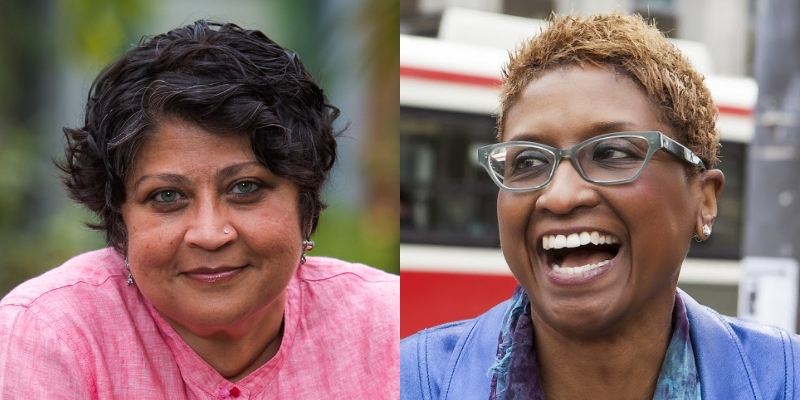
Headshots of Nilanjana Dasgupta (with brown skin, short black hair) and Paula Boggs (with dark skin, short blonde hair, and eyeglasses)

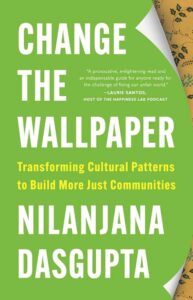
How can one person fight for social justice? Can everyday people actually make changes in systemic, structural inequality? Social psychologist and author of the book Change the Wallpaper, Nilanjana Dasgupta offers science-driven answers to these questions, arguing that social shifts start with small changes to our "wallpaper," or the things that we experience in our daily lives. In other words, we need to revise the hyperlocal cultures we live in to make broader change.

Dasgupta believes that these small shifts in our cultural "wallpaper" are far more effective in producing structural change than through popular movements such as bias awareness training, symbolic proclamations, or even just relying on people's good intentions. By integrating a wide range of studies in psychology, neuroscience, education, sociology, economics, public health, urban studies, cultural geography, and even landscape architecture, Dasgupta shows how attitudes and beliefs are based on what we see and hear every day. They nudge our behavior to create or reinforce small inequalities that go unnoticed and ultimately accumulate over time. So, how do we change our wallpaper?

By consciously disrupting these patterns and habits, Dasgupta argues, we can create opportunities for social mixing across lines of differences, allowing new relationships to form, and promoting a better understanding of others' experiences. These actions lead to organizing and larger social shifts. It's through these small changes in our daily lives, Dasgupta explains, that we can all work toward justice.

Nilanjana Dasgupta, author of Change the Wallpaper, is Provost Professor of Psychology and inaugural Director of the Institute of Diversity Sciences at the University of Massachusetts Amherst. She is the author of many articles, the winner of the Hidden Bias Research Prize from the Kapor Foundation, and the recipient of multiple U.S. government research grants. Her work has been featured in the New York Times and other major outlets.

Paula Boggs is the founder of Boggs Media LLC. A TEDx speaker, U.S. Army veteran, and musician, she previously served for a decade as Executive Vice President, General Counsel, and Secretary at Starbucks Corporation. Her career spans roles as Vice President Legal at Dell, law firm partner, Assistant U.S. Attorney, and U.S. Army captain. Appointed by President Obama to the President's Committee on the Arts and Humanities, she actively serves on multiple nonprofit and corporate boards.


Recorded live from a historic venue in the Pacific Northwest, the Town Hall Seattle Civics Series podcast brings the stage to your headphones. Each episode captures a vital conversation from Town Hall Seattle's ongoing programming, where experts, activists, and thinkers grapple with the ideas shaping our collective life. You’ll hear historians reframe our past, legal scholars dissect constitutional questions, and community organizers explain the mechanics of emerging movements. This isn't just theoretical discussion; it's a direct engagement with the policies and cultural shifts that touch our neighborhoods and the wider world. Tuning in feels like finding a seat in a thoughtful, often provocative public forum. The series operates on a belief that an informed community is an empowered one, and this audio archive makes that process accessible to anyone, anywhere. By focusing on the substance of live civic dialogue, this podcast provides the context and depth often missing from daily headlines, fostering a deeper understanding of how society functions and changes.
Author: Language: English Episodes: 100

Town Hall Seattle Civics Series
Podcast Episodes
325. Simon Johnson: Can AI Power Up Progress? [not-audio_url] [/not-audio_url]

Duration: 57:24
With today's emerging technologies, including things like artificial intelligence, are quickly becoming mainstream. AIs like ChatGPT, the chatbot that can produce answers to questions and write essays and poems, have bec…
325. Raja Shehadeh: A Portrait of a Palestinian Father and Son [not-audio_url] [/not-audio_url]

Duration: 52:47
In his life, Aziz Shehadeh was many things — among them a lawyer, a political detainee, and the father of activist and author, Raja Shehadeh. Raja's latest book, We Could Have Been Friends, My Father and I, is a subtle p…
323. S. C. Gwynne: The Tragic Tale of British Airship R101 [not-audio_url] [/not-audio_url]

Duration: 52:27
Airships, those airborne leviathans that occupied center stage in the world in the first half of the twentieth century, were a symbol of the future. The British airship R101 was not just the largest aircraft ever to have…
320. Gregory Smithers with Hailey Tayathy: Decolonizing Gender [not-audio_url] [/not-audio_url]

Duration: 1:02:09
Before 1492, hundreds of Indigenous communities across North America included people who identified as neither male nor female, but both. They went by aakíí'skassi, miati, okitcitakwe, or one of the hundreds of other tri…
319. Nate G. Hilger with George Durham: The Parent Trap [not-audio_url] [/not-audio_url]

Duration: 1:00:13
Few people realize that raising children is the single largest industry in the United States. Parents are expected not only to care for their children but to help them develop the skills they will need to thrive in today…
318. Nate Gowdy: The Insurrection in Photos [not-audio_url] [/not-audio_url]

Duration: 1:08:19
Nate Gowdy had previously photographed 30 Donald Trump rallies. He thought he was fully prepared for what should have been the grand finale, but the events that unfolded on January 6th, 2021, were more than anyone could…
