Kabbalah and the Rupture of Modernity

Kabbalah and the Rupture of Modernity

Author: Tradition Online December 22, 2025 Duration: 1:01:25

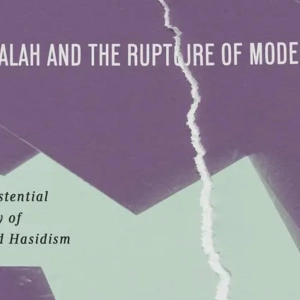
Eli Rubin’s Kabbalah and the Rupture of Modernity (Stanford University Press) presents a groundbreaking study of Chabad Hasidism. Through close readings of primary texts, historical analysis, and engagement with modern philosophy, Rubin, a scholar and Chabad insider, traces the historical evolution of the movement’s theology. The result is an indispensable work for anyone wanting to better understand Chabad’s intellectual and historical trajectory.

Todd Berman, author of a recent TRADITION review of Rubin’s book, conducted an in-depth interview with the author at Yeshivat Eretz HaTzvi. The discussion examined Rubin’s argument that modernity, viewed through the Kabbalistic lens of tzimtzum and cosmic “rupture,” profoundly reshaped modern thought in addition to the inner intellectual life of Chabad-Lubavitch and its spiritual vision. A key focus of the conversation was how Rubin’s ideas speak to the challenges faced by young Modern Orthodox students and how mystical and existential thought can enrich their search for meaning, faith, and identity in the modern world.

Rabbi Eli Rubin is a contributing editor at Chabad.org. He received his Ph.D from University College London. 

Rabbi Todd Berman is the Director of Institutional Advancement at Yeshivat Eretz HaTzvi where he teaches Jewish Thought and Halakha.

The conversation was recorded live at Jerusalem’s Yeshivat Eretz HaTzvi on December 4, 2025, and contains questions from students in the audience.

The post Kabbalah and the Rupture of Modernity appeared first on Tradition Online.


The Tradition Podcast extends the deep, considered conversation of its long-standing journal into an audio format. Each episode draws from the rich well of Orthodox Jewish thought, but frames these ideas for a contemporary listener grappling with modern questions. You'll hear discussions that sit at the intersection of ancient texts and present-day life, where timeless philosophy meets current ethical dilemmas, historical context informs cultural shifts, and spiritual inquiry finds practical expression. This isn't about delivering simple answers, but rather exploring the nuanced arguments and diverse perspectives that have defined a living tradition for centuries. The podcast naturally delves into the same rigorous topics as the journal-Jewish law, theology, societal trends, and moral philosophy-but with the accessible, engaging flow of a spoken dialogue. It’s for anyone curious about how a vibrant intellectual and religious tradition navigates the complexities of the human experience, offering thoughtful reflection that resonates far beyond the page. Tune in for a series that honors the depth of its source material while creating a new space for auditory learning and reflection.
Author: Language: English Episodes: 12

Tradition Podcast
Podcast Episodes
Rav Moshe’s Legacy [not-audio_url] [/not-audio_url]

Duration: 19:13
Ta’anit Esther marks the 40th Yahrzeit of Rav Moshe Feinstein zt”l. Those old enough to remember his passing no doubt recall the feeling of colossal loss for the Gadol and Posek HaDor. But, now, four decades on, we must…
Understanding a Jewish Philosophy of Man [not-audio_url] [/not-audio_url]

Duration: 45:48
This episode of the Tradition Podcast opens with the voice of Rabbi Joseph B. Solovetichik, recorded in 1958, the very year our Journal of Orthodox Jewish Thought was founded. The Rav was speaking as part of a series of…
New/Old American-Jewish Realities [not-audio_url] [/not-audio_url]

Duration: 25:57
For much of the modern era, Jewish life rested, quietly but decisively, on an implicit promise. Power would be constrained by law. The State would bind itself to rules not solely invented for its own advantage. The weak…
A Jewish Philosophy of Man (E3): Three Approaches to Man [not-audio_url] [/not-audio_url]

Duration: 1:50:46
A Lecture Series by Rabbi Joseph B. Soloveitchik Lecture 3: Delivered December 4, 1958 Modern philosophy knows of three approaches to the question, what is Man: the Biblical, the Classical Greek, and the modern scientifi…