It’s the Feast of Septuagesima Sunday, 2nd Class, with the color of Violet. In this episode: the meditation: “The Calming of the Storm”, today’s news from the Church: “From Rerum Novarum to Dilexi Te – Conference by Fr. Bernard de Lacoste”, and today’s thought from the Archbishop.
Have feedback or questions about the DD or our other shows? podcast@sspx.org
Sources Used Today:
- “The Calming of the Storm” – From Epiphany to Lent
- “From Rerum Novarum to Dilexi Te – Conference by Fr. Bernard de Lacoste” (FSSPX.news)
- The Spiritual Life – Archbishop Lefebvre (Angelus Press)
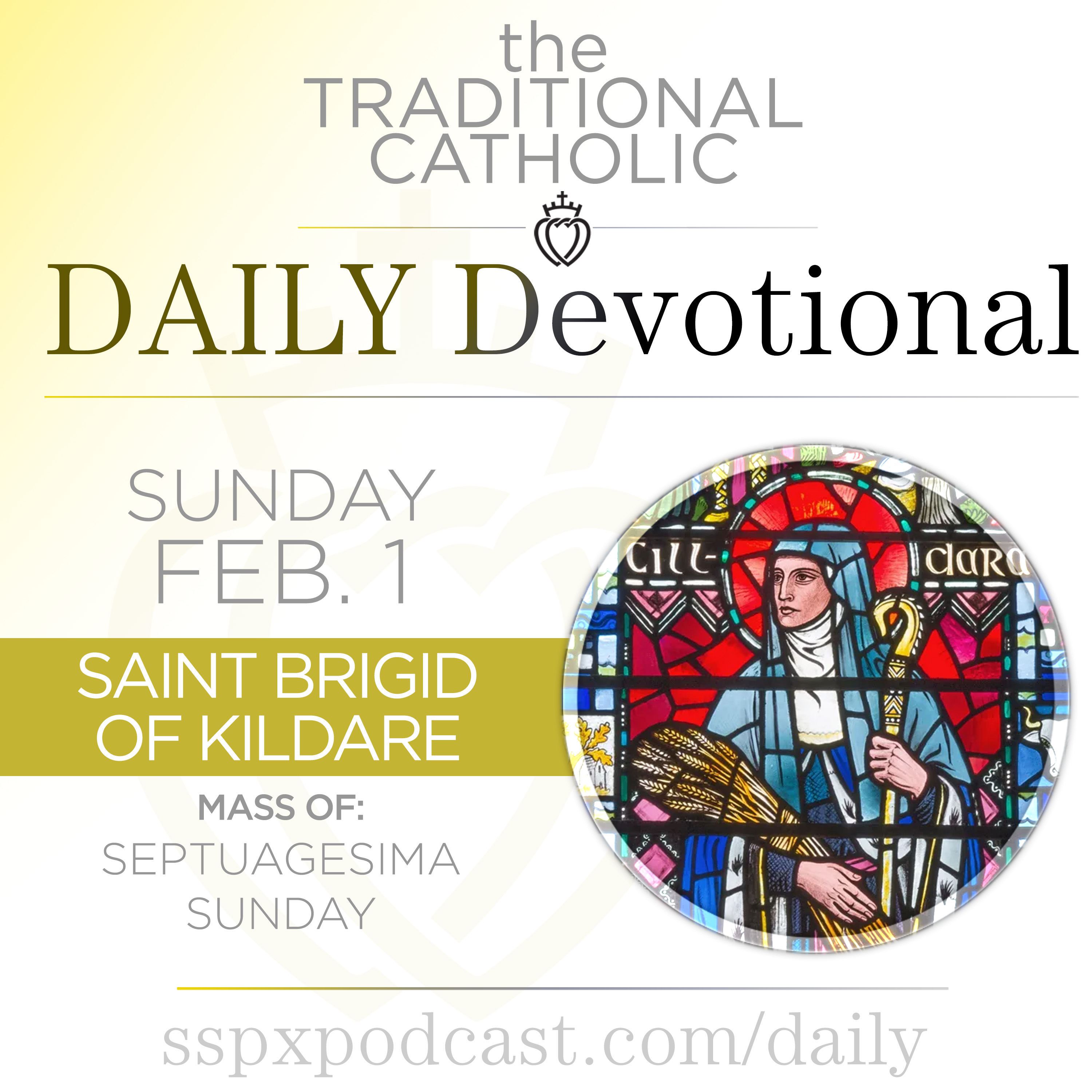
Saint Brigid of Kildare is one of the great maternal figures of the early Church, a woman whose holiness shaped Ireland as deeply as any missionary or bishop. Born in the mid fifth century, tradition places her birth near Dundalk, to a pagan father and a Christian mother. From her earliest years, Brigid showed a fierce compassion that refused limits. Stories of her childhood dwell not on miracles of power, but on generosity that bordered on recklessness. She gave away food meant for her household, clothing meant for herself, and anything else she could place into the hands of the poor. What might have looked like imprudence was, in fact, a soul already convinced that God could not be outdone in generosity.
As a young woman, Brigid chose consecrated virginity, rejecting marriage proposals despite her beauty and noble connections. She gathered other women around her, and together they formed a religious community at Kildare, beneath a great oak tree that gave the place its name. This foundation became one of the most important spiritual centers in Ireland. Brigid’s leadership was marked by warmth rather than command. She governed as a spiritual mother, combining discipline with extraordinary tenderness. Her monastery became known for prayer, hospitality, learning, and care for the sick. Travelers, scholars, and the poor all found welcome there.
Brigid’s influence reached far beyond the cloister. She advised kings, mediated disputes, and defended the vulnerable, especially women and the poor. Yet she never lost the simplicity of heart that defined her early life. Many of the stories told about her emphasize abundance flowing from trust. Milk multiplies. Bread does not run out. Fire warms without destroying. Whether read as miracle or symbol, these accounts point to the same truth. Brigid lived so close to God that scarcity lost its power over her imagination.
She died around the year 525, mourned not only as a holy woman but as a national mother. Her memory became inseparable from the Christian identity of Ireland. Alongside Patrick and Columba, she stands as one of the island’s great patrons, yet her sanctity feels intimate rather than monumental. She shows holiness lived through nurture, protection, and quiet strength.
Traditions surrounding Saint Brigid remain rich and enduring. Her feast on February 1 coincides with the ancient beginning of spring in Ireland and became associated with light, renewal, and blessing. Families wove Brigid’s crosses from rushes and placed them in their homes for protection. Lamps and candles were lit in her honor, recalling her association with warmth and care. She became the patron of Ireland, of dairy workers, poets, midwives, and those who serve quietly in the background of life.
Saint Brigid of Kildare reminds the Church that holiness can be both strong and gentle, abundant and humble, and that a life poured out in charity can shape a people for generations.
Saint Brigid of Kildare, beloved mother of the poor, pray for us.
- - - - - -
- - - - - -
Explore more:
What is the SSPX Podcast?
The SSPX Podcast is produced by Angelus Press, which has as its mission the fortification of traditional Catholics so that they can defend the Faith, and reaching out to those who have not yet found Tradition.
What is the SSPX?
The main goal of the Society of Saint Pius X is to preserve the Catholic Faith in its fullness and purity, to teach its truths, and to diffuse its virtues, especially through the Roman Catholic priesthood.
Authentic spiritual life, the sacraments, and the traditional liturgy are its primary means of bringing this life of grace to souls.
Although the traditional Latin Mass is the most visible and public expression of the work of the Society, we are committed to defending Catholic Tradition in its entirety: all of Catholic doctrine and morals as the Church has always defended them. What people need is the Catholic Faith, without compromise, with all the truth and beauty which accompanies it.
https://sspx.org