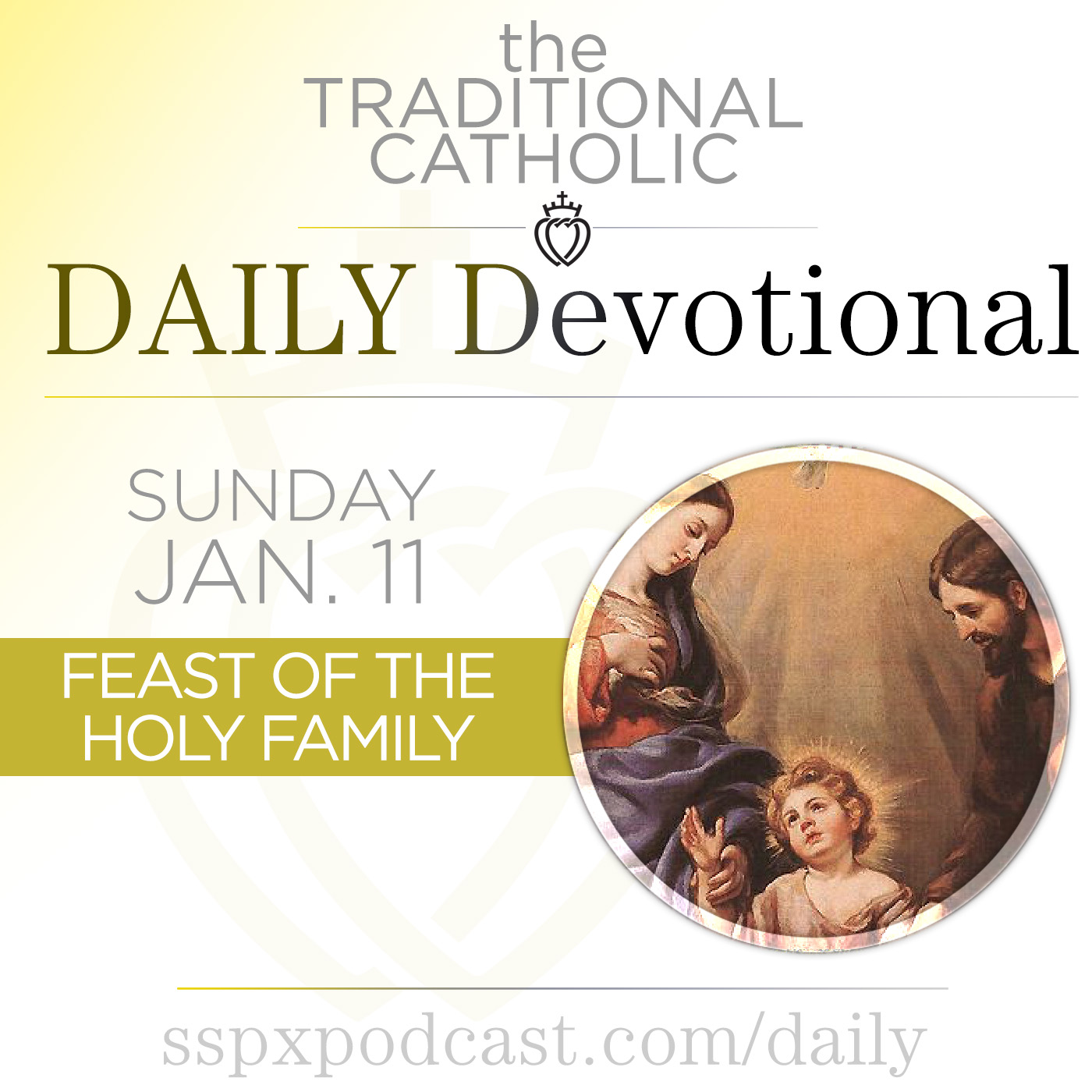
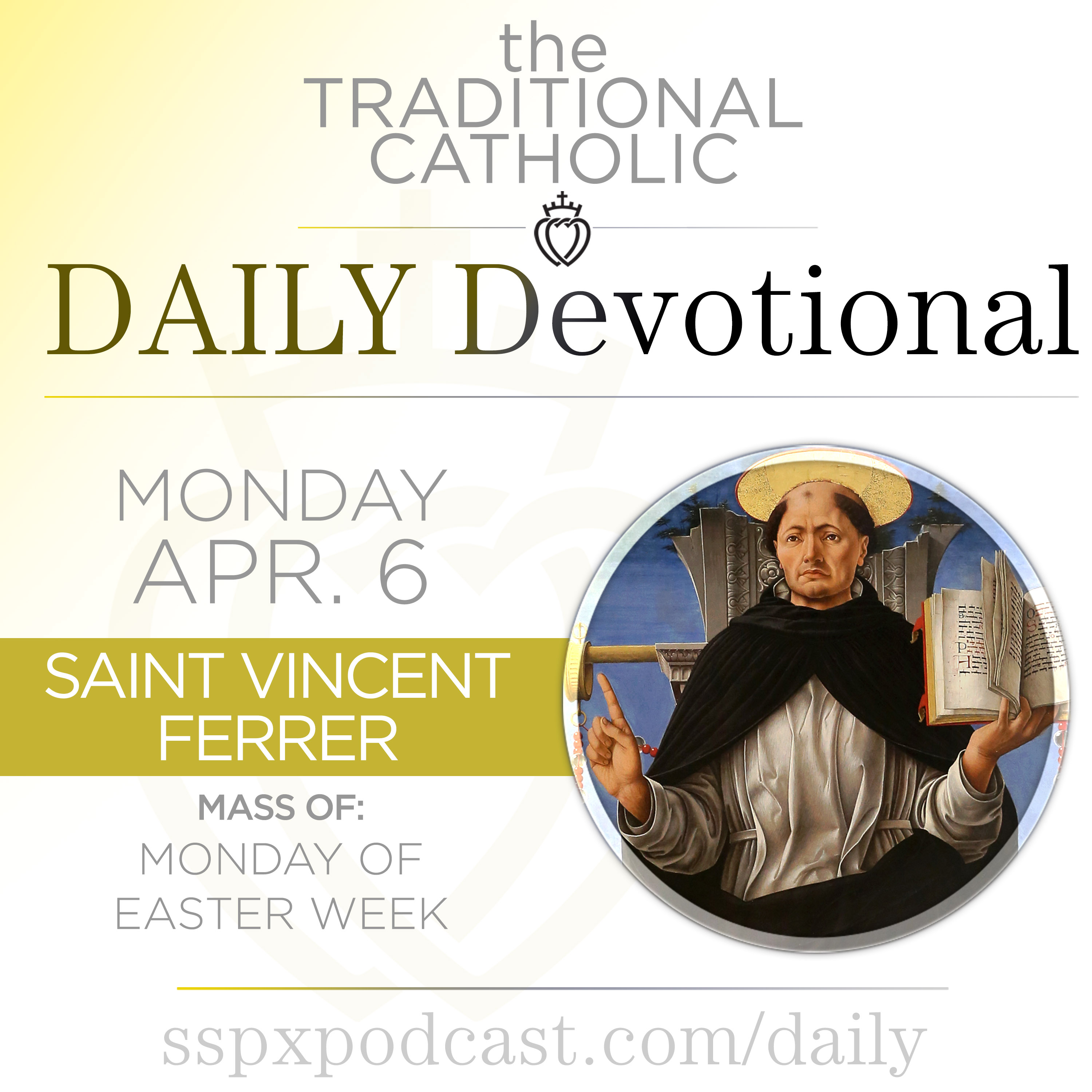
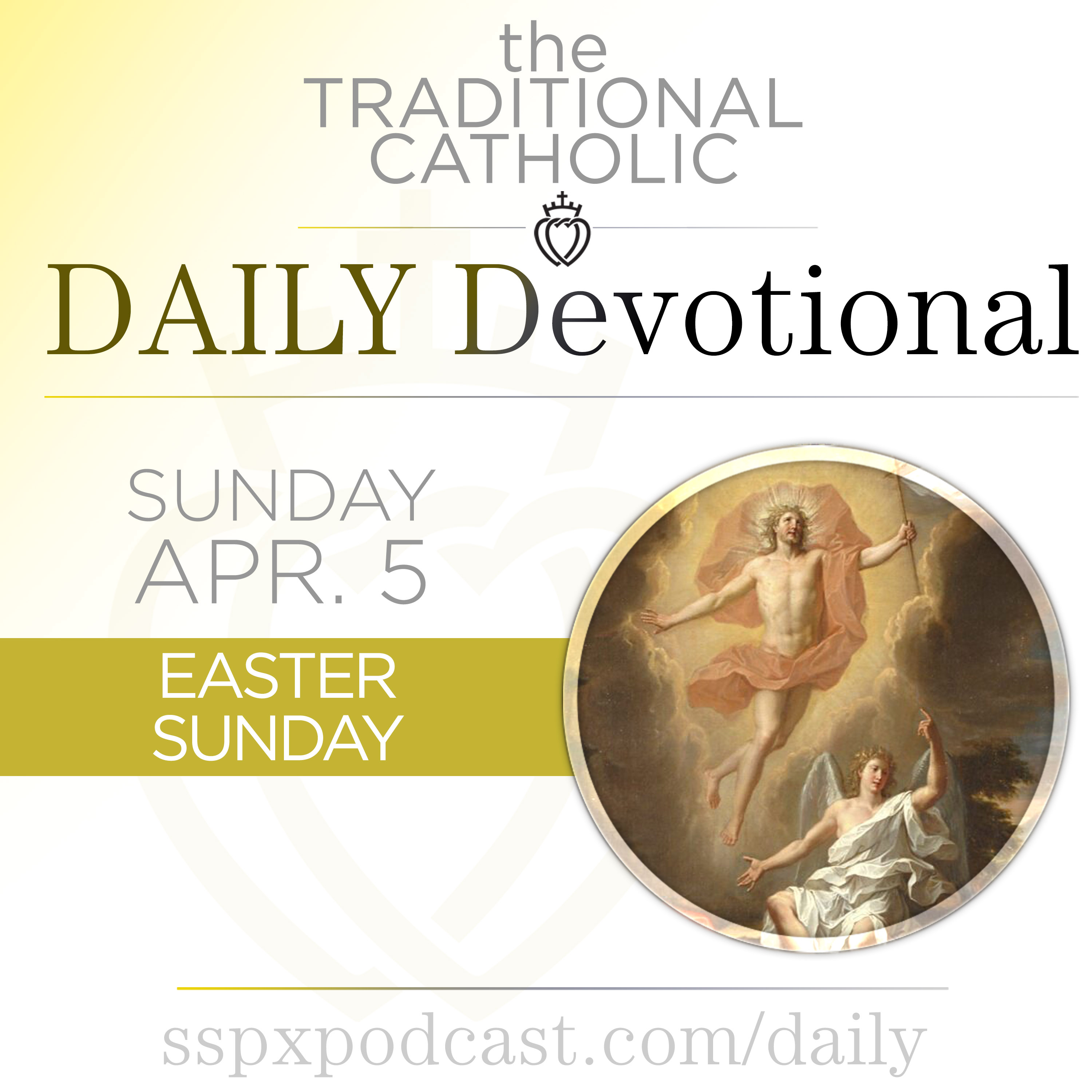
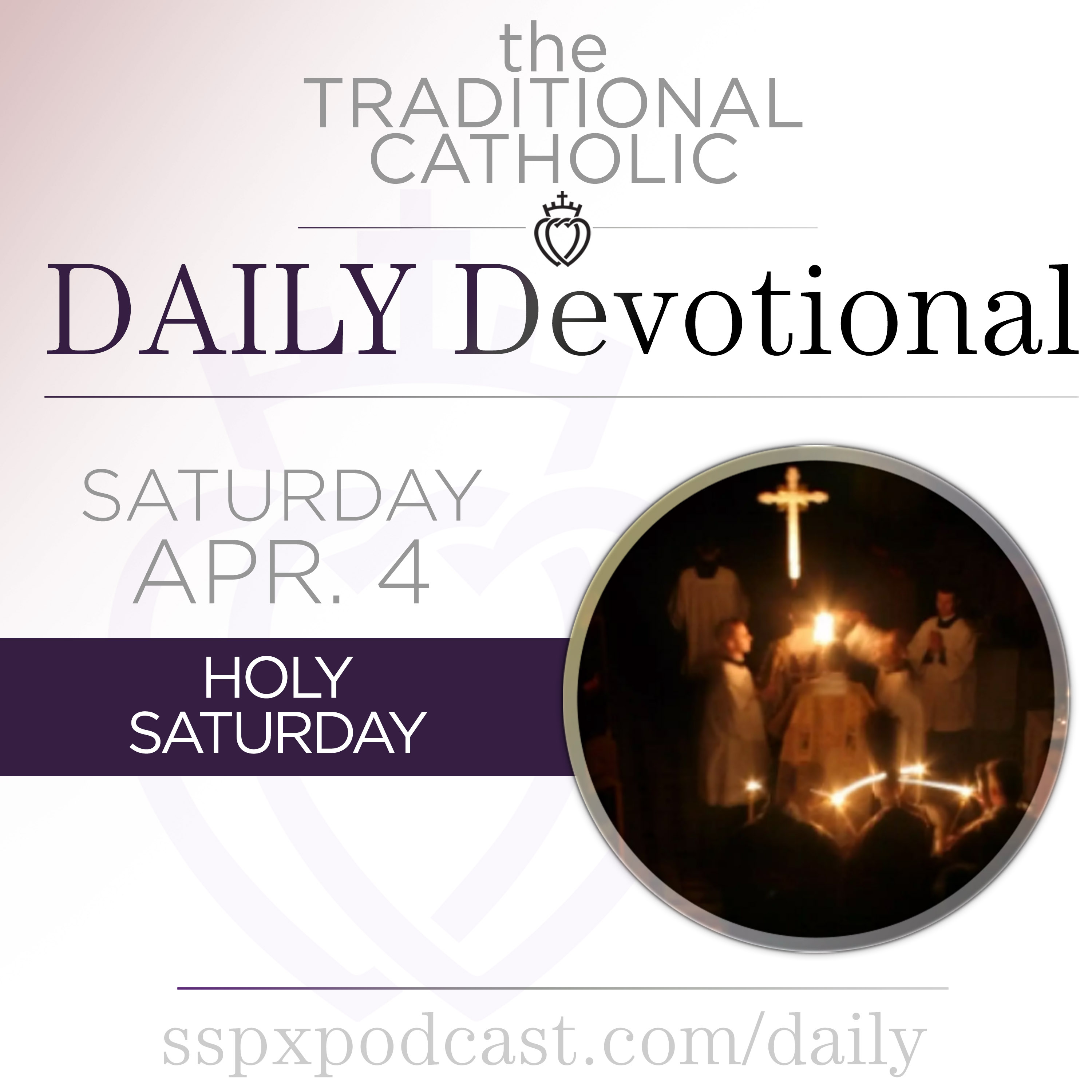
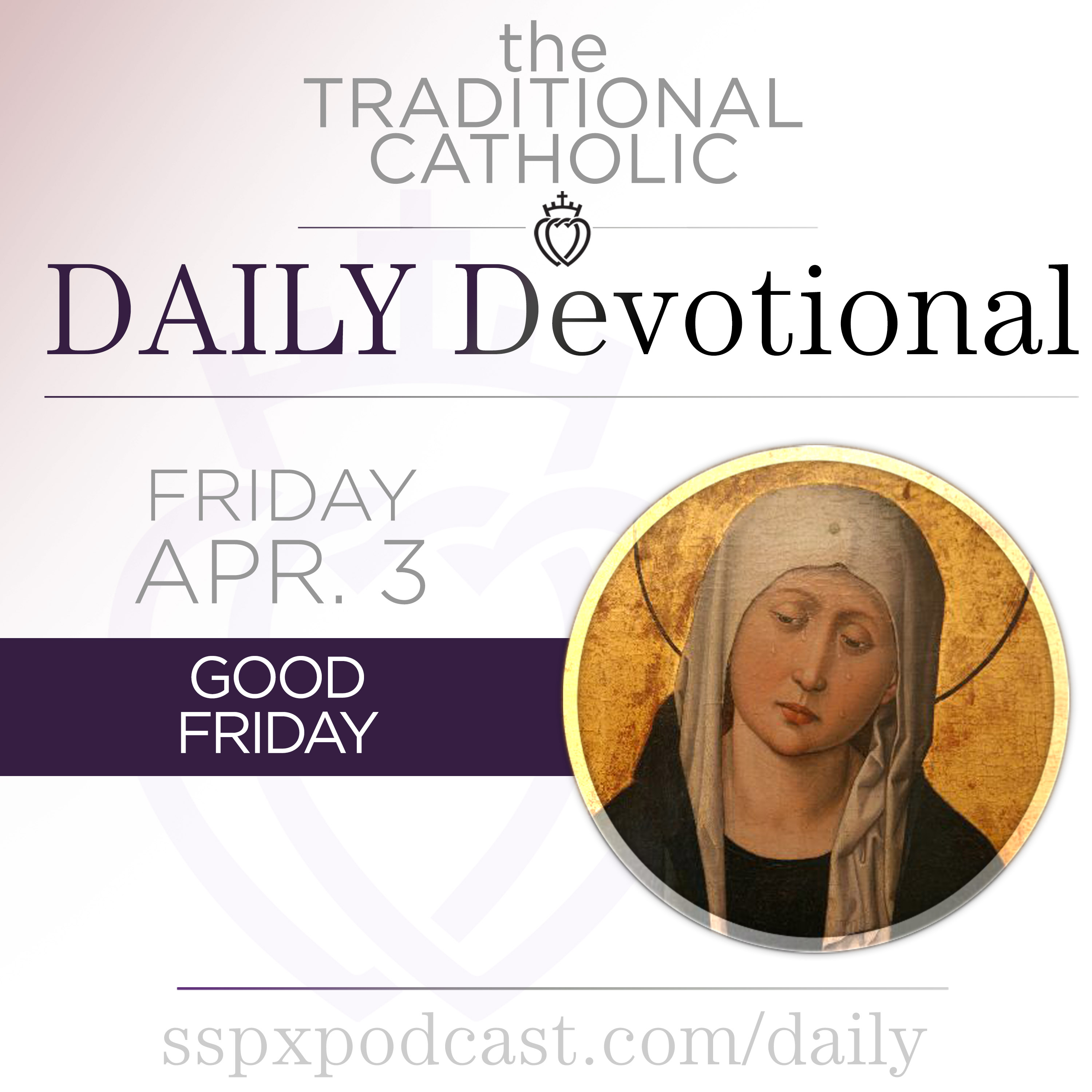
It’s the Feast of Feast of the Holy Family, 2nd Class, with the color of White. In this episode: the meditation: “Jesus, the King of the Magi”, today’s news from the Church: “Euthanasia in France: Catholic Institutions Seriously Threatened”, and today’s thought from the Archbishop.
Have feedback or questions about the DD or our other shows? podcast@sspx.org
Sources Used Today:
- “Jesus, the King of the Magi” – From Advent to Epiphany
- “Euthanasia in France: Catholic Institutions Seriously Threatened” (FSSPX.news)
- The Spiritual Life – Archbishop Lefebvre (Angelus Press)
The Feast of the Holy Family places before the Church the quiet mystery of Jesus, Mary, and Joseph living an ordinary human life infused with divine purpose. The Gospels tell us very little about those hidden years at Nazareth, yet what they do tell us is decisive. The Son of God chose to grow within a family, learning obedience, work, prayer, and love through daily life. Jesus submits Himself to Mary and Joseph. Mary treasures mysteries she does not yet fully understand. Joseph bears responsibility in silence, protecting and providing without a word recorded in Scripture. In this household, salvation advances not through spectacle, but through fidelity. The Holy Family reveals that holiness is formed slowly, through patience, sacrifice, and trust in God’s will amid ordinary circumstances.
Historically, devotion to the Holy Family developed later than many other feasts. While early Christians revered Mary and honored Christ’s hidden life, there was no distinct universal feast in the ancient calendar. The idea of formally celebrating the Holy Family emerged gradually in the late Middle Ages, especially as theologians and preachers reflected more deeply on Christ’s domestic life. By the seventeenth century, religious communities and local dioceses began promoting devotion to Jesus, Mary, and Joseph together as a model for Christian households, especially during times of social instability and moral decline.
The feast gained wider traction in the nineteenth century, as the Church responded to industrialization, urban poverty, and the weakening of family structures. Pope Leo XIII strongly encouraged devotion to the Holy Family, seeing in it a remedy for social disorder and a defense of marriage and family life. In 1921, Pope Benedict XV extended the Feast of the Holy Family to the universal Church, fixing it within the Octave of Epiphany in the traditional calendar. Later reforms placed it within the Christmas season, preserving its essential meaning while highlighting Nazareth as the natural setting for contemplating the Incarnation lived out in daily life.
Culturally, the feast became a day closely associated with family prayer and blessing. In many Catholic regions, parishes offered a special blessing of families, inviting parents and children to renew their commitment to one another before God. Homes were encouraged to enthrone images of the Holy Family and to pray together for unity, patience, and perseverance. Sermons often addressed the real struggles of family life, emphasizing that the Holy Family knew exile, poverty, misunderstanding, and uncertainty, and that holiness does not require perfection, but fidelity.
International customs reflect these themes in diverse ways. In parts of Europe and Latin America, families gather for a shared meal followed by the rosary or the renewal of marriage vows. In some African and Asian communities, the feast includes public prayers for peace in the home and respect between generations. In the Philippines, where devotion to the Holy Family is strong, the feast is often marked by processions and family centered catechesis. Across cultures, the emphasis remains the same: the home as a place where faith is lived, taught, and handed on.
The Feast of the Holy Family ultimately teaches that God chose to sanctify family life from within. By honoring Jesus, Mary, and Joseph, the Church lifts up every household that strives, with grace and effort, to live in love, obedience, and trust in God’s providence.
- - - - - -
- - - - - -
Explore more:
What is the SSPX Podcast?
The SSPX Podcast is produced by Angelus Press, which has as its mission the fortification of traditional Catholics so that they can defend the Faith, and reaching out to those who have not yet found Tradition.
What is the SSPX?
The main goal of the Society of Saint Pius X is to preserve the Catholic Faith in its fullness and purity, to teach its truths, and to diffuse its virtues, especially through the Roman Catholic priesthood.
Authentic spiritual life, the sacraments, and the traditional liturgy are its primary means of bringing this life of grace to souls.
Although the traditional Latin Mass is the most visible and public expression of the work of the Society, we are committed to defending Catholic Tradition in its entirety: all of Catholic doctrine and morals as the Church has always defended them. What people need is the Catholic Faith, without compromise, with all the truth and beauty which accompanies it.
https://sspx.org