258E-258E-270-Space Opals

258E-258E-270-Space Opals

Author: Albert D. Grauer November 14, 2023 Duration: 2:01
Opal, the national gemstone of Australia, is silica, the most common ingredient of sand, with a number of water molecules attached to it. On Earth Opal forms when water evaporates from a slurry of sand and water which is deposited repeatedly in a crack or fissure in a rock over a long period of time. The resulting opal may contain from 3 to 21% water by weight.
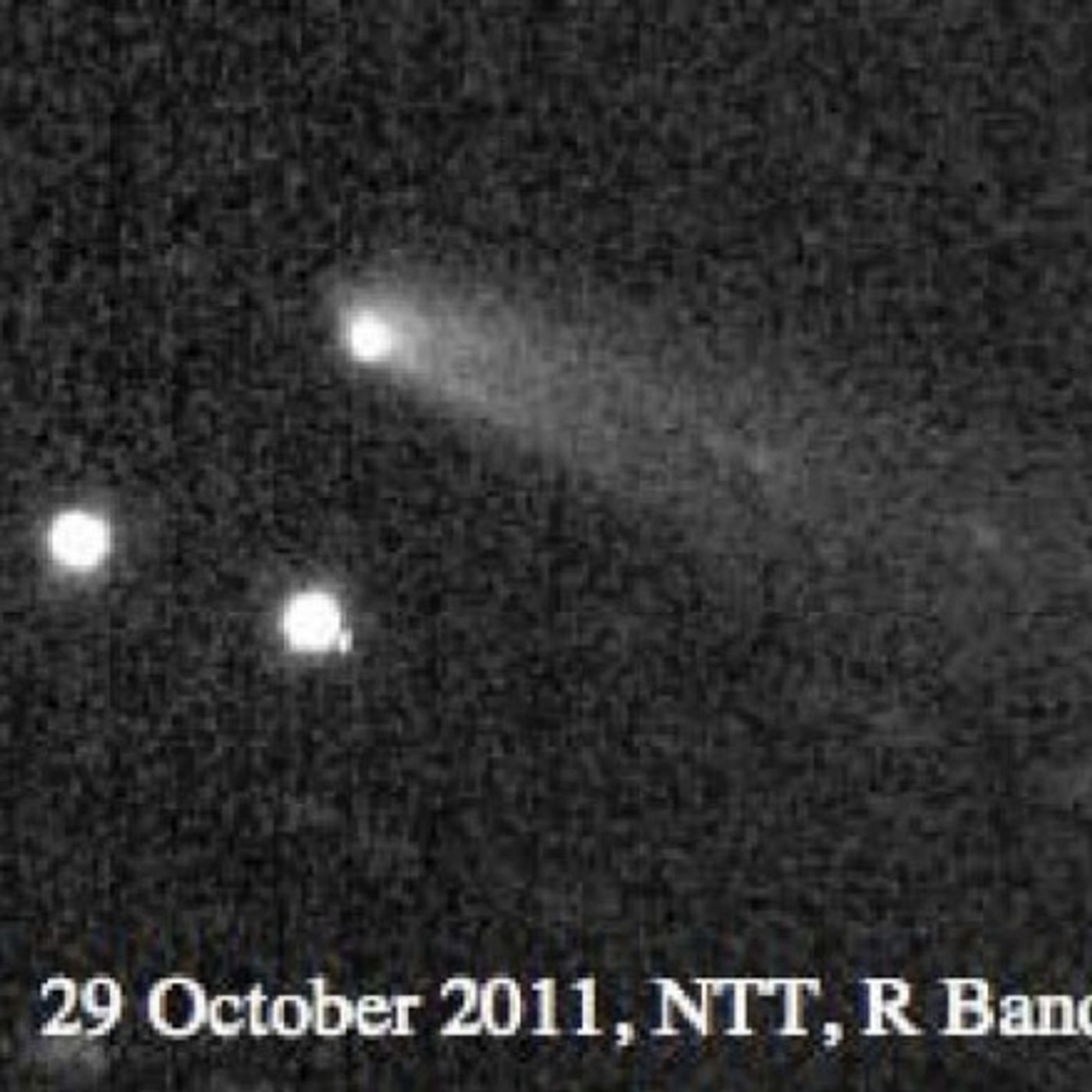
Professor Hilary Downes of Birkbeck College London headed up a team which discovered Opal in a meteorite which was found in Antartica. Previous to their work the only known extra-terrestrial Opal consisted of a few crystals which were found in a meteorite from Mars.
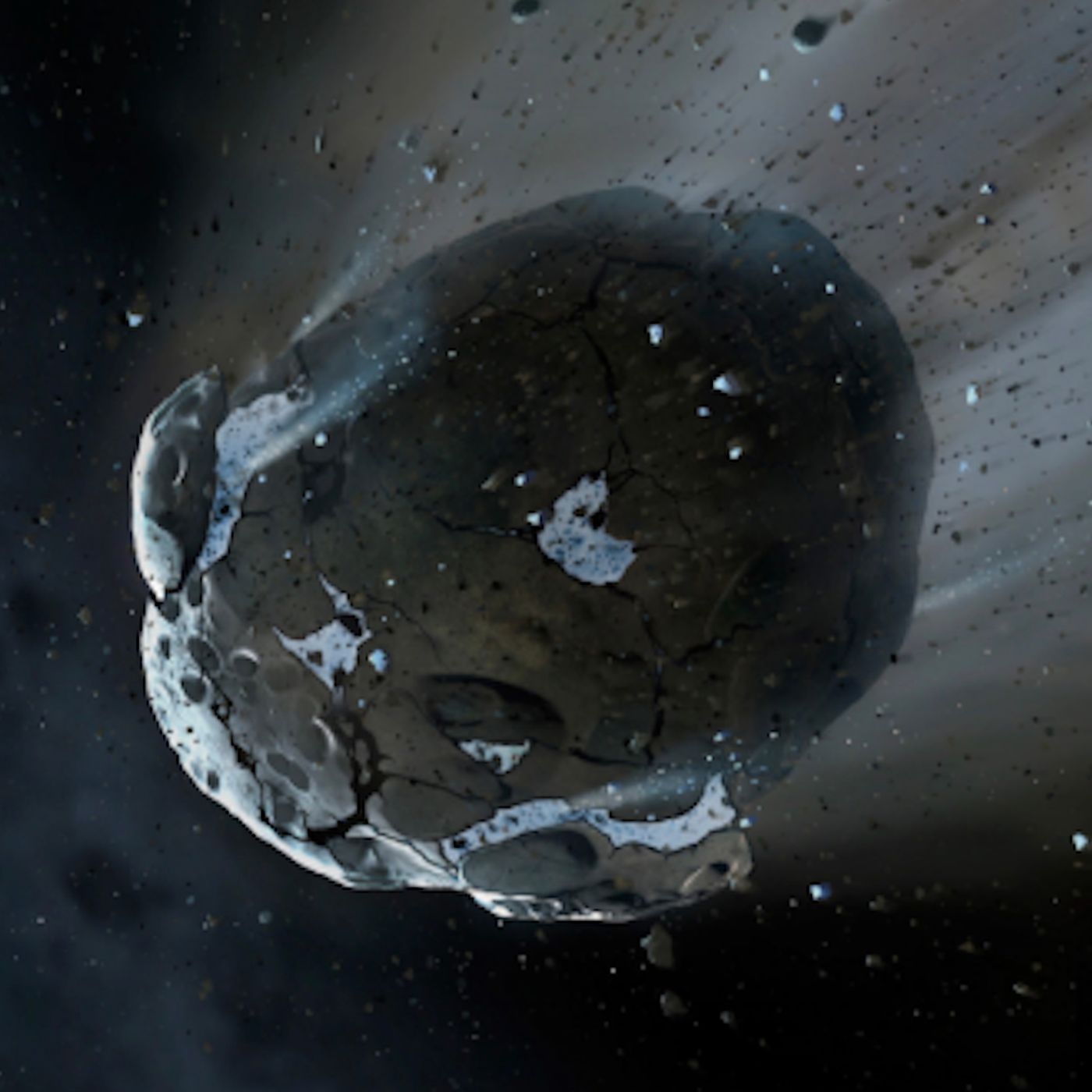
The Antarctic meteorite that Professor Downes and her team studied, EET 83309, is made up of thousands of small pieces of rocks and minerals. This space rock was created by collisions between objects from various parts of our solar system. Some of them are likely to have been carrying large amounts of water ice. The Downes team found solid evidence that the opal was formed before their sample left the surface of the parent asteroid, traveled through space, and was recovered by humans on the Antarctic ice sheet.
Professor Downes concludes "This is more evidence that meteorites and asteroids can carry large amounts of water ice. Although we rightly worry about the consequences of the impact of large asteroids, billions of years ago they may have brought the water to the Earth and helped it become the world teeming with life that we live in today."


Each episode of Travelers In The Night feels like a quiet, personal conversation under a dark sky. Hosted by astronomer Dr. Albert D. Grauer, this podcast brings the distant cosmos into sharp, intimate focus. Dr. Grauer isn't just an observer; he's an active participant in the hunt, working with the Catalina Sky Survey team that has consistently discovered near-Earth asteroids for years. In these brief and engaging segments, you'll hear firsthand accounts of what it's like to track these ancient celestial travelers-the asteroids and comets that silently pass by our world. The discussions move beyond simple facts to explore the real-world implications of these discoveries, from planetary defense to the sheer wonder of our dynamic solar system. Accompanied by the contemplative music of John Lyell's "Eternity," each installment offers a moment of calm reflection on humanity's place in the universe. It’s a perfect blend of grounded science and cosmic curiosity, making complex astronomical concepts accessible and deeply fascinating. For anyone who has ever looked up and wondered what's out there moving in the dark, this podcast provides a direct line to the front lines of discovery.
Author: Language: English Episodes: 1000

Travelers In The Night
Podcast Episodes
894-Discovery Night at the Schmidt [not-audio_url] [/not-audio_url]

Duration: 2:01
On a recent night my Catalina Sky Survey teammate Vivian Carvajal found 4 Earth approaching space rocks with our small but mighty Schmidt telescope on Mt. Bigelow, Arizona. These Earth approaching asteroids are all small…
383E-419-ET's Cigar [not-audio_url] [/not-audio_url]

Duration: 2:01
In 2012 as it crossed the orbit of Neptune heading towards the Sun a small space rock was 250 times fainter than can be detected by the Hubble Space Telescope. Five years later, after it had rounded the Sun, it became vi…
893-DarkSky Oregon [not-audio_url] [/not-audio_url]

Duration: 2:01
Artificial light at night also known as light pollution is degrading human safety and health as well as damaging the natural environment on which we all depend. The loss of the connection with the natural night sky has h…
382E-418-Fireball II [not-audio_url] [/not-audio_url]

Duration: 2:01
Recently there were four fireball meteors, brighter than the planet Venus, which exploded over Germany, France, Ohio, and Arizona within the space of only 10 hours. A total of 1320 individuals were treated to light shows…
892-140m-asteroids [not-audio_url] [/not-audio_url]

Duration: 2:01
Humans can mitigate the damage done by the impact of an asteroid given a sufficient lead time. In 1998, the US Congress mandated NASA to detect and track 90% of the 1 km sized asteroids capable of effecting local mass de…
381E-417-Red Dwarf Planets [not-audio_url] [/not-audio_url]

Duration: 2:01
Astronomers continue to be delighted when they discover an Earth sized planet. Scientists were thus very disappointed when the red dwarf star hosting the nearest such planet, Proxima b some 4.2 light years away, turns ou…
891-2026-AA [not-audio_url] [/not-audio_url]

Duration: 2:01
My Catalina Sky Survey teammate Tracie Beuden was observing with our Schmidt telescope on Mt. Bigelow, Arizona in the constellation of Persus when she found the first asteroid of 2026. Asteroid hunters are trying to like…
380E-416-Odd Ball [not-audio_url] [/not-audio_url]

Duration: 2:01
The orbits of the planets are closely aligned with the extension of the Sun's equator into space and are contained within the flattened disk of material which forms the plane solar system. Most asteroids have orbits with…
890-Comet 467P(Linear-Grauer) [not-audio_url] [/not-audio_url]

Duration: 2:01
Astronomers using the 8.1 m Gemini South Telescope in Chile were excited by the fact that 467P (LINEAR-Grauer)’s Centaur like orbit had been changed as the nucleus emitted rocket like bursts of gases as it was warmed by…
379E-415-Well Done [not-audio_url] [/not-audio_url]

Duration: 2:01
Once every 1,435 days , a 780 foot diameter space rock that my Catalina Sky Survey teammate Carson Fuls discovered makes an annihilation defying close approach to our star. At it's nearest point to the Sun, Carson's well…