353E-381-Peaceful Star

353E-381-Peaceful Star

Author: Albert D. Grauer September 9, 2025 Duration: 2:01
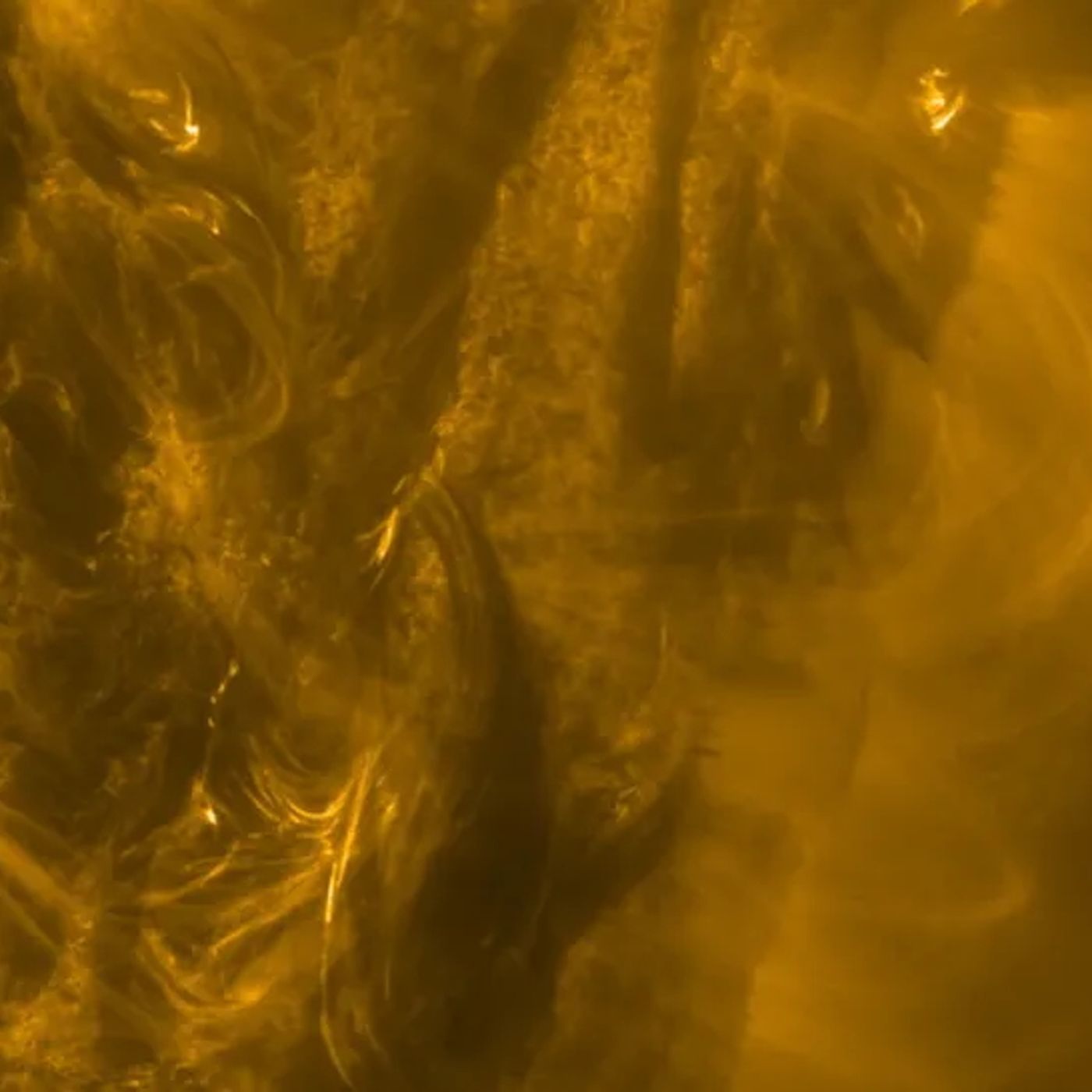
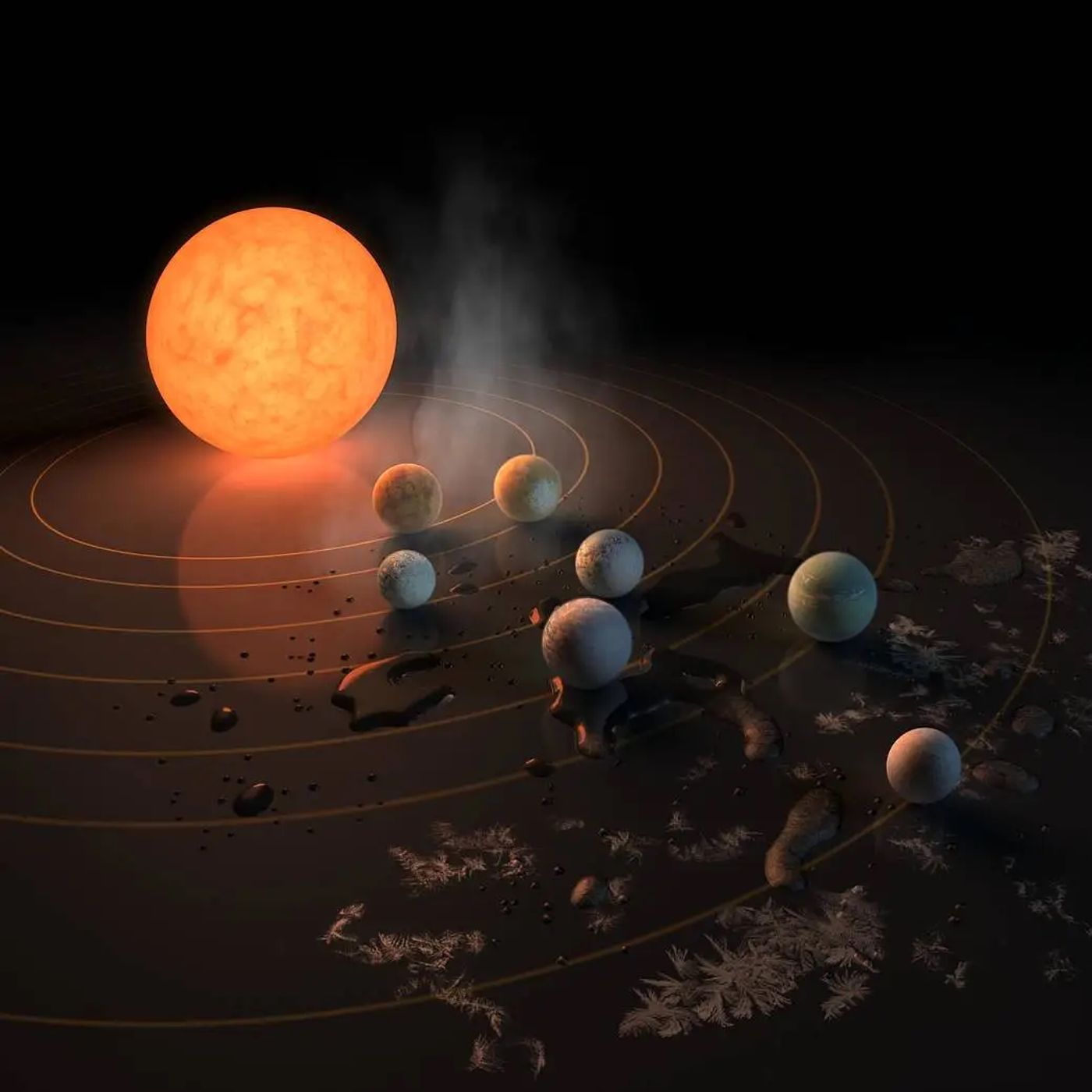
 The Sun is our very own well behaved star. It rises and sets in our sky every day and powers and makes possible all life forms on planet Earth. A new appreciation for our Sun is growing as we learn more about other suns and their families of planets. The Trappist-1 system of 7 planets orbits a dim M type red dwarf star about 40 light years away in the constellation of Aquarius.Recently, Dr. Manasvi Lingam and Dr. Abraham Loeb of Harvard University have calculated the likelihood that planets orbiting red dwarf stars are able to possess an atmosphere conducive to life. They report, in a recently published a paper in the International Journal of Astrobiology that the planet Trappist 1-e is more than 100 times less likely to be habitable than is the Earth. Another group from Harvard and the University of Massachusetts at Lowell, headed up by Dr. Cecilia Garraffo also find the Trappist-1 planets to be a tough place to live. These researchers add that the close proximity of these planets to their host star put them at risk of having their atmospheres stripped off by high stellar winds and their surfaces bombarded with high energy particles and electromagnetic radiation. Go outside today and enjoy some gentle sunshine from our well behaved star.

Each episode of Travelers In The Night feels like a quiet, personal conversation under a dark sky. Hosted by astronomer Dr. Albert D. Grauer, this podcast brings the distant cosmos into sharp, intimate focus. Dr. Grauer isn't just an observer; he's an active participant in the hunt, working with the Catalina Sky Survey team that has consistently discovered near-Earth asteroids for years. In these brief and engaging segments, you'll hear firsthand accounts of what it's like to track these ancient celestial travelers-the asteroids and comets that silently pass by our world. The discussions move beyond simple facts to explore the real-world implications of these discoveries, from planetary defense to the sheer wonder of our dynamic solar system. Accompanied by the contemplative music of John Lyell's "Eternity," each installment offers a moment of calm reflection on humanity's place in the universe. It’s a perfect blend of grounded science and cosmic curiosity, making complex astronomical concepts accessible and deeply fascinating. For anyone who has ever looked up and wondered what's out there moving in the dark, this podcast provides a direct line to the front lines of discovery.
Author: Language: English Episodes: 100

Travelers In The Night
Podcast Episodes
370E-403-Double Comet [not-audio_url] [/not-audio_url]

Duration: 2:01
In November of 2006, University of Arizona's Spacewatch astronomers on Kitt Peak discovered a faint moving point of light in the night sky which appeared to be a garden variety main belt asteroid orbiting the Sun between…
882-David’s Goliath PHA [not-audio_url] [/not-audio_url]

Duration: 2:01
My Catalina Sky Survey teammate David Rankin was asteroid hunting in the evening twilight with our 60 inch telescope on Mt. Lemmon Arizona when he spotted an unknown object in the constellation of Lyra. The largest teles…
369E-401-Night Vision [not-audio_url] [/not-audio_url]

Duration: 2:01
Many people in our modern world rarely if ever experience night vision. To achieve this interesting state of sensory awareness you cannot look at your cell phone or any other source of bright light for 30 to 45 minutes.…
881-Dangerous Comets [not-audio_url] [/not-audio_url]

Duration: 2:01
It is possible the object creating the Tunguska event in Russia 1908 which knocked down 80 million trees over an area about twice the size of New York City was a fragment of a comet or asteroid. The International Asteroi…
368E-400-Roving Venus [not-audio_url] [/not-audio_url]

Duration: 2:01
Venus and Earth are similar in size, composition, density, and mass. Unfortunately, our sister planet Venus is an example of a place where green house gases have created an extreme situation. Venus's thick carbon dioxide…
880-Carrington Anticipated [not-audio_url] [/not-audio_url]

Duration: 2:01
Just before noon on September 1st of 1859 Richard Carrington and Richard Hodgson were making sketches of clusters of sunspots when they were nearly blinded by an intense solar flare. 17.6 hours later a geomagnetic storm…
367E-399-Moons of Florence [not-audio_url] [/not-audio_url]

Duration: 2:01
Dr Lance Benner of NASA's Jet Propulsion Laboratory headed up a team of scientists who used the 70 meter antenna at NASA's Goldstone Deep Space Communications Complex to bounce RADAR beams off of the asteroid Florence as…
879-Lurking Asteroid [not-audio_url] [/not-audio_url]

Duration: 2:01
The Dark Energy Camera on the National Science Foundation’s Blanco 4-meter telescope on Cerro Tololo in Chile is taking near Sun twilight images to search for asteroids, hidden in the glare of our Sun, sneaking up on hom…
366E-398-Mars Rocks [not-audio_url] [/not-audio_url]

Duration: 2:01
At about 2AM on July 18, 2011 several people in near Tata, Morocco saw a bright fireball which was described by one of them to be initially yellow, then turned green, and finally exploded into several pieces producing tw…
878-Comet Fragment [not-audio_url] [/not-audio_url]

Duration: 2:01
My Catalina Sky Survey teammate Vivian Carvajal was asteroid hunting in the constellation of Eridanus with the 90 inch, University of Arizona’s Bok telescope on Kitt Peak when she was treated to an amazing sight. Comet C…