358E-389-Tiny Spacecraft

358E-389-Tiny Spacecraft

Author: Albert D. Grauer October 14, 2025 Duration: 2:01
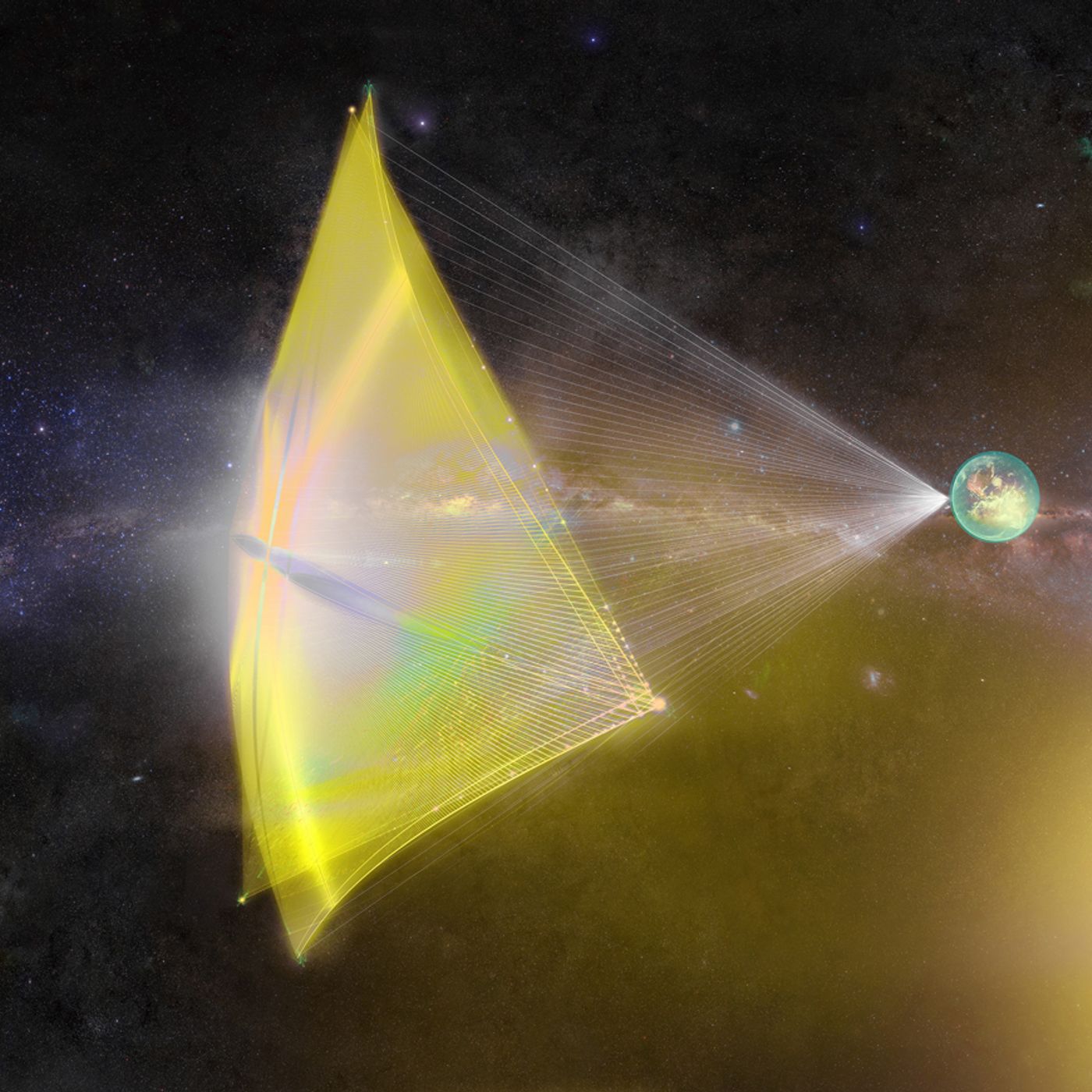
To reach the vicinity of the nearest star, 24 trillion miles away, in less than 20 years, an interstellar space probe would have to travel at a substantial fraction of the speed of light. Newton's laws of motion, published 300 years ago, predict that the greater the mass of an object the greater is the force required to increase it's velocity. In order to alleviate the need for the virtually unaffordable amount of energy required to accelerate a normal sized spacecraft to a speed of 20% of the speed of light, the Breakthrough Starshot program has funded the creation of 'Sprite' , the world's smallest spacecraft. About the size of a saltine cracker and having a mass of less than 2 dimes, the single-board Sprite spacecraft has all the essentials; solar panels, computing electronics, thermometers, gyroscopes, radio communication equipment and more. Working prototypes have been launched into Earth orbit by the Indian Space Research Organization attached to the Italian Max Valier and Latvian Ventra satellites. One of them has sent back signals which have been received by Cornell University's ground station. Dr. Zac Manchester who started the Sprite Spacecraft program while earning a PhD at Cornell University envisions using tiny spacecraft to explore near Earth Space as well as asteroids and moons in our solar system. In the future, fleets of the decedents of Sprite could be sent to explore intriguing planets in nearby alien solar systems. These tiny explorers will be propelled by high power Earth bound lasers directed at their solar sails and could reach and explore distant planets in a reasonable amount of time.

Each episode of Travelers In The Night feels like a quiet, personal conversation under a dark sky. Hosted by astronomer Dr. Albert D. Grauer, this podcast brings the distant cosmos into sharp, intimate focus. Dr. Grauer isn't just an observer; he's an active participant in the hunt, working with the Catalina Sky Survey team that has consistently discovered near-Earth asteroids for years. In these brief and engaging segments, you'll hear firsthand accounts of what it's like to track these ancient celestial travelers-the asteroids and comets that silently pass by our world. The discussions move beyond simple facts to explore the real-world implications of these discoveries, from planetary defense to the sheer wonder of our dynamic solar system. Accompanied by the contemplative music of John Lyell's "Eternity," each installment offers a moment of calm reflection on humanity's place in the universe. It’s a perfect blend of grounded science and cosmic curiosity, making complex astronomical concepts accessible and deeply fascinating. For anyone who has ever looked up and wondered what's out there moving in the dark, this podcast provides a direct line to the front lines of discovery.
Author: Language: English Episodes: 1000

Travelers In The Night
Podcast Episodes
57E-69-Fly Out Of Spaceport America [not-audio_url] [/not-audio_url]

Duration: 2:01
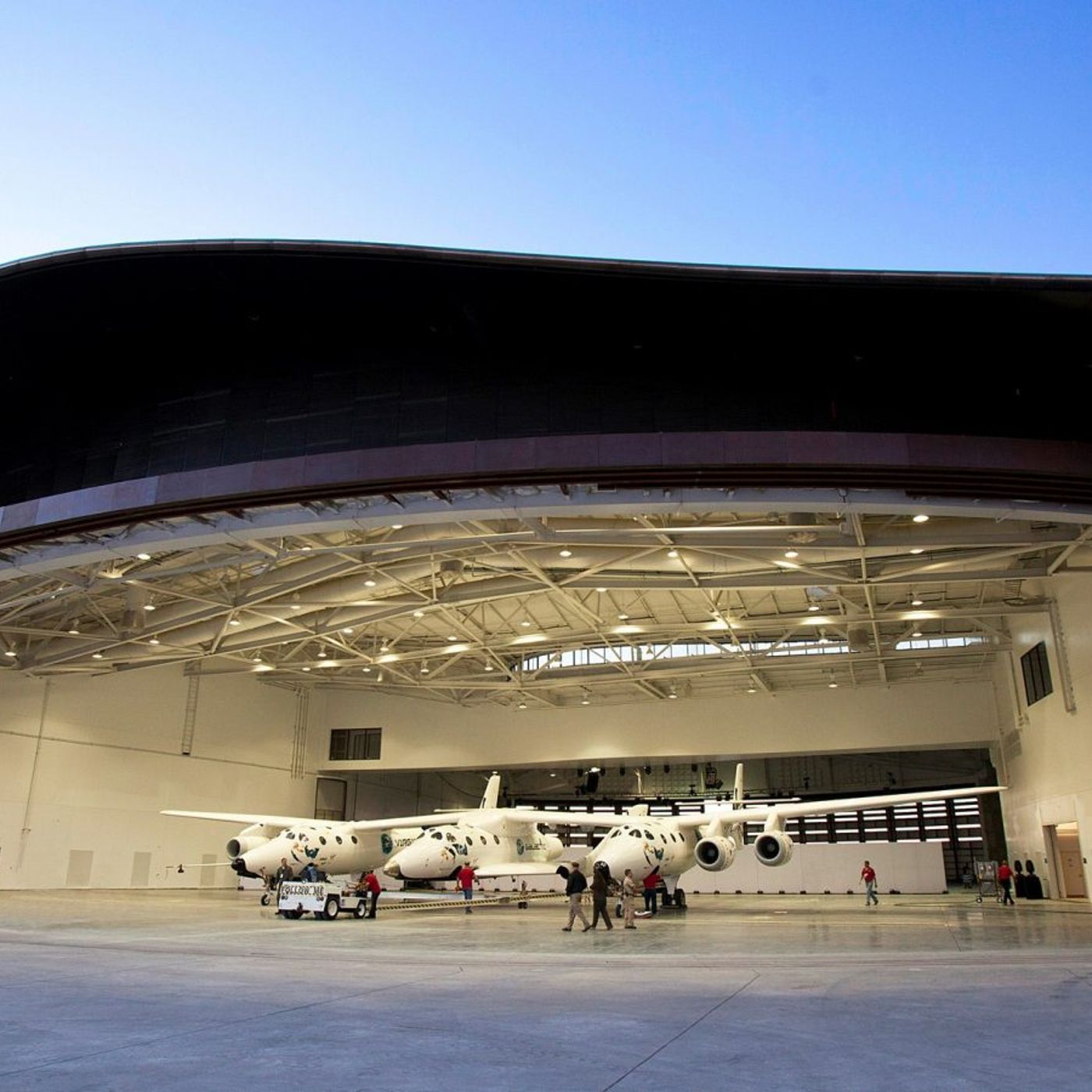
SpaceShipTwo will carry 6 passengers and two pilots and be launched from the 18,000 acre SpacePort America in New Mexico
568-Tough Space Rock [not-audio_url] [/not-audio_url]

Duration: 2:01
At its closest point, a small space rock comes to only 1/3 of Mercury's average distance from the solar surface and receives 9 times the amount of solar energy which heats the planet Mercury to 800F. If it has the chemic…
56E-68-Hubble Finds Three Surprising Dry Exoplanets [not-audio_url] [/not-audio_url]

Duration: 2:01
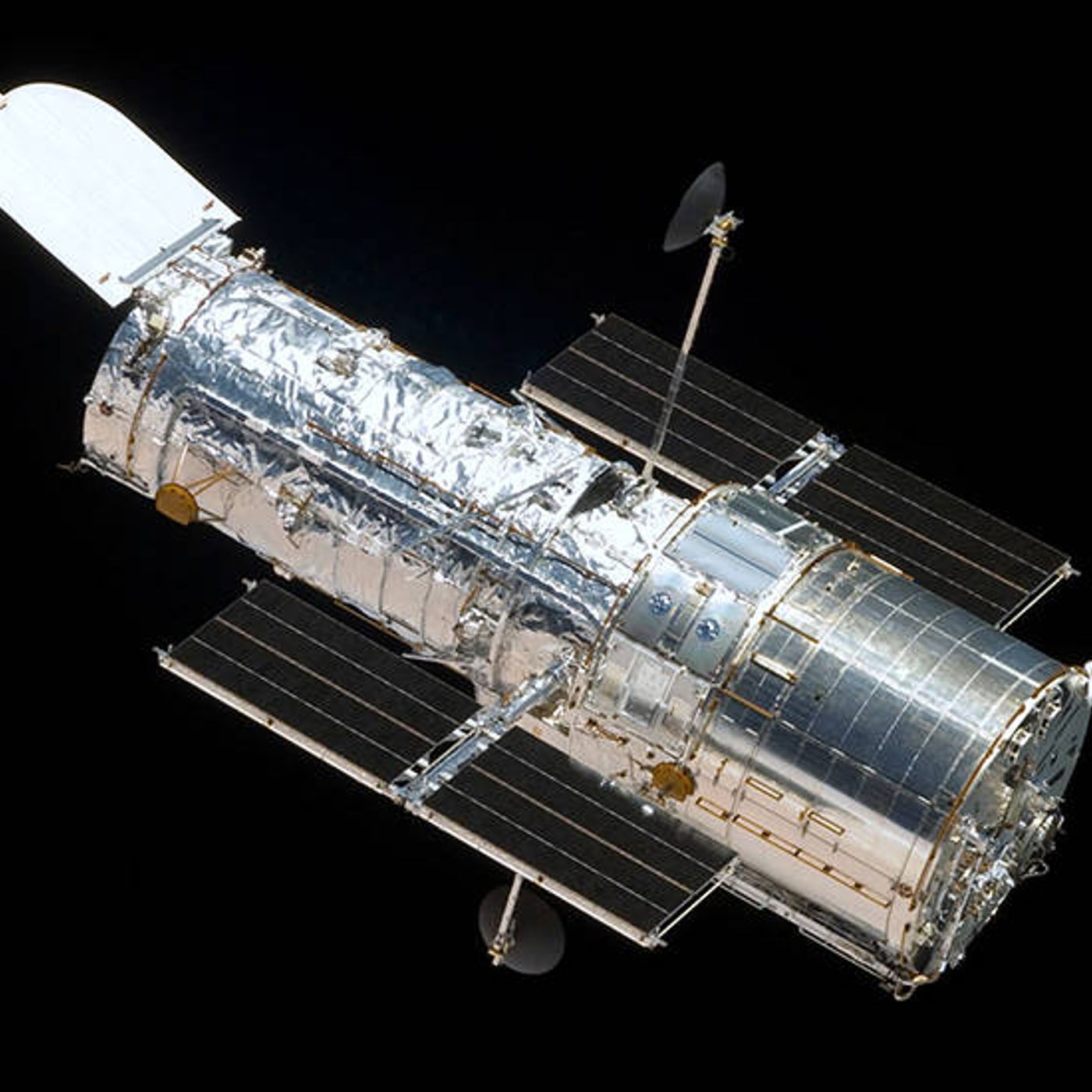
Water is essential to life on our planet. Recently, NASA's Hubble Space Telescope was used to study 3 planets orbiting stars similar to our Sun. Astronomers divided the infrared light from these planets into its componen…
567-Close Space Rock [not-audio_url] [/not-audio_url]

Duration: 2:01
Nine hours after it was discovered a tiny, 4 foot in diameter, space rock streaked less than 4,000 miles above southern Africa as it passed through the cloud of communications satellites which surround our planet. If you…
55E-67-NASA Deep Space Network Turns 50 [not-audio_url] [/not-audio_url]

Duration: 2:01
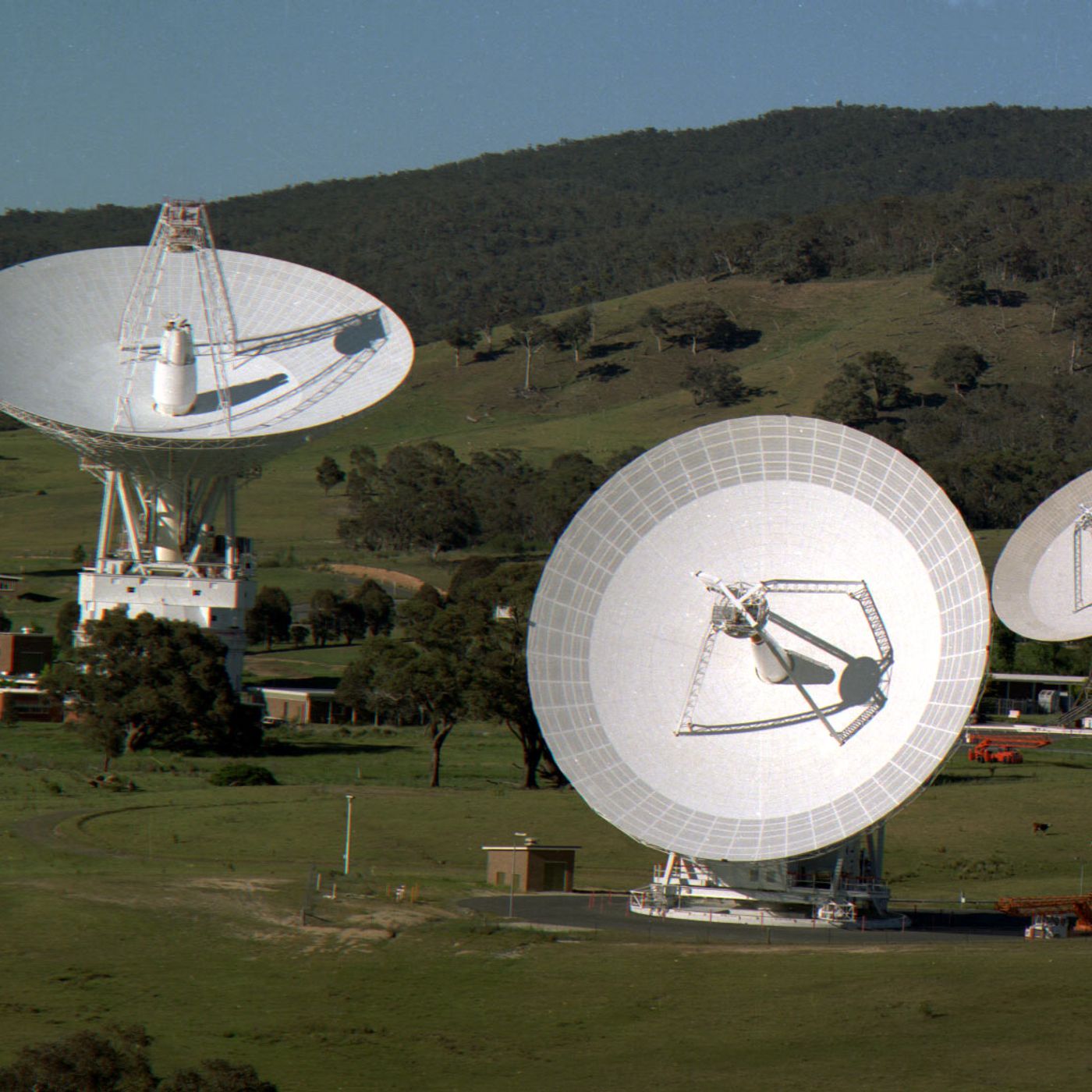
NASA's Deep Space Network is celebrating its 50th birthday. Australia, Spain, and California host its three sites. These facilities are spaced nearly evenly around the world to provide continuous communication with any s…
566-October Fest [not-audio_url] [/not-audio_url]

Duration: 2:01
October of 2019 was a record breaking month for my team the Catalina Sky Survey during which we discovered 240 Earth approaching asteroids. This diverse collection of space rocks ranged in size from one that would fit in…
54E-66-Opportunity Celebrates 10 years on Mars [not-audio_url] [/not-audio_url]

Duration: 2:01
The Opportunity Rover has been joined by, a car sized robot, named Curiosity. So far it has found that ancient Mars could have supported living microbes. You can follow its journey on the NASA Curiosity website. What wil…
565-Ancient Crater [not-audio_url] [/not-audio_url]

Duration: 2:01
In ancient times, Aboriginal people in southwestern Australia quarried fine grained rock on an ancient hill called Barlangi Rock to make very sharp tools. Dr. Timmons Erickson, a NASA scientist at the Johnson Space Fligh…
53E-65-Your Shield [not-audio_url] [/not-audio_url]

Duration: 2:01
The NEOShield project is an international group of scientists and engineers from space faring nations. They are doing the detailed analysis and planning required to provide an effective means of dealing with an asteroid…
564-Heavy Traffic [not-audio_url] [/not-audio_url]

Duration: 2:01
In the space of less than 13 hours four small space rocks zipped through the Earth-Moon neighborhood. All of them were discovered by my team, the NASA funded, Catalina Sky Survey, before they made close approaches to our…