363E-395-House Sized Space Rocks

363E-395-House Sized Space Rocks

Author: Albert D. Grauer November 18, 2025 Duration: 2:01
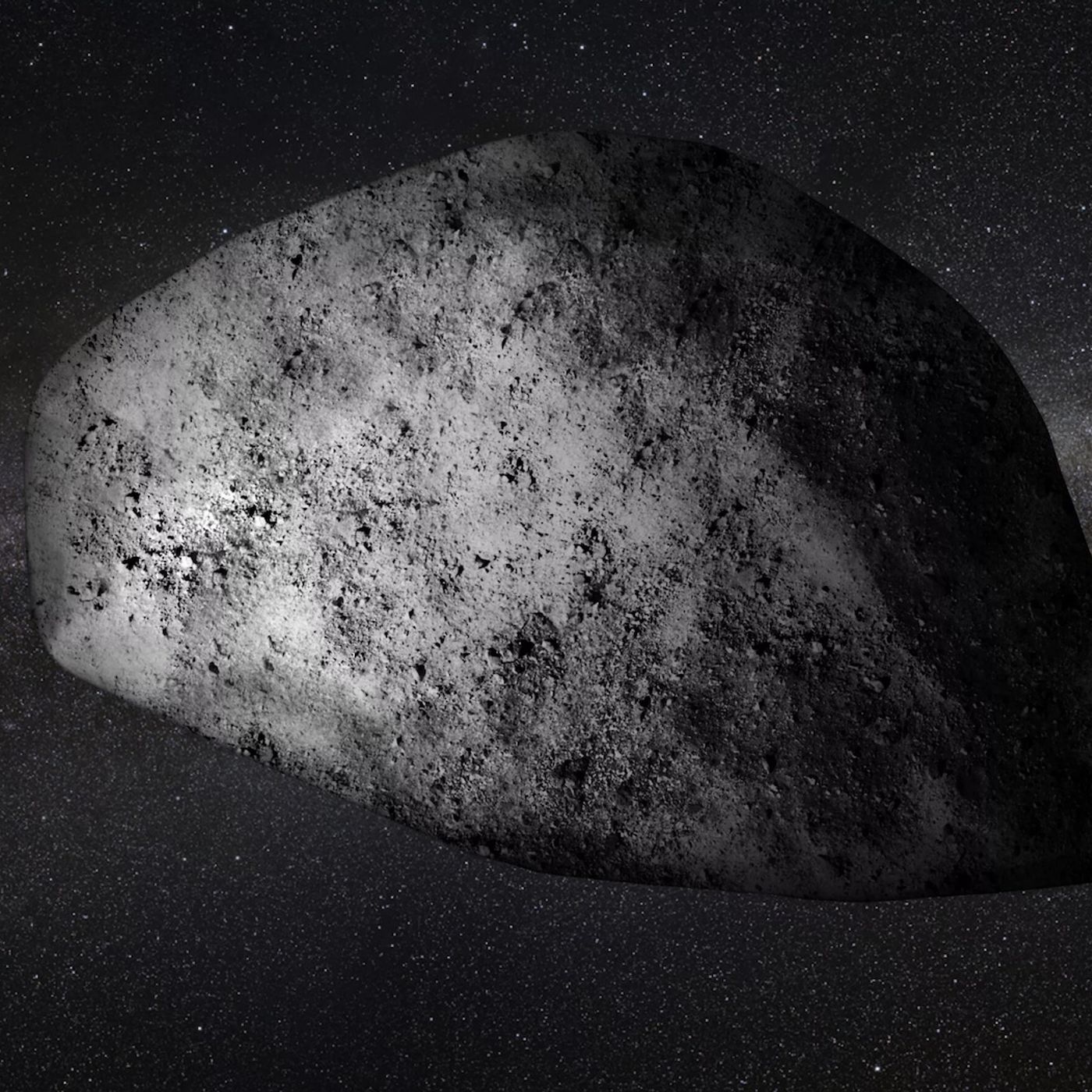
Throughout history small close approaching space rocks have been a part of our environment. Now, thanks to improved telescopes and cameras, asteroid hunters are routinely discovering these small asteroids as they pass closer than the Moon is to us. Since these tiny asteroids are only bright enough to detect for a few days out of their long, many month duration paths about the Sun, astronomers have had difficulty in determining how many of these small space rocks may exist in near Earth space. This effort received more emphasis when a house sized space rock exploded over Chelyabinsk, Russia in 2013 releasing about 10 times the energy of the Hiroshima atomic bomb. Although this asteroid was tiny compared to the one that ended the dinosaurs rule of the planet, the air blast the Chelyabinsk bolide produced caused nearly 1,500 human injuries and damaged more than 7,000 buildings. In a 2017 paper in the Astronomical Journal, Dr. David Trilling of Northern Arizona University and his group of researchers present data from the Blanco 4 meter telescope at the Cerro Tololo Inter-American Observatory in Chile which they use to estimate that there are approximately 3.2 million Earth approaching asteroids similar in size to the Chelyabinsk impactor. My team the Catalina Sky Survey uses 4 telescopes, 24 nights per month, in the mountains north of Tucson, Arizona with the goal to provide warnings for people to stay away from doors and windows should a Chelyabinsk sized space rock be on an impact trajectory with planet Earth.

Each episode of Travelers In The Night feels like a quiet, personal conversation under a dark sky. Hosted by astronomer Dr. Albert D. Grauer, this podcast brings the distant cosmos into sharp, intimate focus. Dr. Grauer isn't just an observer; he's an active participant in the hunt, working with the Catalina Sky Survey team that has consistently discovered near-Earth asteroids for years. In these brief and engaging segments, you'll hear firsthand accounts of what it's like to track these ancient celestial travelers-the asteroids and comets that silently pass by our world. The discussions move beyond simple facts to explore the real-world implications of these discoveries, from planetary defense to the sheer wonder of our dynamic solar system. Accompanied by the contemplative music of John Lyell's "Eternity," each installment offers a moment of calm reflection on humanity's place in the universe. It’s a perfect blend of grounded science and cosmic curiosity, making complex astronomical concepts accessible and deeply fascinating. For anyone who has ever looked up and wondered what's out there moving in the dark, this podcast provides a direct line to the front lines of discovery.
Author: Language: English Episodes: 100

Travelers In The Night
Podcast Episodes
872-Climate Ignored [not-audio_url] [/not-audio_url]

Duration: 2:01
Obtaining accurate data on the Earth’s climate and how it is changing is vital to inform agriculture , insurance risks, business planning, disaster preparedness, financial investments, wild fire mitigation, and national…
359E-390-One in 100,000 [not-audio_url] [/not-audio_url]

Duration: 2:01
Friday the 13th appears to continue to be a lucky day for the human race. When astronomers first discovered Apophis in 2004 it appeared possible that this 3 million ton, 1,200 foot diameter asteroid traveling at 8 mi/s c…
871-New Mars Trojan [not-audio_url] [/not-audio_url]

Duration: 2:01
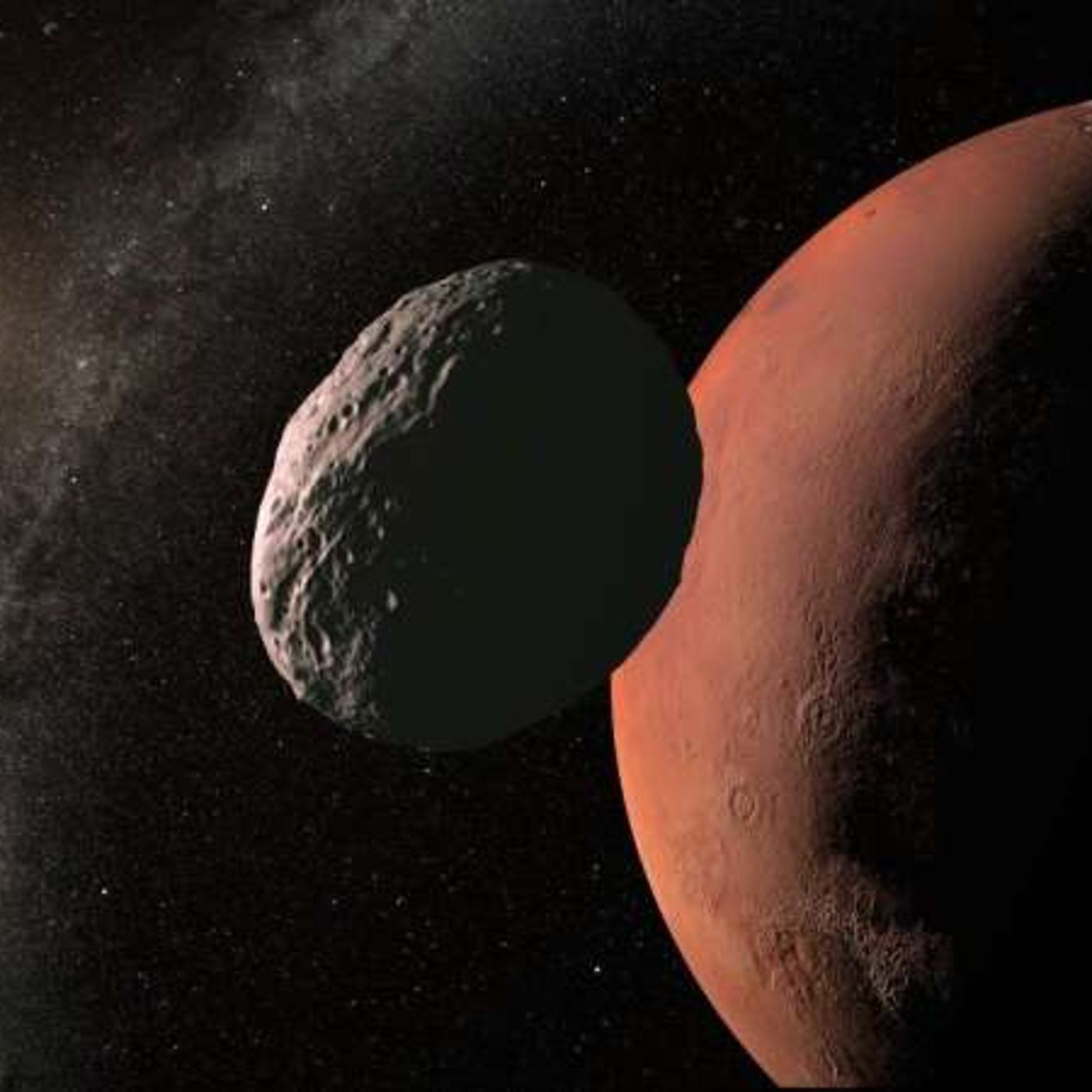
The Lagrange point L4 is 60° ahead of Mars whereas L5 is 60° behind Mars on the red planet’s orbital path about the Sun. An object placed at either of these locations is trapped gravitationally and is likely to remain th…
358E-389-Tiny Spacecraft [not-audio_url] [/not-audio_url]

Duration: 2:01
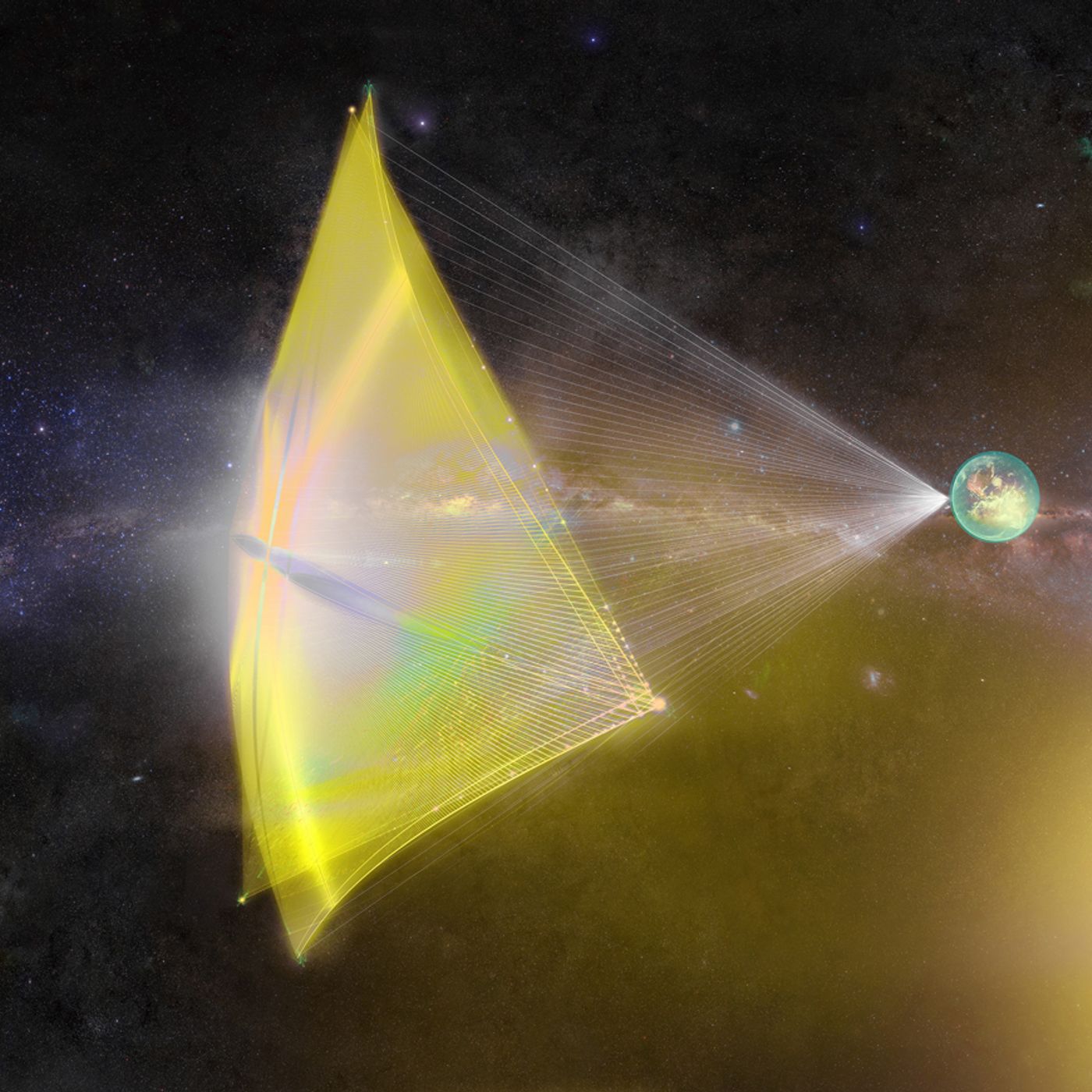
To reach the vicinity of the nearest star, 24 trillion miles away, in less than 20 years, an interstellar space probe would have to travel at a substantial fraction of the speed of light. Newton's laws of motion, publish…
870-Satellite Ashes [not-audio_url] [/not-audio_url]

Duration: 2:01
50 years ago scientists found that Chlorofluorocarbons or CFC chemicals in widespread use in refrigeration, air conditioning , and hair spray were beginning to damage the ozone layer in the Earth’s stratosphere which blo…
357E-388-40 years [not-audio_url] [/not-audio_url]

Duration: 2:01
Looking at the stars on a clear dark night, far from the artificial air glow humanity creates, have you ever wondered what it would be like to travel in truly deep interstellar space? 40 years after their launches in 197…
869-Taurid Resonant Swarm [not-audio_url] [/not-audio_url]

Duration: 2:01
The planets, millions of asteroids, tens of thousands of comets, distant icy worlds, and countless other bits and pieces of material orbit the Sun. A group of such co-orbiting objects is called the Taurid complex or swar…
356E-386-Interplanetary Sand Traps [not-audio_url] [/not-audio_url]

Duration: 2:01
When the Japanese spacecraft Hayabusa [Hi ya Boo sa] visited the near Earth asteroid Itokawa in 2005 it found this 2000 foot by 800 foot elliptical world to have a variety of surface features. Instead of being a solid ob…
868-Inside Venus [not-audio_url] [/not-audio_url]

Duration: 2:01
Astronomers have discovered some 1.4 million asteroids. Approximately 35,000 of these space rocks come near Earth. Less than 40 of them are classified as being Atira asteroids whose orbits lie entirely within the Earth’s…
355E-383-Moon Water [not-audio_url] [/not-audio_url]

Duration: 2:01
The lunar roving, battery powered, 4 wheel drive "Moon Buggy" allowed astronauts on Apollo 15, 16, and 17 to travel 8 mph on the lunar surface with a maximum range of approximately 4.7 mi. Some of the rocks that these sp…