370E-403-Double Comet

370E-403-Double Comet

Author: Albert D. Grauer January 6, 2026 Duration: 2:01
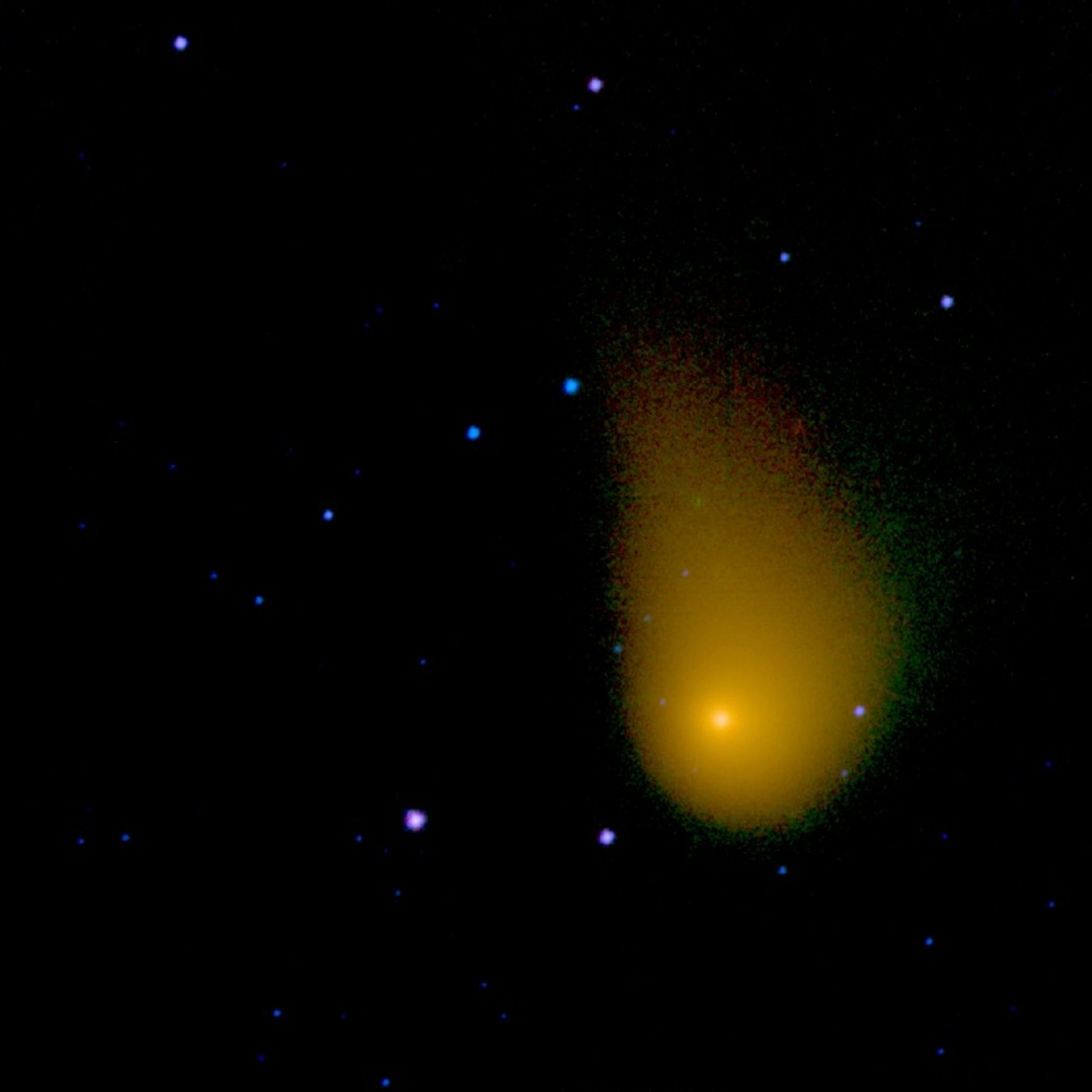
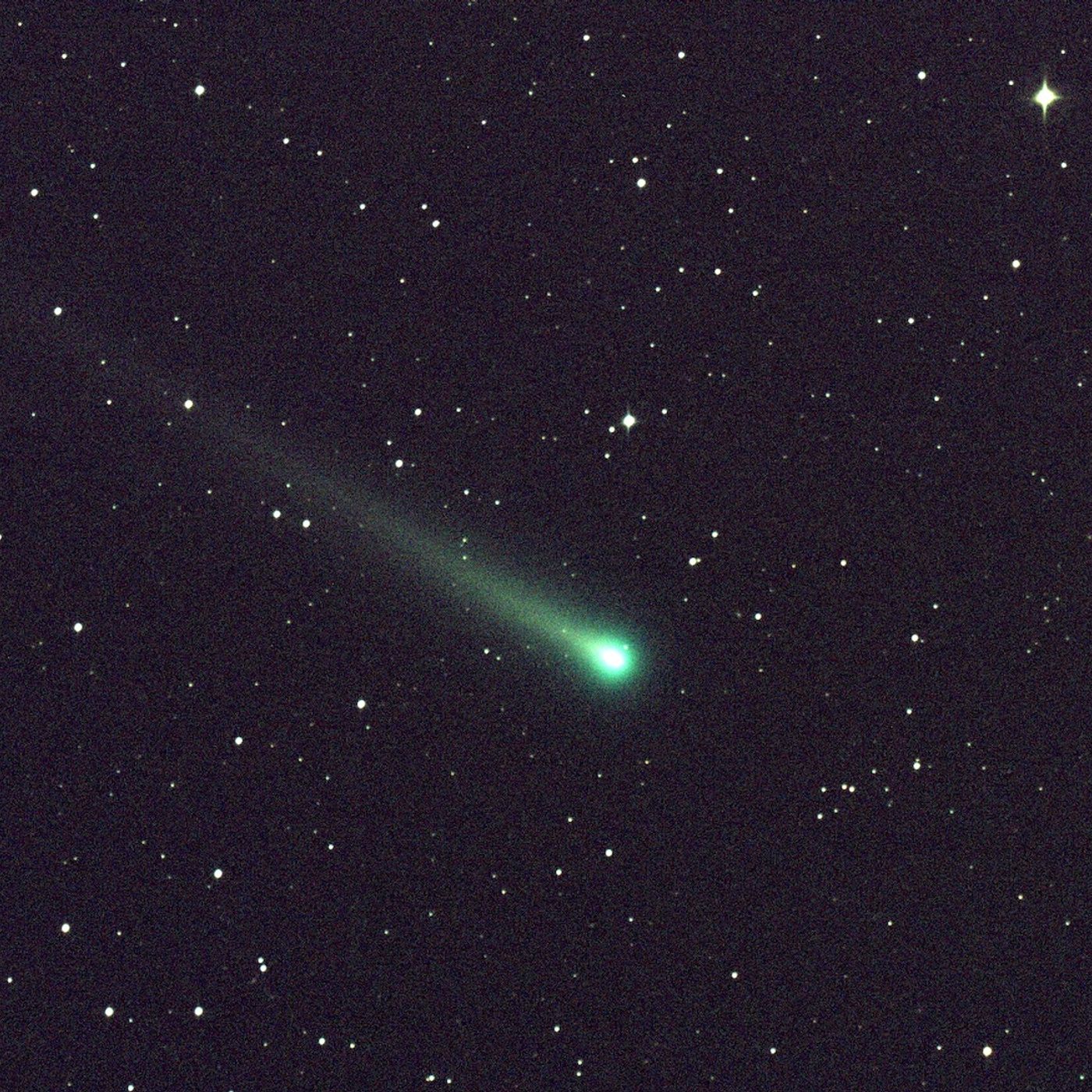
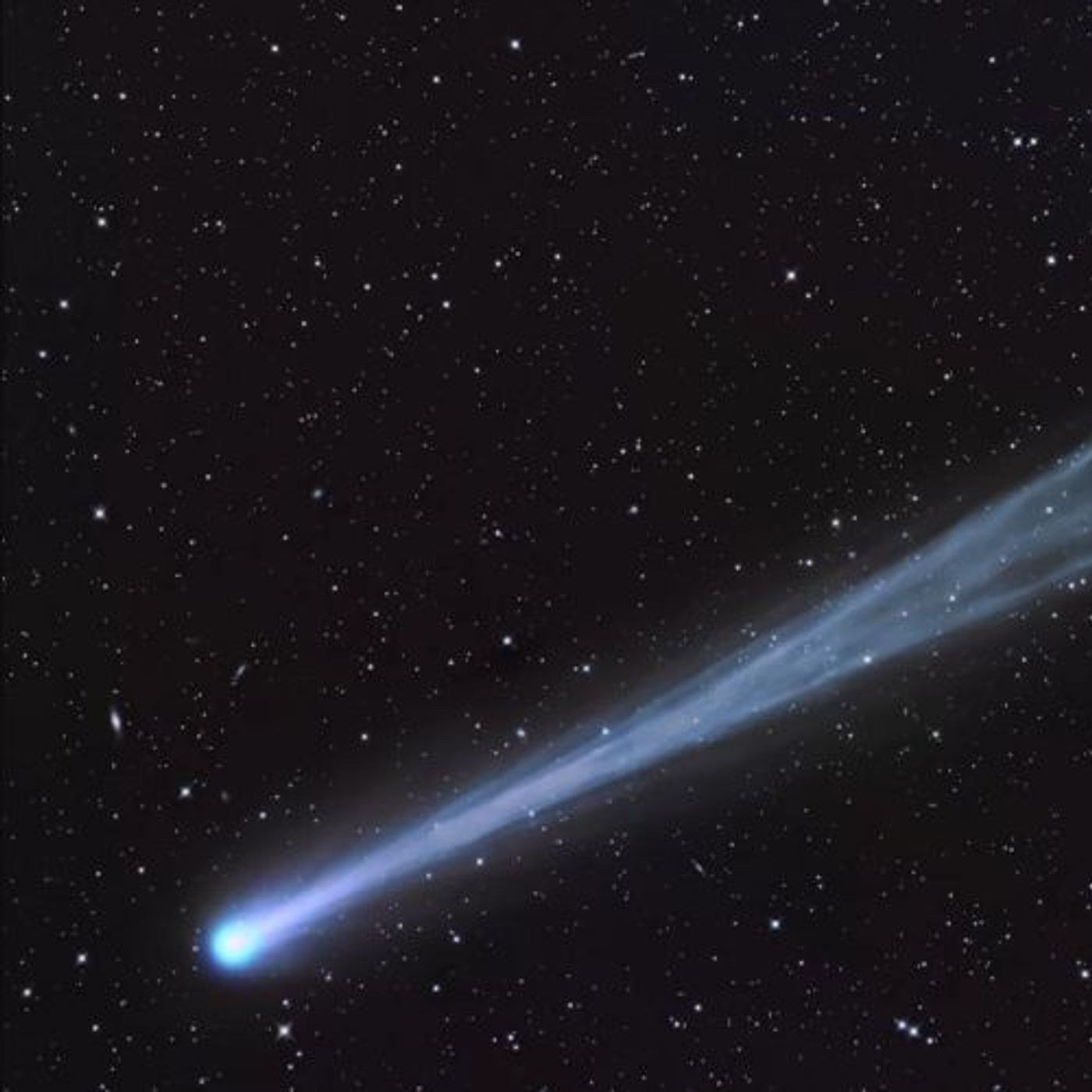
In November of 2006, University of Arizona's Spacewatch astronomers on Kitt Peak discovered a faint moving point of light in the night sky which appeared to be a garden variety main belt asteroid orbiting the Sun between Mars and Jupiter. The Minor Planet Center calculated it's orbit and gave it the name 2006 VW139. Five years later when it again moved closest to the Sun the Pan-STARRS group in Hawaii discovered that 2006 VW139 is surrounded by a gas cloud like a comet and it was given a comet designation, 288P. My Catalina Sky Survey teammate Steve Larson is a member of the team of astronomers who use the Hubble Space Telescope to observe asteroids which have comet like burps. Observations by the Hubble Space Telescope between August 2016 and January 2017 clearly show 288P to be two similar, mile diameter, asteroids orbiting each other about 60 miles apart, surrounded by a gas cloud, as they move about the Sun. The Hubble team estimates that about 5,000 years ago this strange object was formed when a rapidly rotating comet nucleus came apart into two large pieces. It's gas cloud is likely to come from volatile ices like carbon dioxide and water vapor which were liberated by solar heating. Objects like this one are very interesting since they may have had a role in bringing water to a bone dry Earth in the early days of our solar system.

Each episode of Travelers In The Night feels like a quiet, personal conversation under a dark sky. Hosted by astronomer Dr. Albert D. Grauer, this podcast brings the distant cosmos into sharp, intimate focus. Dr. Grauer isn't just an observer; he's an active participant in the hunt, working with the Catalina Sky Survey team that has consistently discovered near-Earth asteroids for years. In these brief and engaging segments, you'll hear firsthand accounts of what it's like to track these ancient celestial travelers-the asteroids and comets that silently pass by our world. The discussions move beyond simple facts to explore the real-world implications of these discoveries, from planetary defense to the sheer wonder of our dynamic solar system. Accompanied by the contemplative music of John Lyell's "Eternity," each installment offers a moment of calm reflection on humanity's place in the universe. It’s a perfect blend of grounded science and cosmic curiosity, making complex astronomical concepts accessible and deeply fascinating. For anyone who has ever looked up and wondered what's out there moving in the dark, this podcast provides a direct line to the front lines of discovery.
Author: Language: English Episodes: 1000

Travelers In The Night
Podcast Episodes
47E-59-Spotting Travelers In The Night [not-audio_url] [/not-audio_url]

Duration: 2:01
Travelers In The Night from outer space are closer than you may imagine. If you were to go straight up more than 4 miles you would need supplementary oxygen to stay conscious. At 50 - 70 miles, the realm of meteors, huma…
558-Exploring The Lunar South Pole [not-audio_url] [/not-audio_url]

Duration: 2:01
The race to explore the Moon by robots and eventually human lunar colonists is on. Near the lunar south pole human space colonists could use solar energy to power equipment and keep warm, manufacture needed items, and mo…
46E-58-NASA Hunts For A Special Asteroid [not-audio_url] [/not-audio_url]

Duration: 2:01
Several years ago the NASA funded Lincoln Near Earth Asteroid Research Program discovered an SUV sized asteroid which comes closer to Earth than about 1/6 of the distance to the Moon. It was2011 MD's mass and size make i…
557-Back On The Sky [not-audio_url] [/not-audio_url]

Duration: 2:01
In the American southwest we welcome the Monsoon rainy season during which the Earth receives much needed moisture. However, after six weeks of clouds, thunder, rain, hail, and lightning asteroid hunters are glad to be o…
45E-57-Hold A Traveler In The Night In Your Hand [not-audio_url] [/not-audio_url]

Duration: 2:01
Imagine holding a rock as old as our solar system that has traveled billions of miles through space to reach its present location. It might even be worth real money. We are talking about a meteorite that you have just di…
556-Earthly Moon Rock [not-audio_url] [/not-audio_url]

Duration: 2:01
In a most amazing turn of events, an international team of astronomers have published research in the Journal Earth and Planetary Science Letters which indicates that the a 3.9 Billion year old rock brought back by Apoll…
44E-56-A Whopper Or A Comet [not-audio_url] [/not-audio_url]

Duration: 2:01
2014 LJ21 is an asteroid, its brightness suggests that it is about 1 and a quarter miles in diameter. This estimate is based on the assumption that it reflects about 15% of the Sun light which strikes it. The impact of a…
555-Dead Comet Dust [not-audio_url] [/not-audio_url]

Duration: 2:01
The Phoenicids are a minor meteor shower which was discovered by the first Japanese Antarctic Research Expedition on December 5, 1956. To spot the illusive Phoenicids for yourself plan to observe during their expected pe…
43E-55-RADAR Telescopes Pair Up To ImageNEA [not-audio_url] [/not-audio_url]

Duration: 2:01
RADAR observations of asteroids and comets are an important way to measure an objects size, shape, and rate of spin. The precise distance measurements they provide make it possible to predict an object's path far into th…
554-Martian Rolling Stones [not-audio_url] [/not-audio_url]

Duration: 2:01
Imagine how strange and wonderful it would be to witness such an event. When the impacting object hit it produced huge boulders, which held loosely by Phobos's weak gravity, continued to roll around and around this tiny…