380E-416-Odd Ball

380E-416-Odd Ball

Author: Albert D. Grauer March 17, 2026 Duration: 2:01
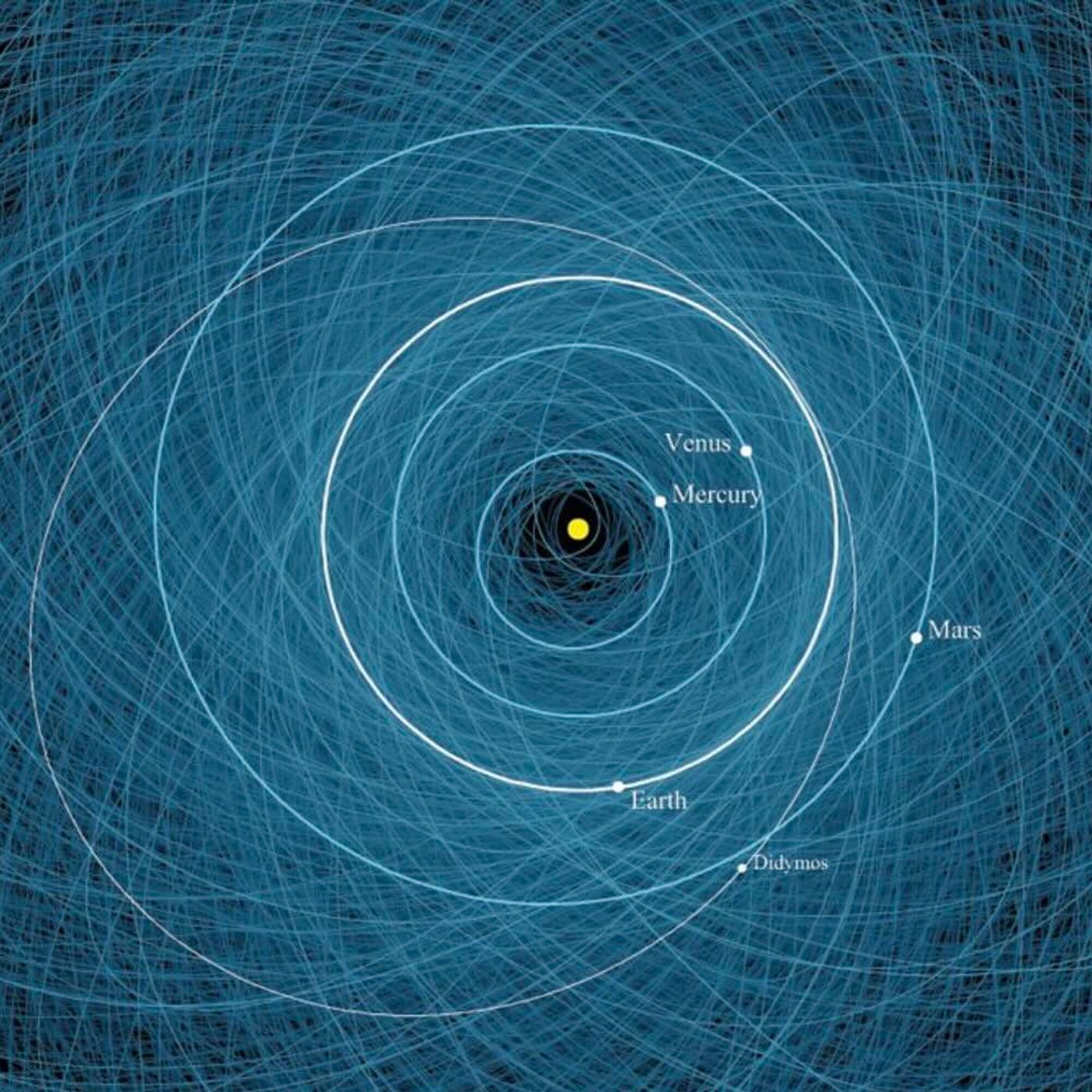
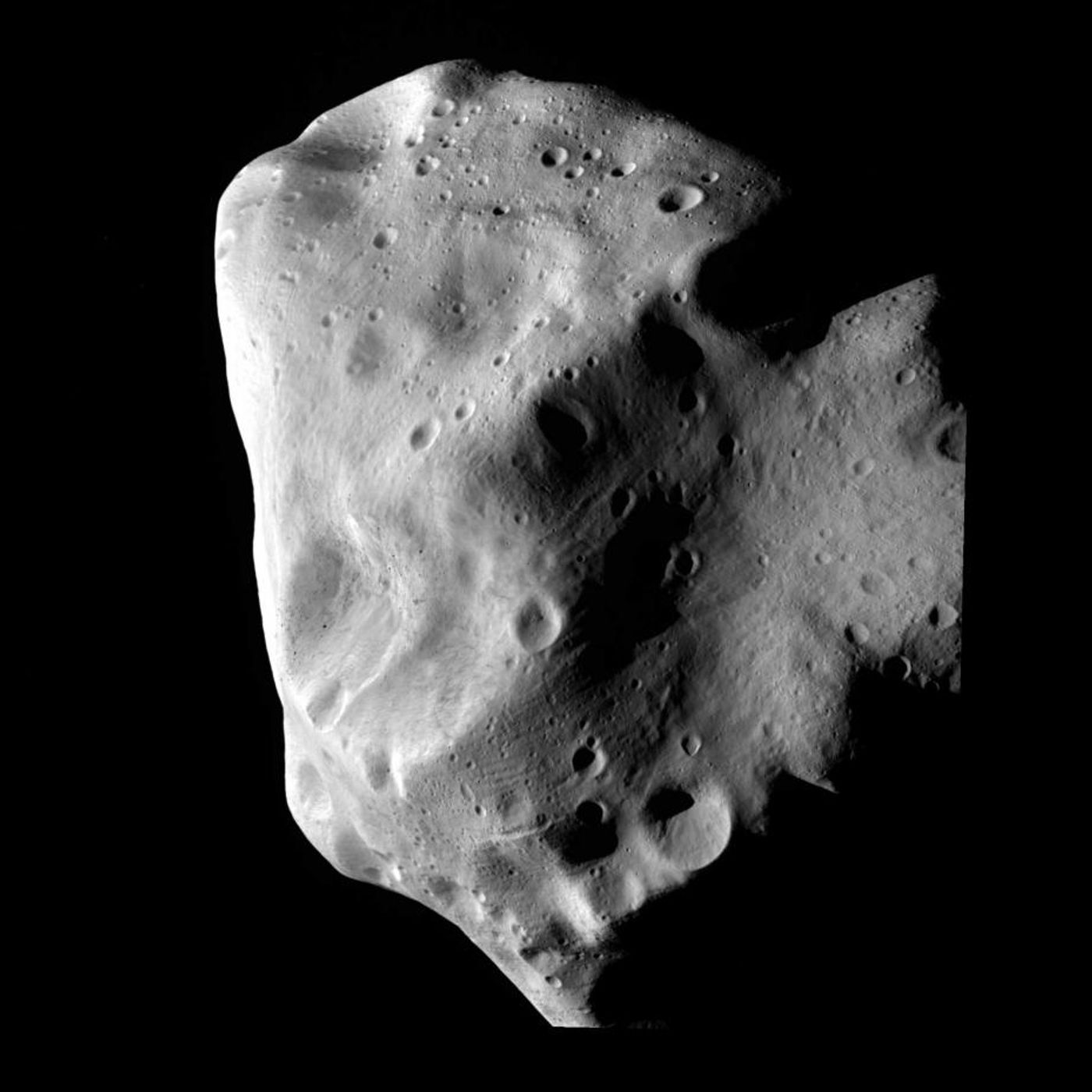
The orbits of the planets are closely aligned with the extension of the Sun's equator into space and are contained within the flattened disk of material which forms the plane solar system. Most asteroids have orbits with inclinations or tilts to the solar system's plane which are less than 20 degrees. Thus, when my Catalina Sky Survey teammate Rose Matheny discovered a small space rock which soars into the lonely space high above and below our solar system's plane, it got our attention. As with all of our asteroid discoveries, Rose had no idea of what kind of object she had discovered with our Schmidt Telescope on Mt. Bigelow, Arizona until it had been tracked by observers around the world. The Minor Planet Center used the data from 14 different telescopes to calculate an orbit, estimate a size, and give the new object the name, 2017 TF4. Rose's odd ball near Earth Apollo asteroid discovery , 2017 TF4, has an orbit which is tilted by 60 degrees to the plane of our solar system. It's inclination or tilt is greater than 99.5% of the other 8,000 known Earth approaching Apollo asteroids. 2017 TF4, Rose's 260 foot diameter discovery orbits the Sun at about the same distance as the Earth once every 414 days. Perhaps as asteroid hunters discover additional small objects with orbits similar to Rose's discovery we will be able to trace them back to when they were created by a catastrophic collision long ago.

Each episode of Travelers In The Night feels like a quiet, personal conversation under a dark sky. Hosted by astronomer Dr. Albert D. Grauer, this podcast brings the distant cosmos into sharp, intimate focus. Dr. Grauer isn't just an observer; he's an active participant in the hunt, working with the Catalina Sky Survey team that has consistently discovered near-Earth asteroids for years. In these brief and engaging segments, you'll hear firsthand accounts of what it's like to track these ancient celestial travelers-the asteroids and comets that silently pass by our world. The discussions move beyond simple facts to explore the real-world implications of these discoveries, from planetary defense to the sheer wonder of our dynamic solar system. Accompanied by the contemplative music of John Lyell's "Eternity," each installment offers a moment of calm reflection on humanity's place in the universe. It’s a perfect blend of grounded science and cosmic curiosity, making complex astronomical concepts accessible and deeply fascinating. For anyone who has ever looked up and wondered what's out there moving in the dark, this podcast provides a direct line to the front lines of discovery.
Author: Language: English Episodes: 1000

Travelers In The Night
Podcast Episodes
840-Lunar South Pole Living [not-audio_url] [/not-audio_url]

Duration: 2:01
NASA has decided to make the lunar south pole the focus for human space exploration. It is a rough area consisting of high mountains, valleys, and craters.One serious problem is that the highest possible elevation of the…
327E-346-Arctic Ice [not-audio_url] [/not-audio_url]

Duration: 2:01
Eliminating NASA's climate research programs is a bit like someone who has a CT scan which reveals a health problem demanding that the CT scan machine be destroyed instead of looking for a cure for themselves. On March 7…
839-Dodged A Meteor [not-audio_url] [/not-audio_url]

Duration: 2:01
Recently , for the first time, the sight and sound of a meteor impact was recorded by a doorbell camera on Prince Edward Island, Canada. Fortunately the event occurred a few minutes after Joe Velaidum the home’s owner ha…
326E-345-364days [not-audio_url] [/not-audio_url]

Duration: 2:01
My Catalina Sky Survey teammate Greg Leonard was using the University of Arizona's 60 inch telescope atop Mt. Lemmon when he discovered a 50 foot diameter asteroid with an orbital period around the Sun of 364.4 days. Aft…
838-Webb-Asteroid-Discoveries [not-audio_url] [/not-audio_url]

Duration: 2:01
Using high powered graphics processing units, a team of 21 astronomers led by Dr. Artem Y. Burdanov of MIT used 93 hours of data from the James Webb Space Telescope or JWST for short to serendipitously search for asteroi…
325E-344-Gnats [not-audio_url] [/not-audio_url]

Duration: 2:01
Near Earth Asteroids or NEAs which are accessible are those objects whose orbits bring them close to Earth at speeds which are reachable by our rockets. They are potential space mission targets for science as well as for…
837-Weird Extraterrestrial Life [not-audio_url] [/not-audio_url]

Duration: 2:01
We will continue to search for life as we know it by studying the chemistry of the atmospheres of extraterrestrial planets and trying to detect signals from alien civilizations while being aware that alien life could be…
836-Jacqui's Comet [not-audio_url] [/not-audio_url]

Duration: 2:01
My Catalina Sky Survey teammate Jacqueline Fazekas was asteroid hunting with our 60 inch telescope on Mt. Lemmon, Arizona when she spotted a glowing patch of light moving through the constellation of Cancer.By discoverin…
323E-342-That's Close [not-audio_url] [/not-audio_url]

Duration: 2:01
My Catalina Sky Survey teammate Greg Leonard discovered an asteroid, 2017 EA, which is so tiny that it could pass under a basketball hoop. It missed exploding in our atmosphere by only about 9,000 miles as it streaked be…
835-Bok Impactor [not-audio_url] [/not-audio_url]

Duration: 2:01
My Catalina Sky Survey teammate Vivian Carvajal was asteroid hunting in the constellation of Aries with the Steward Observatory 90 inch Bok telescope on Kitt Peak, Arizona when she spotted a fast moving point of light in…