382E-418-Fireball II

382E-418-Fireball II

Author: Albert D. Grauer March 31, 2026 Duration: 2:01
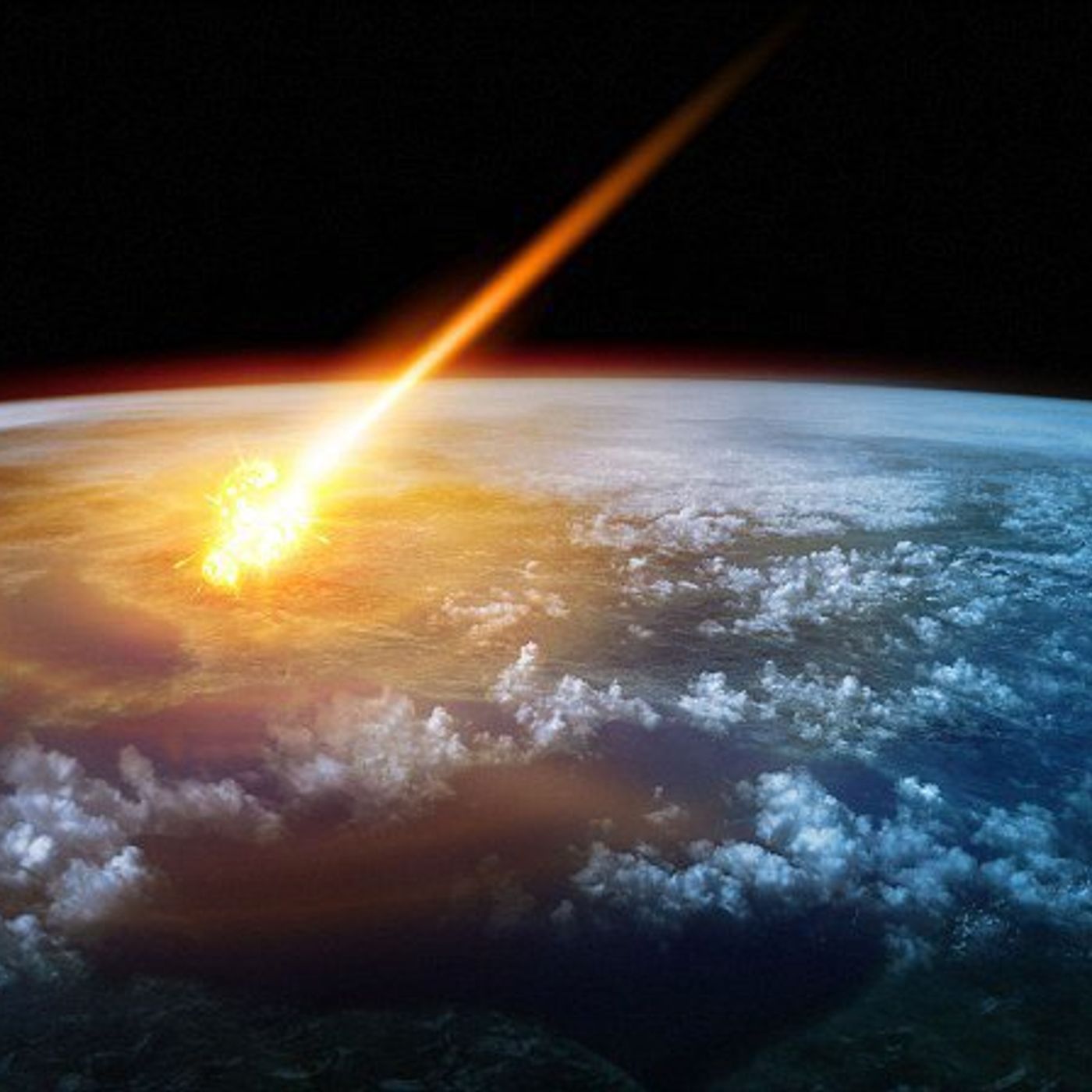
Recently there were four fireball meteors, brighter than the planet Venus, which exploded over Germany, France, Ohio, and Arizona within the space of only 10 hours. A total of 1320 individuals were treated to light shows and reported their observations to the American Meteor Society. The one which exploded over Arizona was probably several feet in diameter and entered the Earth's atmosphere over Flagstaff. This event was observed in Arizona, California, Nevada, Utah, New Mexico, and Colorado. It was recorded by numerous electronic security and dashboard cameras and was visible for from 3 to 7 seconds. This meteor also produced a booming sound which was reported by about a dozen different observers. The fireball was last seen over Happy Jack, Arizona and is likely to have produced meteorite fragments which are scattered along Interstate 17 somewhere in the rugged country between Phoenix and Flagstaff. There are likely to be on the order of 1,000 fireball events over the Earth every day. Most of them occur over the oceans or during the day and pass unobserved by humans. During the first 10 months of 2017 the most energetic fireball event occurred when a meteoroid entered the Earth's atmosphere at 8.5 miles/second above the ocean between Australia and Antartica. If you record a fireball with your dash cam or security camera report it to the American Meteor Society. Your data will be very important in finding out where it came from in the solar system as well as to indicate where it might be possible to find pieces of it on the ground.

Each episode of Travelers In The Night feels like a quiet, personal conversation under a dark sky. Hosted by astronomer Dr. Albert D. Grauer, this podcast brings the distant cosmos into sharp, intimate focus. Dr. Grauer isn't just an observer; he's an active participant in the hunt, working with the Catalina Sky Survey team that has consistently discovered near-Earth asteroids for years. In these brief and engaging segments, you'll hear firsthand accounts of what it's like to track these ancient celestial travelers-the asteroids and comets that silently pass by our world. The discussions move beyond simple facts to explore the real-world implications of these discoveries, from planetary defense to the sheer wonder of our dynamic solar system. Accompanied by the contemplative music of John Lyell's "Eternity," each installment offers a moment of calm reflection on humanity's place in the universe. It’s a perfect blend of grounded science and cosmic curiosity, making complex astronomical concepts accessible and deeply fascinating. For anyone who has ever looked up and wondered what's out there moving in the dark, this podcast provides a direct line to the front lines of discovery.
Author: Language: English Episodes: 1000

Travelers In The Night
Podcast Episodes
314-Our Number [not-audio_url] [/not-audio_url]

Duration: 2:01
The extremely unlikely scenario of an impactor with our number on it.
313-Martian Motherlode [not-audio_url] [/not-audio_url]

Duration: 2:01
Using ground the penetrating RADAR on the NASA Mars Reconnaissance Orbiter, scientists have discovered an ice deposit on Mars the size of New Mexico.
312-200 Yards Of Trouble [not-audio_url] [/not-audio_url]

Duration: 2:01
An asteroid which can come to within about an Earth circumference of the surface of our home planet needs watching.
311-Bright and Bald [not-audio_url] [/not-audio_url]

Duration: 2:01
Humans are developing the ability to study an Earth approaching object to prepare for one that is on an impact trajectory with our home planet.
310-Ethics and Mars [not-audio_url] [/not-audio_url]

Duration: 2:01
Should martian microbes be sacrificed to human space exploration.
309-Tiny Atira [not-audio_url] [/not-audio_url]

Duration: 2:01
Atira, named for the Pawnee goddess of Earth and the Morning and Evening Star orbits the Sun inside of our path.
308-Planning For Impact [not-audio_url] [/not-audio_url]

Duration: 2:01
Planning for the unlikely event that an asteroid is on a collision course with planet Earth will minimize injury and the loss of life.
307-Stepping It Up [not-audio_url] [/not-audio_url]

Duration: 2:01
Competition gives humans the best chance to find dangerous objects and tax payers get more bang for their buck.
306-Egg Rock [not-audio_url] [/not-audio_url]

Duration: 2:01
The NASA/JPL Mars Curiosity Rover discovers a meteorite on Mars.
305-Murky [not-audio_url] [/not-audio_url]

Duration: 2:01
A very close approaching asteroid is observed to pass through the Earth's shadow.