383E-419-ET's Cigar

383E-419-ET's Cigar

Author: Albert D. Grauer April 7, 2026 Duration: 2:01
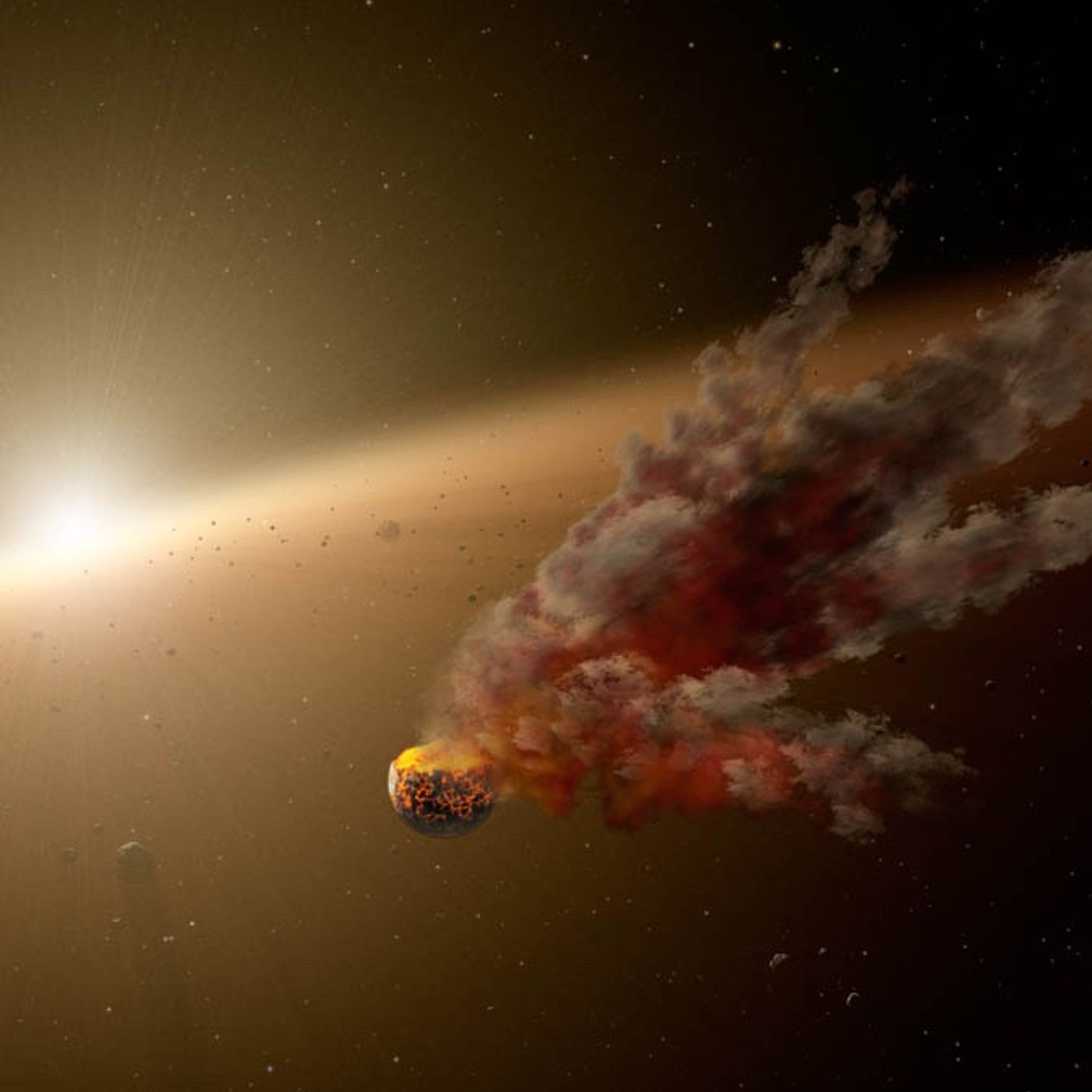
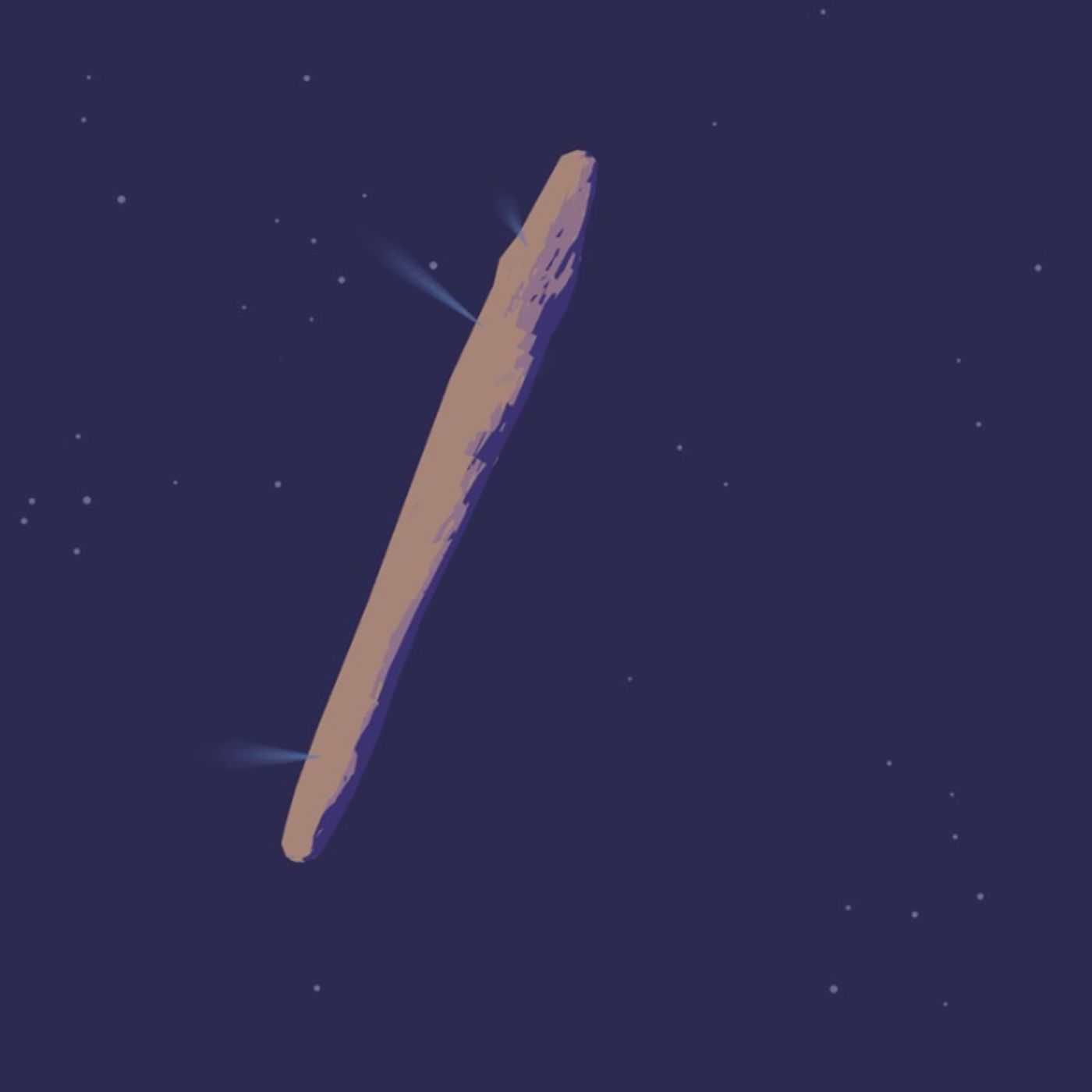
In 2012 as it crossed the orbit of Neptune heading towards the Sun a small space rock was 250 times fainter than can be detected by the Hubble Space Telescope. Five years later, after it had rounded the Sun, it became visible in asteroid hunter's telescopes for about 16 days, as it streaked across our planet's orbit at 37 miles per second, as it continued to move away from the Sun. During that brief period of time it was discovered by the PanSTARRS group in Hawaii, tracked by telescopes around the world, and given the name Oumuamua (“Oh-moo-ah-moo-ah”). Turns out that previous to the discovery observations, sightings too sparse to report, were obtained by my team using the Catalina Sky Survey's Schmidt telescope on Mt. Bigelow, Arizona. In 2024 this unusual space rock will cross Pluto's average distance from the Sun traveling on a path which will take it into deep interstellar space. Since we don't know how Oumuamua could obtained it's current trajectory from processes in our solar system, it is safe to presume that it originated in truly deep space. The mystery of Oumuamua deepened when astronomers measured it's brightness to change regularly by nearly 10 times over a 7.3 hour period of time. If these brightness variations are due to it's shape, and thus the amount of sun light reflected as it rotates, Oumuamua looks like a cigar. Even though Elon Musk's SpaceX Mars rocket could catch Oumuamua, it is more cost effective is to simply wait to discover another one of the several interstellar asteroids which pass by us each year.

Each episode of Travelers In The Night feels like a quiet, personal conversation under a dark sky. Hosted by astronomer Dr. Albert D. Grauer, this podcast brings the distant cosmos into sharp, intimate focus. Dr. Grauer isn't just an observer; he's an active participant in the hunt, working with the Catalina Sky Survey team that has consistently discovered near-Earth asteroids for years. In these brief and engaging segments, you'll hear firsthand accounts of what it's like to track these ancient celestial travelers-the asteroids and comets that silently pass by our world. The discussions move beyond simple facts to explore the real-world implications of these discoveries, from planetary defense to the sheer wonder of our dynamic solar system. Accompanied by the contemplative music of John Lyell's "Eternity," each installment offers a moment of calm reflection on humanity's place in the universe. It’s a perfect blend of grounded science and cosmic curiosity, making complex astronomical concepts accessible and deeply fascinating. For anyone who has ever looked up and wondered what's out there moving in the dark, this podcast provides a direct line to the front lines of discovery.
Author: Language: English Episodes: 1000

Travelers In The Night
Podcast Episodes
284-Dark Trails [not-audio_url] [/not-audio_url]

Duration: 2:01
After a meteor is no longer visible to the human eye it leaves a dark trail which can be followed by Doppler Weather RADAR.
283-Micro-Astronomy [not-audio_url] [/not-audio_url]

Duration: 2:01
A single crystal from space.
282-Biggest Rocket [not-audio_url] [/not-audio_url]

Duration: 2:01
NASA's Space Launch System Core Stage will start a new age of space exploration,
281-Starlight Walking [not-audio_url] [/not-audio_url]

Duration: 2:01
Experience the age old sense of wonder which happens when a human looks into deep space and thinks about what might be out there.
280-Ice Volcanos [not-audio_url] [/not-audio_url]

Duration: 2:01
Fire on Earth may be ice on other worlds.
279-Hottest [not-audio_url] [/not-audio_url]

Duration: 2:01
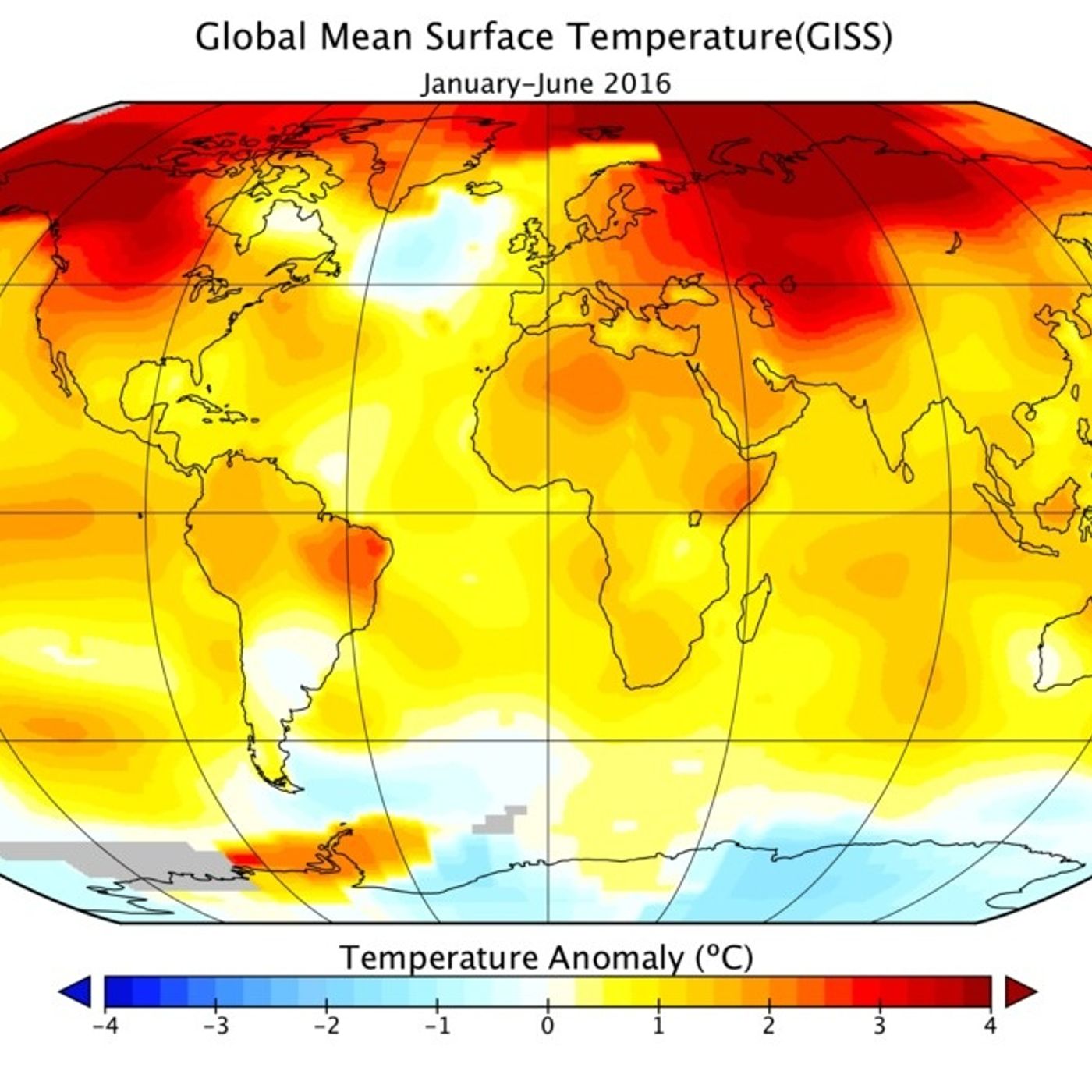
Our world is undergoing an alarming warming.
278-Nope [not-audio_url] [/not-audio_url]

Duration: 2:01
This is the story of the big one that got away.
277-Old Girl [not-audio_url] [/not-audio_url]

Duration: 2:01
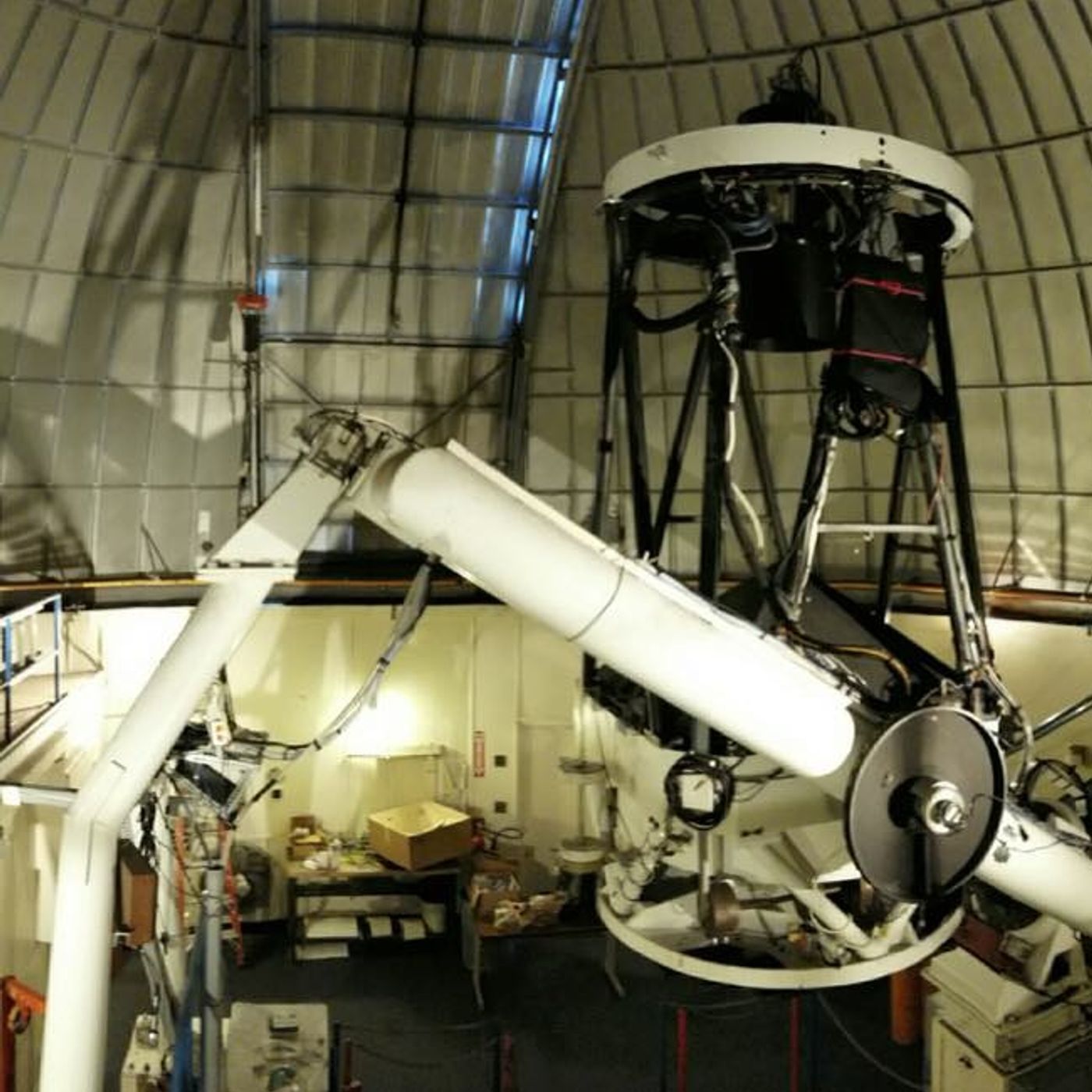
Imagine a telescope old enough for Senior Citizen discounts, which has traveled between mountains, and started life with a metal mirror measuring one thing at time being equipped with a camera with 100 million pixels.
276-Big 3 [not-audio_url] [/not-audio_url]

Duration: 2:01
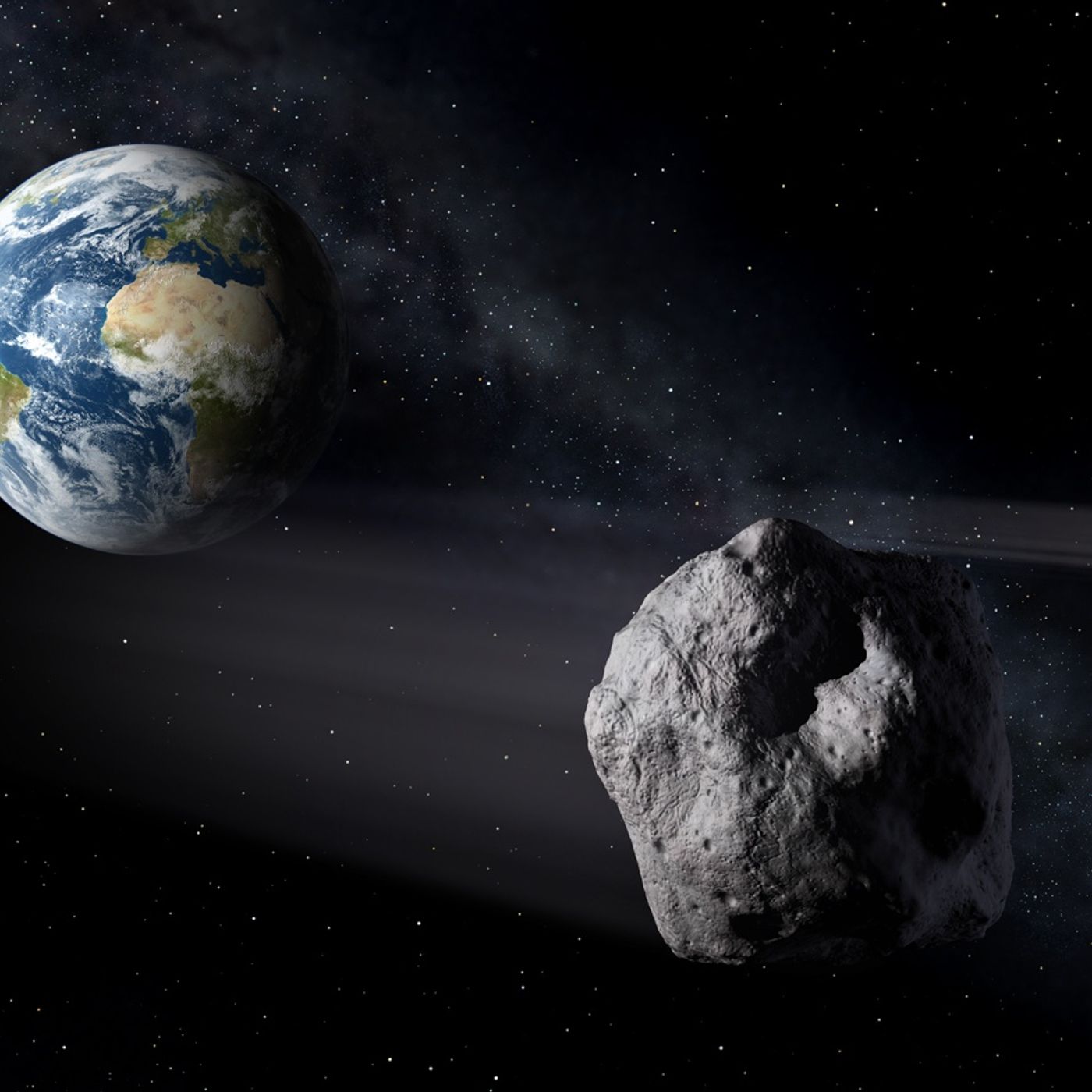
Large potentially dangerous asteroids are still out there.