How the Inflation Reduction Act will change our country (and our planet)

How the Inflation Reduction Act will change our country (and our planet)

Author: The Watson School March 15, 2023 Duration: 33:12

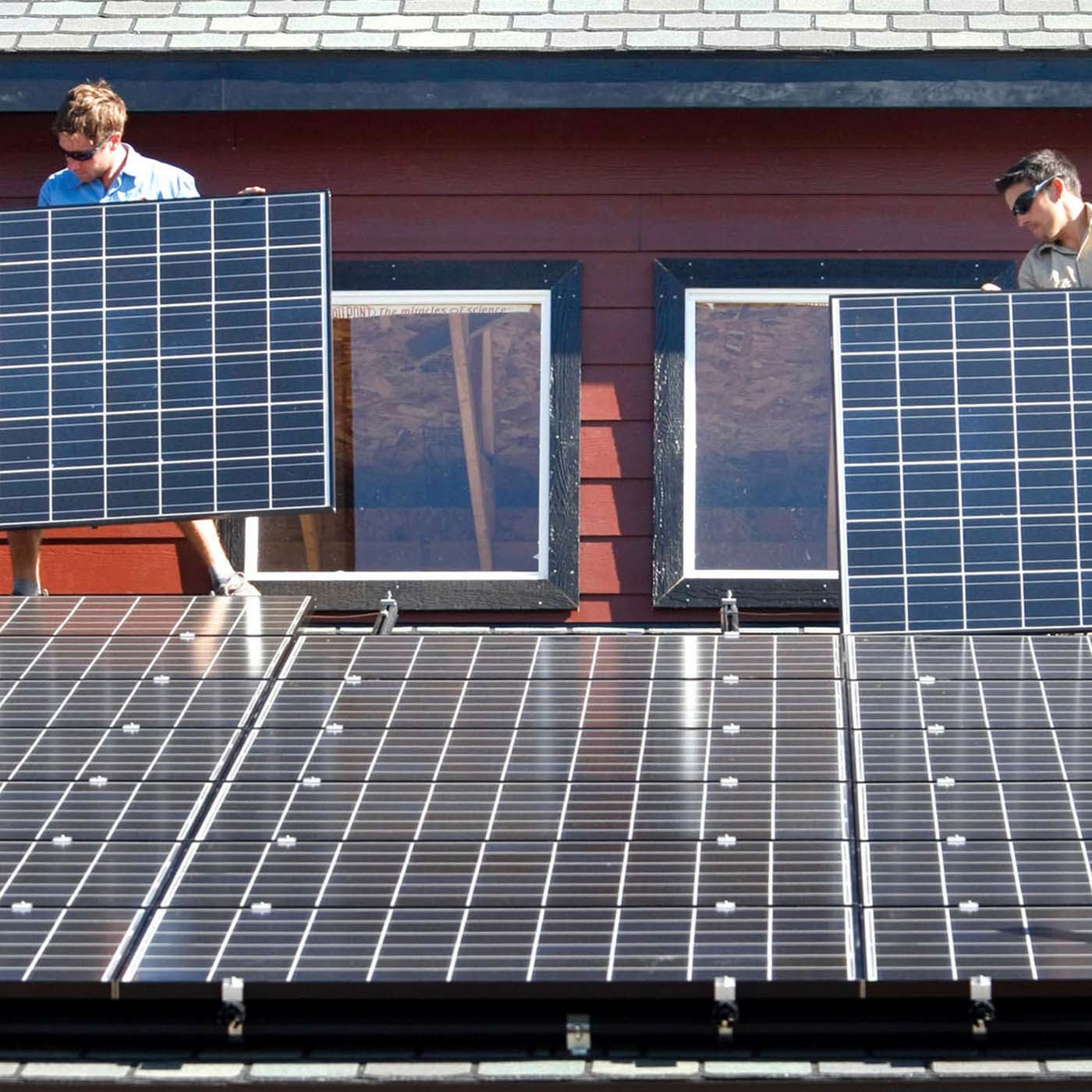
Last year, the biggest piece of climate legislation in American history was signed into law. However, it wasn’t always touted as such; even its name - “The Inflation Reduction Act” – avoided the topic of climate.

This puts it in a long line of federal climate legislation, according to climate policy experts Leah Stokes and Jeff Colgan. 

As Jeff told Dan Richards in this episode of “Trending Globally,” “Lots of the progress that we make on climate change is best done when the word climate is never mentioned at all.” 

Jeff is a political scientist and director of the Climate Solutions Lab at Watson. Leah is an associate professor of environmental politics at the University of California at Santa Barbara, and she helped craft the climate-related provisions in the Inflation Reduction Act. To understand the relationship between the science and politics of climate change in the U.S., you couldn’t ask for two better guests. 

As they explain, the bill’s name is just one example of how this legislation was shaped as much by the politics of a closely divided Senate as it was by the science of climate change and decarbonization. 

In this episode, Jeff and Leah talk with Dan Richards about the contents of the bill, what it took to get it passed and how it will contribute to the global effort to fight climate change.

Listen to Leah Stokes’ podcast “A Matter of Degrees”.

Explore the Climate Solutions Lab “Climate Opportunity Map”.

Learn more about the Watson Institute’s other podcasts.


From the Watson School at Brown University, Trending Globally: Politics and Policy brings the insights of leading scholars and practitioners directly into your ears. This award-winning podcast digs into the complex forces shaping our world, moving beyond headlines to understand the deeper political and policy decisions behind them. Each conversation is designed to unpack a pressing issue-whether it's international trade tensions, public health crises, or social movements-with clarity and depth. You'll hear experts from the Watson Institute and beyond explain not just what's happening, but why it matters and how different policies might change the course of events. The discussions are grounded in rigorous research yet remain accessible, turning daunting global topics into understandable and engaging dialogue. For anyone curious about the mechanics of power, governance, and societal change, this series offers a vital resource. It’s a direct line to some of the sharpest minds in international and public affairs, all within a format that fits into your daily routine. Find Trending Globally: Politics and Policy and add it to your listening rotation for a consistently informative perspective on the stories that define our time.
Author: Language: English Episodes: 100

Trending Globally: Politics and Policy
Podcast Episodes
Small Barriers, Big Impact: Rethinking International Development [not-audio_url] [/not-audio_url]

Duration: 39:15
Bryce Steinberg is a development economist, which means she studies how lower-income countries grow into more prosperous ones. More specifically, she studies how to help people in low-income countries build their “human…
‘Illicit global economics 101’ with Peter Andreas [not-audio_url] [/not-audio_url]

Duration: 39:20
Watson School political scientist Peter Andreas has spent decades studying the global economy — but not the one you read about in the business section, or are taught in Econ 101. His focus is on the illicit global econom…
Diplomacy, security, and the “Art of Coercion” [not-audio_url] [/not-audio_url]

Duration: 47:48
In his new book “The Art of Coercion,” Watson political scientist Reid Pauly provides a seemingly straightforward definition of coercion: “The practice of convincing a target by the use of threats, to bend to your will.”…
What does the ‘One Big Beautiful Bill’ mean for America? [not-audio_url] [/not-audio_url]

Duration: 38:30
On July 4th, President Trump signed the “One Big Beautiful Bill Act” into law. The bill cuts trillions of dollars in taxes, and allocates hundreds of billions in new spending. To offset all of this, it calls for over a t…
USAID is gone. What's the future of international aid? [not-audio_url] [/not-audio_url]

Duration: 33:24
On July 1st, the United States Agency for International Development (USAID) officially closed its operations. It was the culmination of a months-long effort by the Trump administration to dismantle the agency, which had…
Inflation’s winners and losers, with Mark Blyth [not-audio_url] [/not-audio_url]

Duration: 26:14
On this episode, Dan Richards talks with Mark Blyth about his new book, co-written with Nicoló Fraccaroli, called “Inflation: A Guide for Users and Losers.” Mark and Dan discuss the competing theories for what causes inf…
How American firearms fuel violence in Mexico (rebroadcast) [not-audio_url] [/not-audio_url]

Duration: 35:09
Mexico, like the United States, has a gun violence problem. It has one of the highest murder rates in the world, and most of those murders come from firearms. In 2019, for example, almost 70% of the country's 35,000 murd…
Press freedom and democracy in Africa and around the world [not-audio_url] [/not-audio_url]

Duration: 38:12
The World Press Freedom Index, which is issued by Reporters without Borders, measures the health of press freedom around the world. They do so along a number of axes, including the economic health of independent media, l…
Trump’s (second) “first 100 days” [not-audio_url] [/not-audio_url]

Duration: 34:50
Tuesday, April 29, marked the first 100 days of Trump’s second term. To help make sense of all that’s happened (and a lot has happened), Dan Richards spoke with political scientist and Interim Director of the Watson Inst…
