Why the West is thinking about the coup in Niger all wrong

Why the West is thinking about the coup in Niger all wrong

Author: The Watson School September 6, 2023 Duration: 28:41

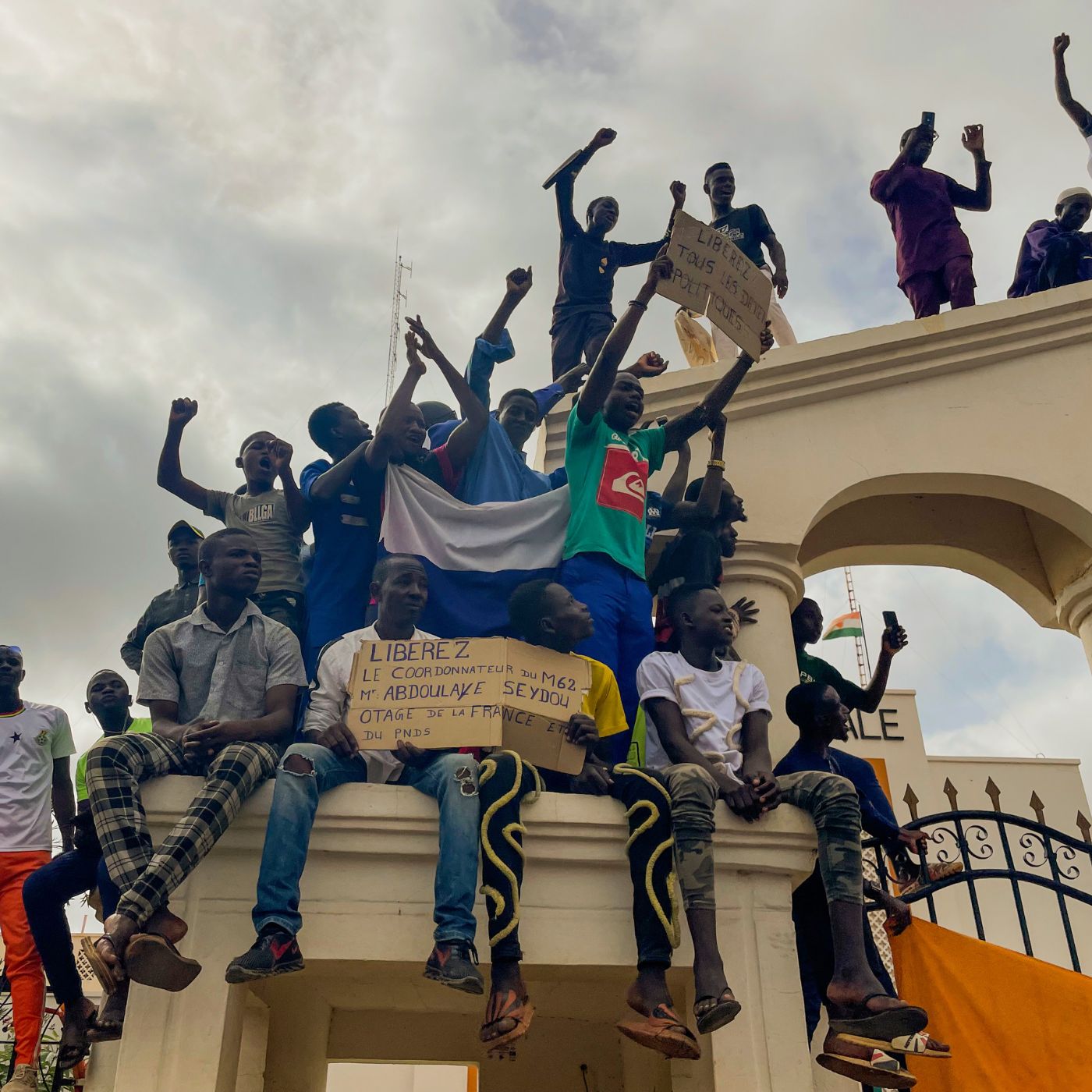
This summer, military forces in the West African country of Niger pushed the country’s president, Mohamed Bazoum, out of power.

This was not the first coup in Niger’s history, or in the recent history of the Sahel region of Africa. In the last few years there have been coups in multiple countries in the region, including Burkina Faso and Mali. 

But this one has put the West especially on edge. 

Why?

Listening to U.S. officials or much of the reporting on the topic, you’d think this coup has huge ramifications for the fight against Islamist militant groups in West Africa, and for the U.S. and Russia’s race to gain influence across Africa. 

But as Stephanie Savell, an expert on U.S.-Niger relations and a co-director of the Costs of War Project at the Watson Institute, explains, those framings of the coup largely miss what’s really going on in the region. And worse still — they might actually make it more difficult to bring peace and stability to this part of the world. 

Read more from Stephanie Savell on the coup in Niger

Learn more about the Costs of War project

Learn more about the Watson Institute’s other podcasts


From the Watson School at Brown University, Trending Globally: Politics and Policy brings the insights of leading scholars and practitioners directly into your ears. This award-winning podcast digs into the complex forces shaping our world, moving beyond headlines to understand the deeper political and policy decisions behind them. Each conversation is designed to unpack a pressing issue-whether it's international trade tensions, public health crises, or social movements-with clarity and depth. You'll hear experts from the Watson Institute and beyond explain not just what's happening, but why it matters and how different policies might change the course of events. The discussions are grounded in rigorous research yet remain accessible, turning daunting global topics into understandable and engaging dialogue. For anyone curious about the mechanics of power, governance, and societal change, this series offers a vital resource. It’s a direct line to some of the sharpest minds in international and public affairs, all within a format that fits into your daily routine. Find Trending Globally: Politics and Policy and add it to your listening rotation for a consistently informative perspective on the stories that define our time.
Author: Language: English Episodes: 100

Trending Globally: Politics and Policy
Podcast Episodes
The origins of America's separate and unequal schools [not-audio_url] [/not-audio_url]

Duration: 27:43
In the United States, inequality along the lines of race in education is such a persistent issue that it often fails to make headlines. COVID-19 brought it back to the front of the nation’s consciousness as evidence moun…
After four years of COVID-19, are we safer against future pandemics? [not-audio_url] [/not-audio_url]

Duration: 29:21
This December marks four years since the first confirmed case of COVID-19 in Wuhan, China. On this episode of Trending Globally, Dan Richards speaks with two experts from the Pandemic Center at Brown University’s School…
Israel, Palestine, and ‘personal history in times of crisis’ [not-audio_url] [/not-audio_url]

Duration: 37:43
How do our individual experiences shape our political views? What role do our own stories and memories play in how we think about the world around us? How can we use our memories — even our most painful ones — to help bu…
The political ramifications of a ‘green transition’ in the US [not-audio_url] [/not-audio_url]

Duration: 32:49
Last year, President Biden signed the Inflation Reduction Act into law. Considered by many to be the biggest climate and energy bill ever passed, the IRA included roughly $370 billion to help shift the U.S. to cleaner fo…
Seeing America through the eyes of refugees [not-audio_url] [/not-audio_url]

Duration: 31:31
One day in the year 2000, in the midst of the Second Congo War, Honoria* fled her home in the Democratic Republic of the Congo and never returned. After 16 years in a refugee camp in Uganda, she relocated to Philadelphia…