Republicans and Evangelicals I How the Wealthy Dodge Taxes (w/ Pro Publica's Jesse Eisinger)

Republicans and Evangelicals I How the Wealthy Dodge Taxes (w/ Pro Publica's Jesse Eisinger)

Author: Chris Staron December 3, 2024 Duration: 46:12
Give to help Chris make Truce How do ultra-wealthy people avoid paying taxes? It seems like a strange subject to bring up when discussing why some evangelicals are drawn to the Republican Party. But many of the ties between evangelicals and the GOP have to do with money. So, let's take a little side trip and explore the tax loopholes of today. More importantly, let's try to understand why so many Americans are tax-averse. Could it possibly be because we, deep down, know that someone else is getting a better deal than us? One tactic used by the ultra-wealthy is "buy, borrow, die". They avoid "income", instead opting for assets like stock and real estate they can borrow against. Borrowed money is not taxed. Then they either pay back those loans with other loans (often with interest rates that are much lower than their tax rates would be) or they fail to pay back the loans. Then... they die. Jesse Eisinger is a Pulitzer Prize-winning reporter with Pro Publica. Chris first heard about him from his book (pardon the language) The Chickenshit Club and met him when he appeared at a live event in Jackson, WY hosted by the Teton County Library, the Center for the Arts, and the Jackson Hole News and Guide. Sources Pro-Publica's reporting on taxation This lecture at the Center for the Arts in Jackson, WY on November 8, 2023 Fascinating IRS responses to some of the conspiracy theories about them Disney's Donald Duck film "The New Spirit" encourages income tax as a national duty Time Magazine article about the history of taxes William McKinley vs. William Jennings Bryan by John Pafford (pg 29) New York Times archival article listing taxes paid by the wealthy The 16th Amendment The Macomber case article on Justia.com Historic Tax Bracket data Time Magazine article on the John Birch Society Methodist History from January 1988 Discussion Questions: What are your thoughts on the income tax in general? How should countries be funded? Why might a progressive tax structure (where wealthy people pay more) make sense? How could we close some of these tax loopholes? What is the difference between income and wealth? Should we tax wealth in the USA? Learn more about your ad choices. Visit podcastchoices.com/adchoices

Hosted by Chris Staron, Truce-History of the Christian Church is a deep, journalistic look into the forces that have shaped American evangelicalism. This isn't a simple timeline of events; it's an investigation into the surprising intersections of faith, culture, and power. Staron digs into movements from fundamentalism's roots to modern political campaigns, and even examines connections to phenomena like pyramid schemes, revealing a complex history many listeners may never have encountered. Each episode is built on thorough research and thoughtful interviews, aiming to understand not just how the church arrived at its current moment, but how that story might inform a better path forward. The current season focuses specifically on the rise of the Religious Right, meticulously tracing the evolving alliance between evangelicals and the Republican Party. To tell this story, the podcast features conversations with notable guests like historians Rick Perlstein and Frances Fitzgerald, or journalist Jesse Eisinger, who bring their expertise to this nuanced narrative. Listening to this podcast feels like joining a rigorous yet accessible conversation, one that respects the subject's gravity while pursuing clarity and truth. For anyone curious about the real stories behind today's headlines concerning faith and society, this series offers essential context.
Author: Language: English Episodes: 100

Truce - History of the Christian Church
Podcast Episodes
Populism | Christian Fundamentalism Series [not-audio_url] [/not-audio_url]

Duration: 40:04
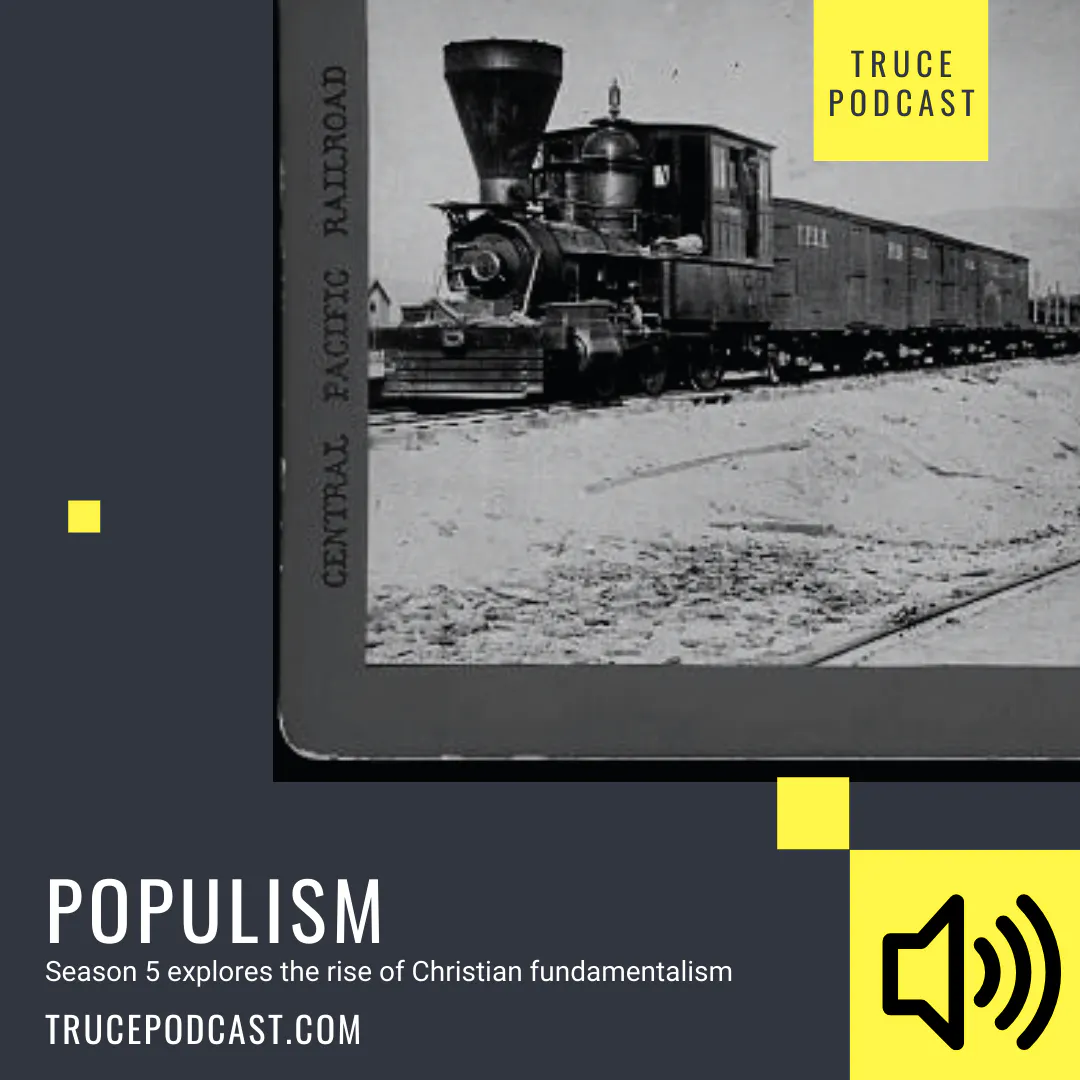
Give to help Truce. www,trucepodcast.com/donate Populism is a tricky subject. We use it these days as a slur, but populism can be a useful phenomenon. History professor and author Michael Kazin says that populism is an i…
The Gold Standard and the Great Depression [not-audio_url] [/not-audio_url]

Duration: 14:19
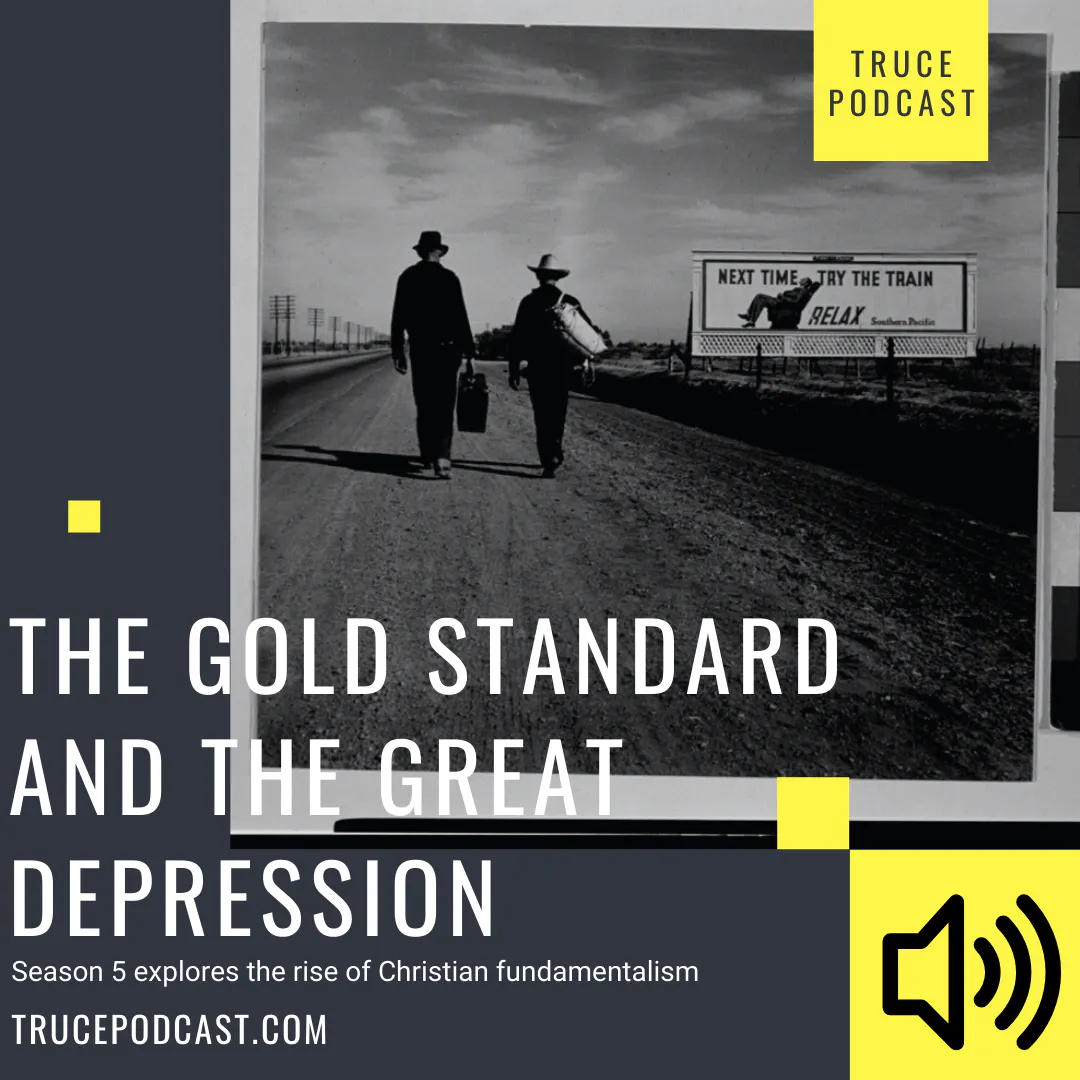
The Great Depression. Some say that it was caused by a failure of the stock market. Well... that's not all. Jacob Goldstein, host of NPR's Planet Money podcast and author of "Money: the Truce Story of a Made-Up Thing" jo…
The Gold Standard | Christian Fundamentalism Series [not-audio_url] [/not-audio_url]

Duration: 33:15
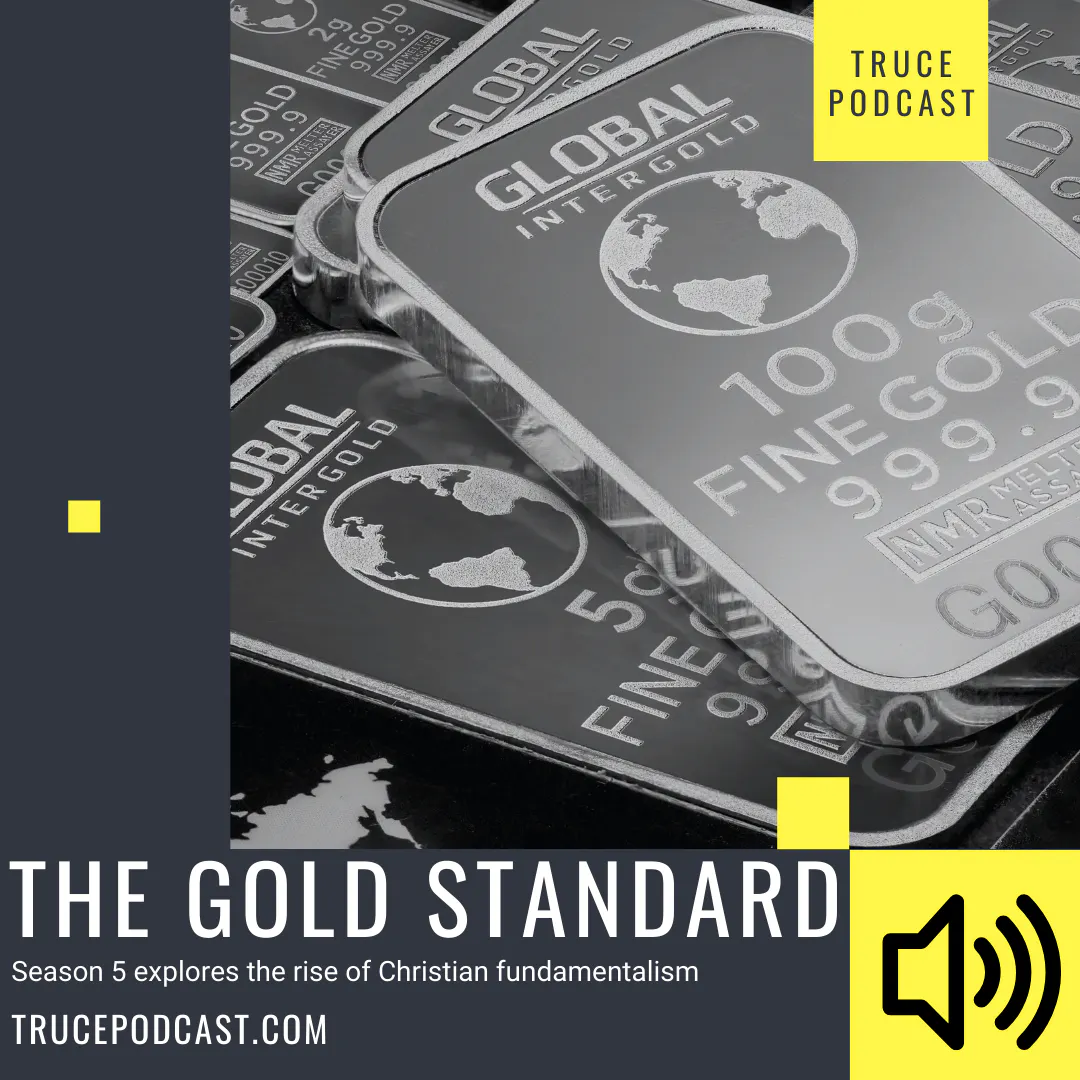
There was a time not so long ago when the value of an ounce of gold cost $20.67. That was true not just in one moment or one year. It was true in the 1880s, 1890s, 1900s, 1920s... This was the gold standard. A person cou…
The Liberals | Christian Fundamentalism Series [not-audio_url] [/not-audio_url]

Duration: 39:13
George Marsden characterized Christian fundamentalism as "militantly anti-modernist protestant evangelicalism". Right there you see that fundamentalism is a reaction against something. And that something is modernist the…
The End of Reconstruction | Christian Fundamentalism Series [not-audio_url] [/not-audio_url]

Duration: 27:06
The 1800s were a time of milking cows and going to the county fair. Sure... but what else? We tend to think of this century as a quiet, pastoral era when people were friendly and life was simple. But the 1800s were a cra…

«1...678910