World War One I Christian Fundamentalism Series

World War One I Christian Fundamentalism Series

Author: Chris Staron November 8, 2022 Duration: 39:02
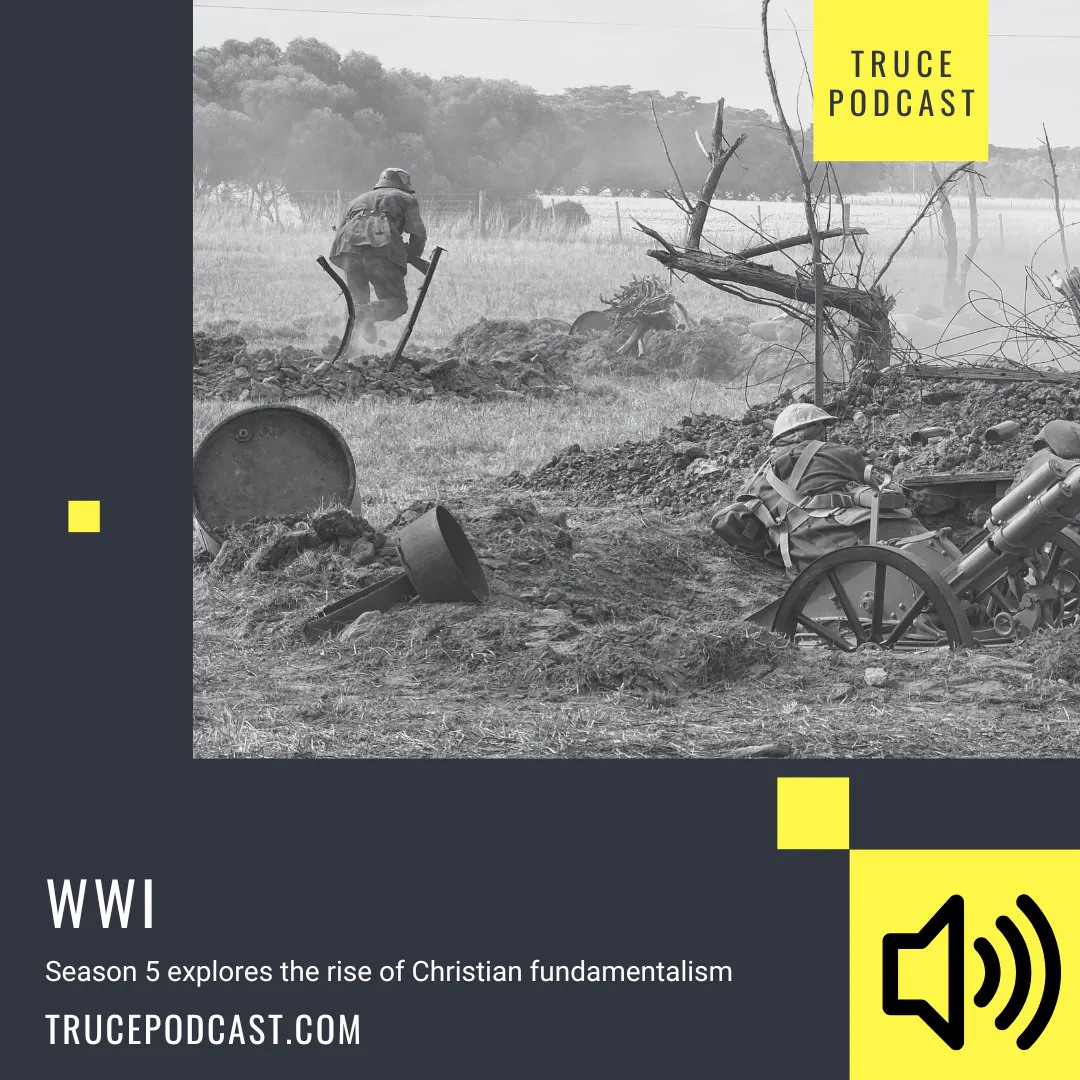
Love Truce? Donate to help Chris make the show! Send checks to: Truce Media LLC PO Box 3434 Jackson, WY 83001 The modernish/ fundamentalist controversy was heating up in the early 1900s. Conservatives saw this coming a long way off but could not stop modernism from taking control of seminaries and popular pulpits. It was everywhere. It all came to a head with WWI. Theological conservatives saw WWI as evidence that the world was getting worse. To them, it was a chance to fight for patriotic reasons. Modernists were also pro-war because they thought this was the "war to end all wars". There would be no more war after this and democracy would take over the world. The liberals fired the first shots in this theological battle because they thought that premillennialism encouraged people to root for the end of the world. William Jennings Bryan was Secretary of State in the US during this time and did his best to keep us out of the war. This episode features the voices of George Marsden (author of "Fundamentalism and American Culture") and Michael Kazin, professor at Georgetown University and author of "What it Took to Win". Sources: Fundamentalism and American Culture by George Marsden The Evangelicals by Frances Fitzgerald A Godly Hero by Michael Kazin What it Took to Win by Michael Kazin These Truths by Jill Lepore To End All Wars by Adam Hochschild Dead Wake by Erik Larson (about The Lusitania) Woodrow Wilson's second inauguration Short article about Billy Sunday Discussion Questions: What was the purpose of WWI? What caused it? Would you have been for or against the war in the 1900s? How can pre and post-millenniallism shape a person's view of the world? Does it have to? How does social Darwinism tie into WWI and WWII? Is WWI an outcome of changing morality? How would you tell a large audience of Christians to adapt to changing morality? Learn more about your ad choices. Visit podcastchoices.com/adchoices

Hosted by Chris Staron, Truce-History of the Christian Church is a deep, journalistic look into the forces that have shaped American evangelicalism. This isn't a simple timeline of events; it's an investigation into the surprising intersections of faith, culture, and power. Staron digs into movements from fundamentalism's roots to modern political campaigns, and even examines connections to phenomena like pyramid schemes, revealing a complex history many listeners may never have encountered. Each episode is built on thorough research and thoughtful interviews, aiming to understand not just how the church arrived at its current moment, but how that story might inform a better path forward. The current season focuses specifically on the rise of the Religious Right, meticulously tracing the evolving alliance between evangelicals and the Republican Party. To tell this story, the podcast features conversations with notable guests like historians Rick Perlstein and Frances Fitzgerald, or journalist Jesse Eisinger, who bring their expertise to this nuanced narrative. Listening to this podcast feels like joining a rigorous yet accessible conversation, one that respects the subject's gravity while pursuing clarity and truth. For anyone curious about the real stories behind today's headlines concerning faith and society, this series offers essential context.
Author: Language: English Episodes: 100

Truce - History of the Christian Church
Podcast Episodes
Mike Cosper: The Church in Dark Times [not-audio_url] [/not-audio_url]

Duration: 40:27
Give $10/ month to help Chris make Truce What are the warning signs that a church leader will become a tyrant? How do we prevent church hurt from becoming our identity? What are ideologies and how do they become the over…
The Cask of Amontillado by Edgar Allan Poe [not-audio_url] [/not-audio_url]

Duration: 17:50
Give to help Chris continue to make Truce In the Kanawha County Textbook War episode, Chris shared that the people of that county fought against some textbooks and stories being read in classrooms and as homework. Edgar…