129: Encore – Birth of the Barkley Marathons

129: Encore – Birth of the Barkley Marathons

Author: Davy Crockett March 14, 2023 Duration: 37:07
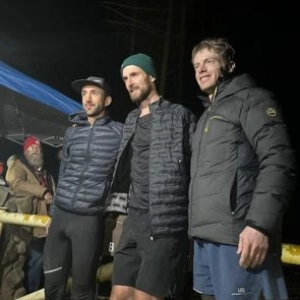
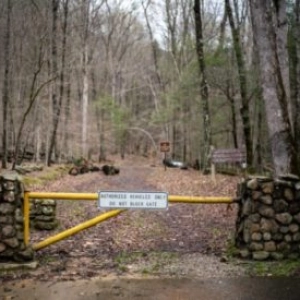
This is an encore episode. The Barkley Marathons, with its historic low finish rate (only 15 runners in 30 years), is perhaps the most difficult ultramarathon trail race in the world. It is held in and near Frozen Head State Park in Tennessee, with a distance of more than 100 miles.

The Barkley is an event with a mysterious lore. It has no official website. It is a mystery how to enter, It has no course map or entrants list is published online. It isn't a spectator event. For the 2018 race, 1,300 runners applied and only 40 selected.

Those seeking entry must submit an essay. The entrance fee includes bringing a license plate from your home state/country. Runners are given the course directions the day before the race and aren't told when the race exactly starts. They are just given a one-hour warning when the conch is blown. To prove that they run the course correctly, books are placed a various places on the course where the runners must tear out a page from each book matching their bib number. If they lose a page or miss a book, they are out. Directly opposite of most ultras, the course is specifically designed to minimize the number of finishers.

The inspiration for creating the Barkley in 1986 was the 1977 prison escape by James Earl Ray from Brushy Mountain State Prison. Ray was the convicted assassin of Martin Luther King Jr. He spent more than two days trying to get away in the very rugged Cumberland Mountains where the Barkley later was established. Ray's escape has been a subject of folklore.

Davy Crockett hosts Ultrarunning History, a deep and often surprising exploration of how runners began pushing themselves beyond the standard marathon distance. While many assume the sport started with the boom of the 1980s, its roots are far older, stretching back into the late 19th century. This podcast digs into those early decades, uncovering the personalities, races, and cultural forces that shaped ultrarunning long before it had a name. Each episode functions as an audio archive, piecing together narratives from a time when running 50 kilometers or more was considered an almost unimaginable feat. You’ll hear about forgotten competitions, pioneering athletes whose stories have faded, and the gradual evolution of training and ethos that defined the community. The focus is primarily on the era before the year 2000, offering a foundational understanding of how modern ultra events came to be. It’s for anyone who loves running and wonders about its past, or for history buffs curious about a niche sport’s enduring human drama. The storytelling in this podcast aims to connect today’s trails and roads to a much longer, dustier path.

Author: Language: en-us Episodes: 50

Ultrarunning History
Podcast Episodes
138: Grand Canyon Rim-to-Rim History – Part 9: Phantom Ranch [not-audio_url] [/not-audio_url]

Duration: 25:22
In 1906, David Dexter Rust (1874-1963) established a permanent camp near the confluence of Bright Angel Creek and the Colorado River that they name Rust Camp. They dug irrigation ditches and planted cottonwood trees by t…
137: Grand Canyon Rim-to-Rim History – Part 8: Kolb Brothers [not-audio_url] [/not-audio_url]

Duration: 27:00
No Grand Canyon Rim to Rim History can be complete without mentioning the Kolb brothers, who maintained a photo gallery on the South Rim for decades. The two were among the very first to accomplish double crossings of th…
136: Grand Canyon Rim-to-Rim History – Part 7: Prof Cureton [not-audio_url] [/not-audio_url]

Duration: 26:55
“Prof” Thomas Henry Cureton (1875-1957) of Williams, Arizona, was a significant Grand Canyon rim-to-rim contributor. Through his selfless service in the 1920s, he passed on the love of the inner Grand Canyon to a generat…
135: Grand Canyon Rim-to-Rim History – Part 6: Early Guides [not-audio_url] [/not-audio_url]

Duration: 25:27
Running the Grand Canyon rim-to-rim and back is one of the ultimate experiences for ultrarunners. Before the Grand Canyon National Park was established in 1919, there were several individuals who helped to bring attentio…
134: Frank Hart – Part 6: Final Years [not-audio_url] [/not-audio_url]

Duration: 24:43
By late 1892, many of the original six-day professional pedestrians had left the sport, using their winnings to establish other careers, some of them pursuing illegal activities. Frank Hart had another terrible health sc…
133: Frank Hart – Part 5: Declining Running Career [not-audio_url] [/not-audio_url]

Duration: 27:26
By 1888, Hart had competed in about 30 six-day races in nine years. He had reached 100 miles or more in about 40 races and had so far won at least 30 ultras. Perhaps because of his color, he had not been given enough cre…
132: Frank Hart Part 4 – Former Champion [not-audio_url] [/not-audio_url]

Duration: 28:16
Frank Hart’s life in 1883 was at a low point. He had squandered his riches and damaged his reputation as a professional pedestrian. He was viewed as being hot-headed, undisciplined, and a womanizer. His wife and children…
131: Tom Osler – The Serious Runner [not-audio_url] [/not-audio_url]

Duration: 27:05
Thomas Joseph Osler (1940-2023) of Camden, New Jersey, was a mathematician, former national champion distance runner, and author. His published running training theories have made a deep impact on distance running for mu…
130: The 2023 Barkley Marathons [not-audio_url] [/not-audio_url]

Duration: 24:48
The Barkley Marathons course (thought to be roughly 130 miles and about 63,000 feet of elevation gain) at Frozen Head State Park in Tennessee was conquered for the first time in six years. Laz (Gary Cantrell) blew the co…