159: Ted Corbitt – Part Two (1953-1963)

159: Ted Corbitt – Part Two (1953-1963)

Author: Davy Crockett June 21, 2024 Duration: 28:43
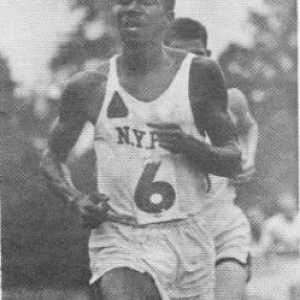
After Ted Corbitt's disappointing 1952 Olympic marathon, he was determined to continue running. His key takeaway was that he had to elevate his performance by running more often and covering greater distances. But as he continued to push his training, he experienced a series of chronic muscle strains for the next year.

Corbitt was focused on the marathon distance and continued to finish high each year at Boston. He believed that success would require training every day, reaching at least 100 miles per week. His perseverance finally paid off in January 1954, when he emerged victorious in a marathon held in Philadelphia, completing it in 2:36:08. He won again, at the 1954 Yonkers Marathon, considered the national championship, with a time of 2:46:13. He had proven that his 1952 Olympic selection was justified. In 1955, he made the team for the Pan American team in Mexico City but was cut from the team became of lack of funds. It bothered him that some newspapers listed him as a non-finisher in the race. He never started it. Throughout his long running career, he never had a "did not finish (DNF)."

Davy Crockett hosts Ultrarunning History, a deep and often surprising exploration of how runners began pushing themselves beyond the standard marathon distance. While many assume the sport started with the boom of the 1980s, its roots are far older, stretching back into the late 19th century. This podcast digs into those early decades, uncovering the personalities, races, and cultural forces that shaped ultrarunning long before it had a name. Each episode functions as an audio archive, piecing together narratives from a time when running 50 kilometers or more was considered an almost unimaginable feat. You’ll hear about forgotten competitions, pioneering athletes whose stories have faded, and the gradual evolution of training and ethos that defined the community. The focus is primarily on the era before the year 2000, offering a foundational understanding of how modern ultra events came to be. It’s for anyone who loves running and wonders about its past, or for history buffs curious about a niche sport’s enduring human drama. The storytelling in this podcast aims to connect today’s trails and roads to a much longer, dustier path.

Author: Language: en-us Episodes: 100

Ultrarunning History
Podcast Episodes
178: Grand Canyon Short Stories – Part Two [not-audio_url] [/not-audio_url]

Duration: 27:48
In May, thousands of hikers and ultrarunners make their pilgrimage to the Grand Canyon to hike or run across this amazing wonder of the world. I have been producing short videos for the new Grand Canyon History YouTube c…
177: Grand Canyon History Short Stories – Part One [not-audio_url] [/not-audio_url]

Duration: 27:18
This weekend (mid May each year) the North Rim of the Grand Canyon opened for the season. Thousands of hikers and ultrarunners make their pilgrimage to the canyon to hike or run across this amazing wonder of the world. I…
176: Trail Runner Nation Interview about Old Sport Campana [not-audio_url] [/not-audio_url]

Duration: 29:19
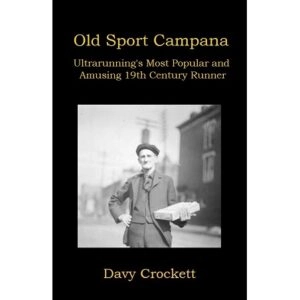
For this episode of the Ultrarunning History Podcast, I included an edited down interview I did with the excellent Trail Runner Nation Podcast. We discussed my new book, Old Sport Campana: Ultrarunning’s Most Popular and…
175: The Tarahumara Ultrarunners [not-audio_url] [/not-audio_url]

Duration: 30:55
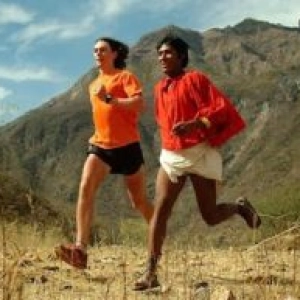
In recent years, the story of the amazing Tarahumara (Rarámuri) runners from Mexico exploded into international attention with the publication of Christopher McDougall’s best-selling 2009 book, Born to Run. Runners every…
174: Old Sport Campana (1836-1906) – Part Seven [not-audio_url] [/not-audio_url]

Duration: 26:21
In 1889, "Old Sport" Peter Napoleon Campana (1836-1905) returned home to Bridgeport, Connecticut, after his four-month trip to California. His celebrity status had increased because of news stories across the country abo…
173: Old Sport Campana (1836-1906) – Part Six [not-audio_url] [/not-audio_url]

Duration: 26:14
fter ten years of competing in ultra-distance races, Old Sport, Peter Napoleon Campana (1836-1906), age 52, had never gone west of the Mississippi River. That was all about to change in 1889. Frank W. Hall (1860-1923), o…
172: Old Sport Campana (1836-1906) – Part Five [not-audio_url] [/not-audio_url]

Duration: 23:34
By 1888, Old Sport Campana had competed in 35 ultra-distance races, and eight in 1888. He also competed in the most historic six-day race of the 19th century, held in November 1888 in Madison Square Garden. William M. O’…
171: Old Sport Campana (1836-1906) – Part Four [not-audio_url] [/not-audio_url]

Duration: 23:34
By 1884, “Old Sport” Peter Napoleon Campana (1836-1906), had gained national fame. He was being called "the clown of the walking matches." While he was never competitive enough to win a six-day race, event managers knew…
170: Old Sport Campana (1836-1906) – Part Three [not-audio_url] [/not-audio_url]

Duration: 27:42
By 1880, “Old Sport” Peter Napoleon Campana (1836-1906), a fruit and nut peddler from Bridgeport, Connecticut, had established himself as an odd anomaly in the very popular spectator sport of six-day indoor races held in…
169: Old Sport Campana (1836-1906) – Part Two [not-audio_url] [/not-audio_url]

Duration: 28:06
“Old Sport” Peter Napoleon Campana (1836-1906), of Bridgeport, Connecticut, a poor street vendor, and talented runner, wanted to become a professional pedestrian/ultrarunner. At age 42, he was viewed as very elderly, a s…