Child Soldiers: From civil wars to violent extremism with Dr Sukanya Podder

Child Soldiers: From civil wars to violent extremism with Dr Sukanya Podder

Author: Department of War Studies June 22, 2021 Duration: 35:49
There are an estimated 250,000 child soldiers in the world today in at least 20 countries. “At times I would cry while on the frontline, especially when I thought about my family. When I cried, my friends in the group would lock me up and tell me that I am no longer a child. I should not cry, when I see people dying.” These are the words of Timothy Sunday, a child forcibly recruited into armed conflict in the Liberian civil war in 2002. In this episode of the podcast we chat to Dr Sukanya Podder, Senior Lecturer in the Defence Studies Department, to explore the world-wide issue of children affected by armed groups, including in civil wars to violent extremism. She shares case studies of personal experience with affected youths and describes the evolving global recruitment methods including social media, the violence children are subjected to and the complexities involved in rehabilitating them back into society post-conflict. We’re also joined by Rocco Blume from NGO War Child, who shares how the problem has evolved over the past decade and their dedication and Professor Funmi Olonisakin, Vice-President and Vice-Principal (International), King’s College London, who shares insights from her time in the Office of the United Nations Special Representative of the Secretary-General on Children and Armed Conflict, including the vital role the UN played in drawing international attention to and combatting the issue of child recruitment into armed groups.

Drawn from the work of the School of Security Studies at King's College London, War Studies offers a direct line to one of the world's largest and most dedicated academic communities focused on security, defence, and international relations. This isn't about surface-level headlines; each episode digs into the intricate realities of conflict, diplomacy, and global power. You'll hear scholars and researchers unpack the underlying forces that shape world affairs, moving beyond theory to examine the tangible challenges faced by those navigating these complex spaces. The Department of War Studies produces this podcast to share its world-leading research, treating each conversation as an opportunity to question assumptions and deepen understanding. Tuning in means engaging with rigorous analysis that connects academic insight to the pressing security issues of our time. The consistent thread is a belief that examining the nature of war is essential for comprehending the broader landscape of human conflict and cooperation. Expect thoughtful, evidence-driven discussions that refuse to simplify the difficult questions.
Author: Language: English Episodes: 100

War Studies
Podcast Episodes
China, India and the USA’s different approaches to climate security [not-audio_url] [/not-audio_url]

Duration: 41:57
The three major powers at the centre of COP26 - China, India and the USA, have differing perspectives on the link between climate and security. Yet how does this impact their climate policy? What are the drivers behind t…
Drivers and obstacles of the UN Climate Change Agenda [not-audio_url] [/not-audio_url]

Duration: 33:53
What's the UN's role in addressing the security risks of climate change? And what are the obstacles faced by UN bodies in meeting these challenges? In the second episode of this five-part mini-series on Climate Change an…
Government responses to climate change and national security [not-audio_url] [/not-audio_url]

Duration: 29:16
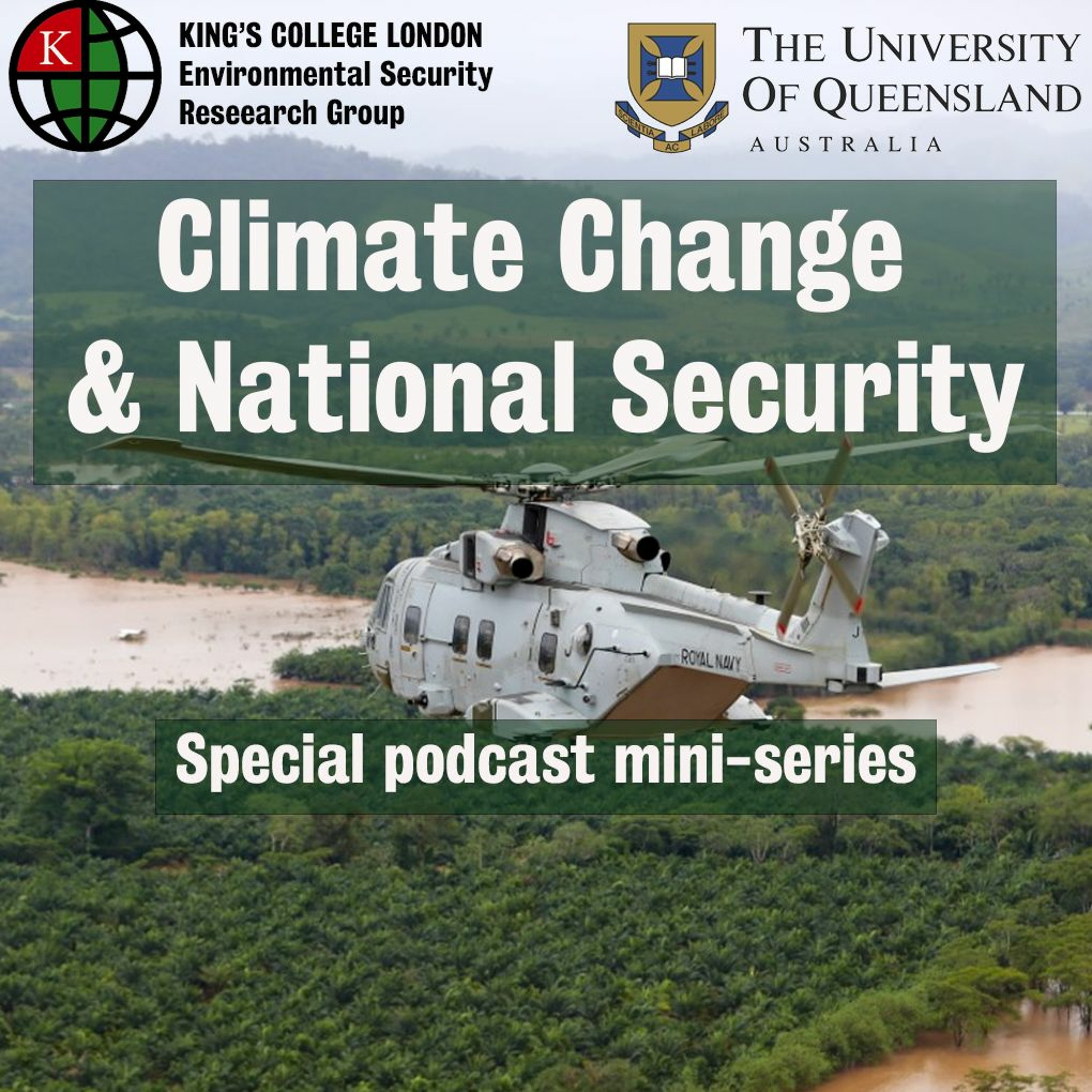
Throughout October and November we're bringing you the special podcast mini-series ‘Climate Change and National Security’, in the run up to the 2021 United Nations Climate Change Conference (COP26), hosted by the Environ…
A new approach to peacebuilding with Severine Autesserre [not-audio_url] [/not-audio_url]

Duration: 43:52
Billions of dollars are spent every year on pacifying conflict zones by international organisations and NGOs. However, the past five years have seen the worst refugee crisis in the world since World War II, and conflicts…