Leadership in a divided world

Leadership in a divided world

Author: Department of War Studies February 25, 2026 Duration: 59:33
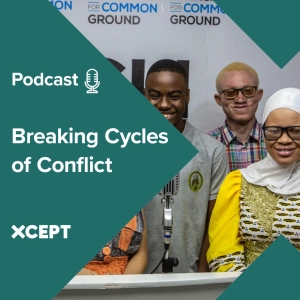
In this episode, Dr Nafees Hamid speaks with Michael Shipler, King’s College London War Studies alumnus and Vice President of Leadership Development & Partnerships at Search for Common Ground (SFCG), the world’s largest dedicated peacebuilding organisation. With global cooperation declining and populism and authoritarianism on the rise, Nafees and Michael explore how those on opposite sides can be brought together. Drawing on SFCG’s work in conflict‑affected regions around the world, their conversation covers topics from moral injury to the use of art in peacebuilding, and why conflict itself isn’t the problem - it’s how we choose to manage it. Learn more about SFCG and their work here: https://www.sfcg.org/ This episode is produced as part of the Cross-Border Conflict Evidence, Policy and Trends (XCEPT) programme, which seeks to understand the drivers of violent and peaceful behaviour in conflict‑affected populations and to support practical solutions for peace. Learn more at www.xcept-research.org.

Drawn from the work of the School of Security Studies at King's College London, War Studies offers a direct line to one of the world's largest and most dedicated academic communities focused on security, defence, and international relations. This isn't about surface-level headlines; each episode digs into the intricate realities of conflict, diplomacy, and global power. You'll hear scholars and researchers unpack the underlying forces that shape world affairs, moving beyond theory to examine the tangible challenges faced by those navigating these complex spaces. The Department of War Studies produces this podcast to share its world-leading research, treating each conversation as an opportunity to question assumptions and deepen understanding. Tuning in means engaging with rigorous analysis that connects academic insight to the pressing security issues of our time. The consistent thread is a belief that examining the nature of war is essential for comprehending the broader landscape of human conflict and cooperation. Expect thoughtful, evidence-driven discussions that refuse to simplify the difficult questions.
Author: Language: English Episodes: 100

War Studies
Podcast Episodes
Imaging Peace: Photographing everyday peace [not-audio_url] [/not-audio_url]

Duration: 58:40
In this episode, Dr Tiffany Fairey, Senior Research Fellow at the Department of War Studies, and Dr Pamina Firchow, Associate Professor at Brandeis University, join Professor Rachel Kerr, Professor of War and Society at…
From rebels to rulers: Who are Syria’s new leaders? [not-audio_url] [/not-audio_url]

Duration: 49:38
In December 2024, the Assad regime in Syria was overthrown. Today, Ahmed al-Sharaa is acting as the interim president of Syria, at the head of a new transitional government. What will the future look like for Syria under…
How behavioural science can pave the way to peace in Colombia [not-audio_url] [/not-audio_url]

Duration: 52:49
In 2016, the Colombian government signed a historic peace agreement with guerilla group the Revolutionary Armed Forces of Colombia, also known as FARC. The agreement brought an end to 52 years of war, but today, eight ye…
Eyes on the Indo-Pacific: Australia’s defence strategy [not-audio_url] [/not-audio_url]

Duration: 53:17
What does the future of Australia's defence strategy look like in the face of rising geopolitical tensions? How are shifting dynamics in the Indo-Pacific and Euro-Atlantic influencing Australia’s approach to security? Wh…
The fall of Assad and its impact on international dynamics [not-audio_url] [/not-audio_url]

Duration: 44:32
What does the fall of Bashar al-Assad’s regime mean for the future of Syria and the broader Middle East? How might the rise of Abu Mohammed al-Jolani reshape Syria’s governance and regional alliances? Can the rebel leade…