Episode 196 – Lost and Never Found: On 'The Blair Witch Project'

Episode 196 – Lost and Never Found: On 'The Blair Witch Project'

Author: SpectreVision Radio August 13, 2025 Duration: 1:32:13
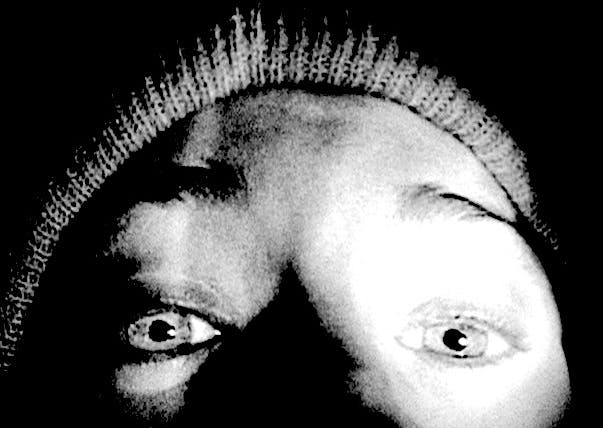
Of all the flavors of horror, few are as dreadful as that of being lost in the wilderness. In this episode, JF and Phil revisit The Blair Witch Project, the classic 1999 found-footage film that inspired a thousand imitators. What makes this film so gripping, they argue, is the way it lingers over the subtle stages of disorientation in a hostile place, from blithe denial to devastating gnosis. The Blair Witch Project isn't a ghost story so much as a work of cosmic horror. Ultimately, the woods themselves—vast, indifferent, inescapable—are the monster. Support Weird Studies on Patreon. Buy the Weird Studies soundtrack, volumes 1 and 2, on Pierre-Yves Martel's Bandcamp page. Visit the Weird Studies ⁠Bookshop⁠ Find us on ⁠Discord⁠ Get the T-shirt design from ⁠Cotton Bureau⁠. Listen to Meredith Michael and Gabriel Lubell's podcast, Cosmophonia. References Daniel Myrick and Eduardo Sanchez (dirs.), The Blair Witch Project Gus Van Sant (dir.), Gerry Martin Heidegger, Being and Time Weird Studies, Episode 195 on John Keel Gilbert Simondon, Imagination and Invention Georgio De Chirico, Italian artist Arthur Machen, The White People Jack Zipes, literary scholar Weird Studies, Episode 150 on Arthur Machen's “A Fragment of Life” “Schizophonia” Stanislav Lem, Solaris Andrei Tarkovsky (dir.), Solaris Beyond Yacht Rock Podcast  Shirley Clarke (dir.), The Connection Gilles Deleuze, Cinema 1: The Movement-Image   Learn more about your ad choices. Visit megaphone.fm/adchoices

At the heart of Weird Studies, a podcast from SpectreVision Radio, you’ll find long-form conversations between Professor Phil Ford and writer J. F. Martel. Their discussions aren’t simple reviews or straightforward analyses; instead, they wander through the tangled undergrowth where art and philosophy meet, giving generous time to concepts that resist easy understanding and to creative works that fracture our ordinary sense of the world. This podcast deliberately lingers in that ambiguous space, treating the “weird” not as a genre but as a particular mode of experience-one that reveals the cracks in what we comfortably assume is real. Each episode feels like joining a deep, meandering dialogue between two friends who are both deeply knowledgeable and endlessly curious, covering a vast terrain that includes literature, film, music, and esoteric thought. It’s a show for anyone who suspects that the most profound truths are often found in the shadows, the anomalies, and the strangely beautiful. As part of the SpectreVision Radio network, which specializes in content that explores the uncanny edges of creativity, Weird Studies builds a unique community of listeners who are eager to think differently. You won’t find pat answers here, but you will encounter compelling questions and a shared sense of exploration that makes each installment a distinctive journey.
Author: Language: English Episodes: 230

Weird Studies
Podcast Episodes
Episode 56: On Jean Gebser, with Jeremy D. Johnson [not-audio_url] [/not-audio_url]

Duration: 1:19:22
The German poet and philosopher Jean Gebser's major work, The Ever-Present Origin, is a monumental study of the evolution of consciousness from prehistory to posthistory. For Gebser, consciousness adopts different "struc…
Episode 54: Lobsters, Pianos, and Hidden Gods [not-audio_url] [/not-audio_url]

Duration: 1:17:49
"All things feel," Pythagoas said. Panpsychism, the belief that consciousnes is a property of all things and not limited to the human brain, is back in vogue -- with good reason. The problem of how inert matter could giv…
Episode 53: Astral Jet Lag: On William Gibson's 'Pattern Recognition' [not-audio_url] [/not-audio_url]

Duration: 1:02:49
William Gibson's Pattern Recognition was published in 2003, in the wake of 9/11. You would think that a novel about the early Internet's effects on the collective psyche would feel dated today. But Gibson's insight into…
Episode 52: On Beauty [not-audio_url] [/not-audio_url]

Duration: 1:15:32
The idea that beauty might denote an actual quality of the world, something outside the human frame, is one of the great taboos of modern intellectual thought. Beauty, we are almost universally told, is a cultural contri…
Episode 51: Blind Seers: On Flannery O'Connor's 'Wise Blood' [not-audio_url] [/not-audio_url]

Duration: 1:36:26
Through her fiction, Flannery O'Connor reenvisioned life as a supernatural war wherein each soul becomes the site of a clash of mysterious, almost incomprehensible forces. Her first novel, Wise Blood, tells the story of…
Episode 50: Demogorgon: On 'Stranger Things' [not-audio_url] [/not-audio_url]

Duration: 1:36:31
The Duffer Brothers' hit series Stranger Things is many things: an exemplary piece of entertainment in the summer blockbuster mold, a fresh take on the "kids on bikes" subgenre of science fiction, a loving pastiche of 19…
Episode 49: Out of Time: Nietzsche on History [not-audio_url] [/not-audio_url]

Duration: 1:22:42
In his essay "On the Uses and Disadvantages of History for Life," Nietzsche attacks the notion that humans are totally determined by the historical forces that shape their physical and mental environment. Where other phi…
Episode 48: Walking the Tightrope with Erik Davis [not-audio_url] [/not-audio_url]

Duration: 1:25:09
Journalist and historian of religion Erik Davis joins Phil and JF to talk about his latest magnum opus, High Weirdness: Drugs, Esoterica, and Visionary Experience in the Seventies. In this masterwork of weird scholarship…
Episode 47: Machines of Loving Grace: Technology and the Unabomber [not-audio_url] [/not-audio_url]

Duration: 1:08:24
Made in 2003, Lutz Dammbeck's documentary The Net: The Unabomber, LSD, and the Internet is a film about many things, but the gist of it is something like what William Burroughs called the doctrine of control. We live in…