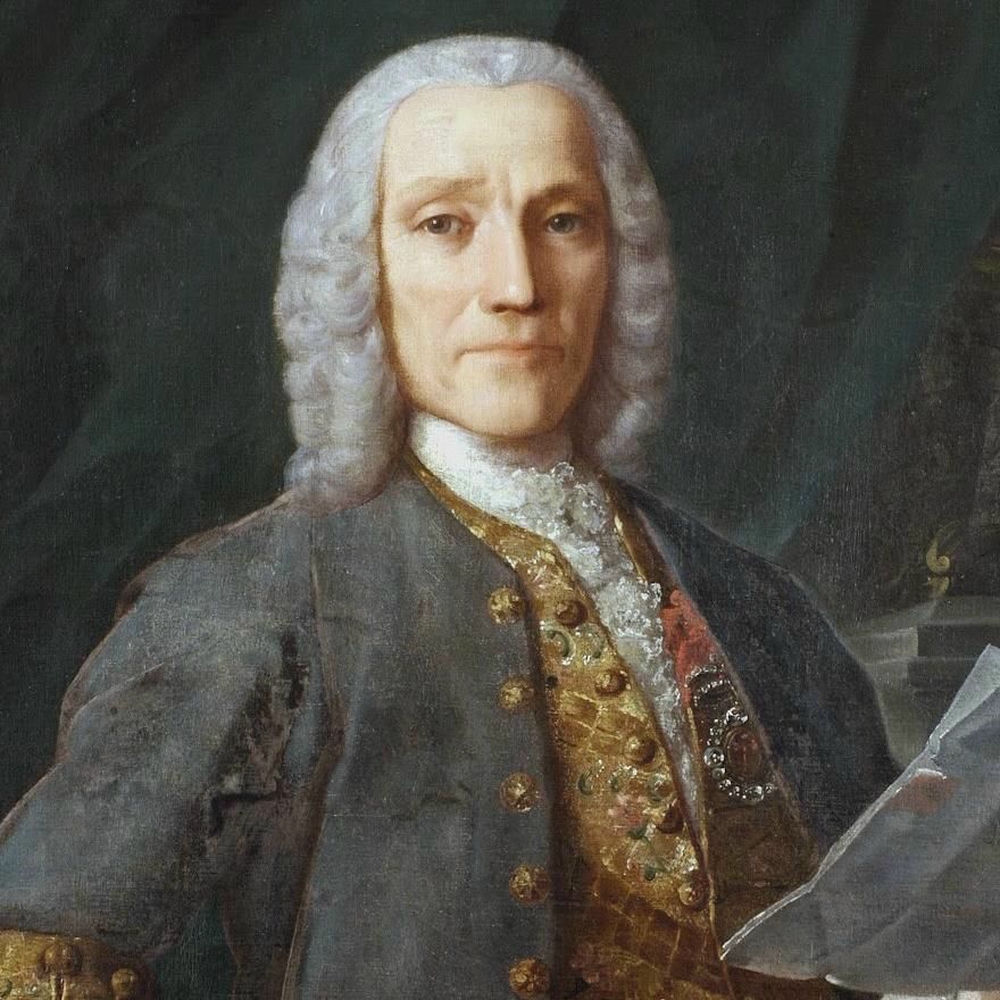
Alessandro Scarlatti: The Prolific Architect of Baroque Opera
Alessandro Scarlatti was a pivotal Italian composer who defined the sound of the late Baroque era. Hailing from Palermo, Sicily, his immense output of over 60 operas and hundreds of cantatas established the formal structures that would dominate Italian music for generations.
Early career
Born in 1660, Scarlatti's family moved to Rome when he was just twelve, placing him at the heart of the musical world. His first known opera, Gli equivoci nel sembiante, premiered in 1679 and was an immediate success, securing him the patronage of the influential Queen Christina of Sweden. This early triumph led directly to his appointment as maestro di cappella at the court of Naples in 1684, a prestigious position he held for nearly two decades.
Breakthrough
While his early Roman works gained attention, it was his prolific period in Naples that cemented his reputation. His operas for the Teatro San Bartolomeo, such as Il Pompeo in 1683 and La Statira in 1690, showcased his mature style. These works popularized the three-movement Italian overture and the da capo aria, forms that became industry standards, effectively shaping the future of opera seria.
Key tracks
Gli equivoci nel sembiante — This debut opera launched Scarlatti's career, earning him the favor of Roman aristocracy and a papal knighthood.
Il Pompeo — A landmark early Neapolitan opera that demonstrated his skill in integrating dramatic recitatives with expressive arias.
La Griselda — One of his final and most refined operas, composed for Rome in 1721, showcasing his advanced harmonic language.
Clori vezzosa, e bella — A celebrated chamber cantata that exemplifies his mastery of the intimate vocal form.
After leaving Naples in 1702, Alessandro Scarlatti worked in Florence and Rome before returning to Naples in 1708. His later works, like the serenata Il giardino di amore and the oratorio La Santissima Vergine del Rosario, displayed even greater contrapuntal complexity. He maintained a vast network of collaborations, teaching and influencing major figures including his own son, Domenico Scarlatti, and composers like Johann Adolph Hasse.
For listeners of Baroque and early music, explore similar artists featured on our site. George Frideric Handel directly adopted Scarlatti's operatic forms in his own London productions. Antonio Vivaldi followed Scarlatti's model in developing dramatic vocal writing for Venetian audiences. Johann Adolph Hasse was a student who further propagated the Neapolitan style across Europe. Arcangelo Corelli was a contemporary Roman colleague whose instrumental works complement Scarlatti's vocal focus.
RADIO ROTATION: The music of Alessandro Scarlatti holds a firm place in the playlists of classical music radio stations and dedicated Baroque music streams. His operatic overtures and expressive cantatas are regularly featured on programming focused on early music, providing essential historical context for listeners exploring the foundations of Western classical tradition.
The extensive catalog of Alessandro Scarlatti, from his pioneering operas to his intimate chamber works, is available to hear on radio stations featured on onairium.com. Listeners can discover the depth of this Baroque master's influence through curated broadcasts available on our platform.