
Andrea Gabrieli: The Renaissance Maestro of Venetian Music
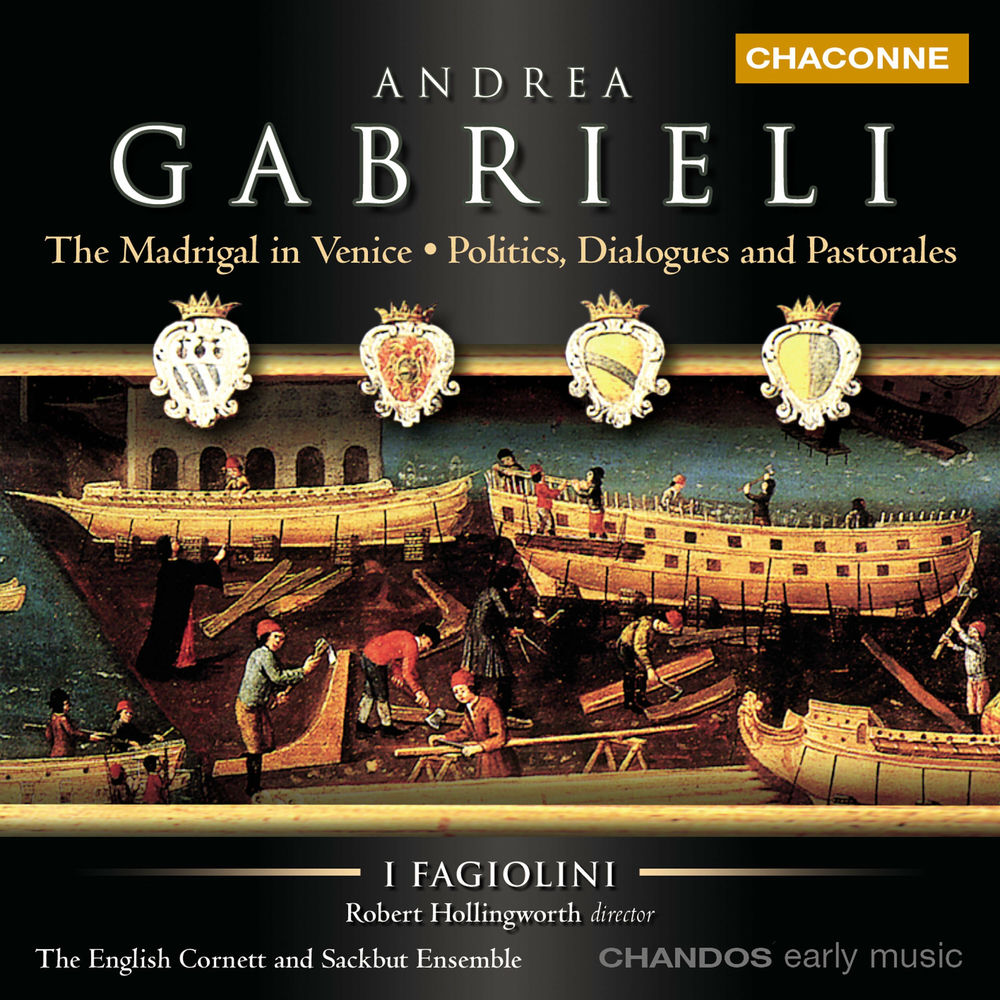
Andrea Gabrieli was a pivotal Italian composer and organist of the late Renaissance. Hailing from Venice, his prolific output and innovative style helped define the grand, polychoral sound of the Venetian school, influencing generations of musicians across Europe.
Early career
Born around 1532 or 1533 in Venice, Gabrieli's early musical training remains undocumented, though he likely studied with the renowned Franco-Flemish composer Adrian Willaert. His career began in earnest in 1557 when he competed for the position of organist at St. Mark's Basilica, a prestigious post he would not win until 1566. Early publications included madrigals and his involvement in the spectacular festivities for the visit of the French king in 1574 showcased his growing reputation for large-scale ceremonial music.
Breakthrough
Gabrieli's true breakthrough came with the publication of his Concerti in 1587. This landmark collection, printed by the heirs of the famed publisher Angelo Gardano, contained sacred vocal works for six to sixteen voices. It codified the Venetian "cori spezzati" (split choirs) technique, using multiple vocal and instrumental groups placed apart for dramatic spatial effects. While 16th-century chart positions did not exist, the collection's widespread dissemination and multiple printings signaled its immense success and influence.
Key tracks
In ecclesiis — This monumental motet for fourteen voices, soloists, and instruments is a quintessential display of Gabrieli's polychoral mastery and vibrant energy.
O magnum mysterium — A celebratory Christmas motet that expertly contrasts full, resonant choral sections with intimate soloistic passages.
Angelus ad pastores ait — A festive work often performed during the Venetian Christmas season, showcasing his ability to write immediately engaging and jubilant music.
Ricercar del duodecimo tuono — This instrumental piece highlights his sophisticated contrapuntal skill and was crucial for organists' repertoires.
Following his major publications, Andrea Gabrieli's role as a teacher became highly significant. His most famous pupil was his nephew, Giovanni Gabrieli, who would later surpass his uncle's fame. Andrea Gabrieli continued composing until his death in 1585, leaving a vast legacy of madrigals, motets, and instrumental music that bridged the Renaissance and early Baroque periods. His music was performed internationally, spreading the Venetian style to Germany and beyond.
For listeners captivated by the rich, spatial textures of Andrea Gabrieli, explore similar composers from the Italian Renaissance and early Baroque. Giovanni Gabrieli was his nephew and student who expanded the polychoral style to new heights. Claudio Monteverdi followed the Venetian tradition before revolutionizing music with his dramatic early operas. Adrian Willaert was the foundational maestro di cappella at St. Mark's who first established its distinct musical identity. Orlando di Lasso was a prolific Franco-Flemish contemporary whose works were also celebrated for their expressive depth and complexity.
The majestic sounds of Andrea Gabrieli are a staple on classical music radio stations and dedicated early music streams featured on this website. His festive motets and grand concerti are frequently programmed on stations specializing in Renaissance music, sacred choral works, and historical broadcasts, bringing the splendor of 16th-century Venice to modern audiences.
You can experience the foundational works of the Venetian school by listening to Andrea Gabrieli's music on the classical and early music radio stations available on onairium.com. Tune in to discover the powerful antiphonal choirs and instrumental brilliance that cemented his legacy as a master of the Renaissance era.