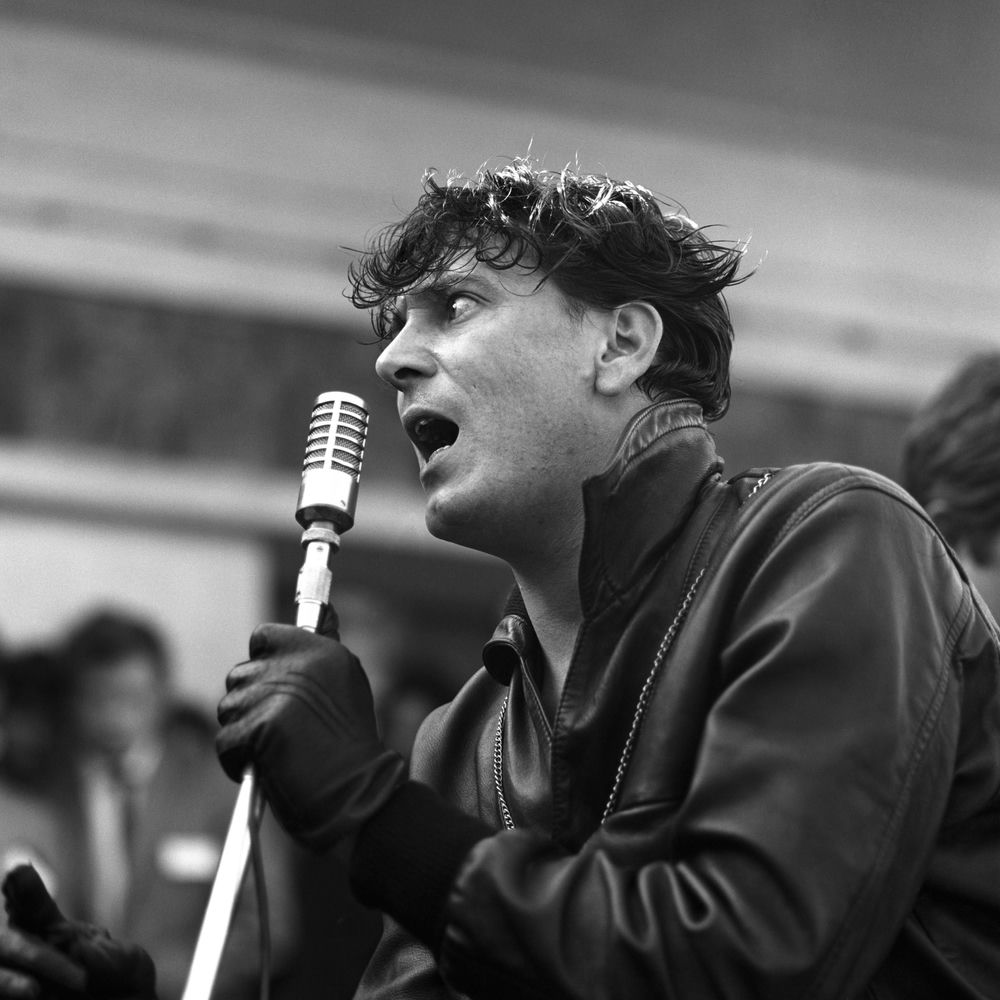
Gene Vincent
 United States
Listen Gene Vincent on radio stations:






Gene Vincent: The Pioneering Voice of Rockabilly
Gene Vincent was an American rock and roll and rockabilly singer whose raw energy and distinctive vocal style left a permanent mark on the genre's formative years. His 1956 single "Be-Bop-A-Lula" became a landmark hit, propelling him to international fame and cementing his legacy as a foundational rock and roll figure.
Early career
Born Vincent Eugene Craddock in 1935 in Norfolk, Virginia, his path to music was altered by a severe motorcycle accident in 1955. While recuperating, he began writing songs and formed the backing band the Blue Caps. His early demos caught the attention of Capitol Records' talent scout Ken Nelson, who signed him to the label in 1956, launching his professional career.
Breakthrough
Gene Vincent's breakthrough was immediate and explosive with his very first Capitol single. Released in 1956, "Be-Bop-A-Lula" climbed to number seven on the Billboard pop charts, selling over two million copies and achieving gold record status. The song's success made Gene Vincent & His Blue Caps one of the most exciting new acts in rock and roll, leading to appearances in the seminal 1956 film "The Girl Can't Help It" and extensive touring.
Key tracks
Be-Bop-A-Lula - This 1956 debut single was his signature hit, defining the rockabilly sound with its galloping rhythm and Vincent's passionate, hiccupping vocal.
Race With the Devil - A frantic, high-energy B-side that showcased the blistering musicianship of the original Blue Caps, particularly guitarist Cliff Gallup.
Bluejean Bop - The title track from his 1956 debut LP, it solidified his reputation as a premier rockabilly artist with its driving slap-bass and rebellious attitude.
Lotta Lovin' - A major 1957 hit that reached the Top 20, demonstrating a slightly smoother but still potent rock and roll style.
Dance to the Bop - Later featured in the 1957 film "Hot Rod Gang," this track captured the enduring, energetic spirit of his live performances.
Following his initial success, Vincent's career faced challenges due to changing musical tastes, further injuries, and personal struggles. He relocated to Europe in the early 1960s, where he found a dedicated audience and continued to record and perform. His influence was profoundly acknowledged by later rock icons; he toured with the Beatles in 1960 and his music was covered by artists from the Everly Brothers to Paul McCartney. Gene Vincent's raw, emotional delivery and pioneering rockabilly sound with the Blue Caps directly inspired generations of punk and rock musicians. His contributions were recognized with his posthumous induction into the Rock and Roll Hall of Fame in 1998.
Fans of Gene Vincent's fiery rockabilly style may also appreciate the work of Eddie Cochran, another rock and roll pioneer who blended country roots with electric energy. The early recordings of Elvis Presley on Sun Records share a similar raw, revolutionary spirit. For the rockabilly revival sound, listeners often enjoy The Stray Cats, who channeled Vincent's influence for a new generation.